





This summer, we welcomed Wyatt Munsch, a senior electrical engineering major at San Jose State University, who spent the summer interning in our Karen Colonias Research Laboratory in Pleasanton, California. He jumped into projects ranging from small-scale fastener tests to large-scale structural builds, learning how engineers and technicians collaborate to bring ideas to life. Wyatt gained hands-on experience with tools, setups, and material prep, even building a planter box for our scholarship student trip. Along the way, he picked up practical skills and made personal and professional connections..
My name is Wyatt Munsch, and I’m a senior at San Jose State University majoring in electrical engineering (EE). I was approached in March with an internship opportunity working for Simpson Strong-Tie at their Pleasanton research lab. Although I’m an EE undergraduate, Simpson’s lab environment appealed to my interest in learning the relationship between engineer and technician when it comes to research and development.

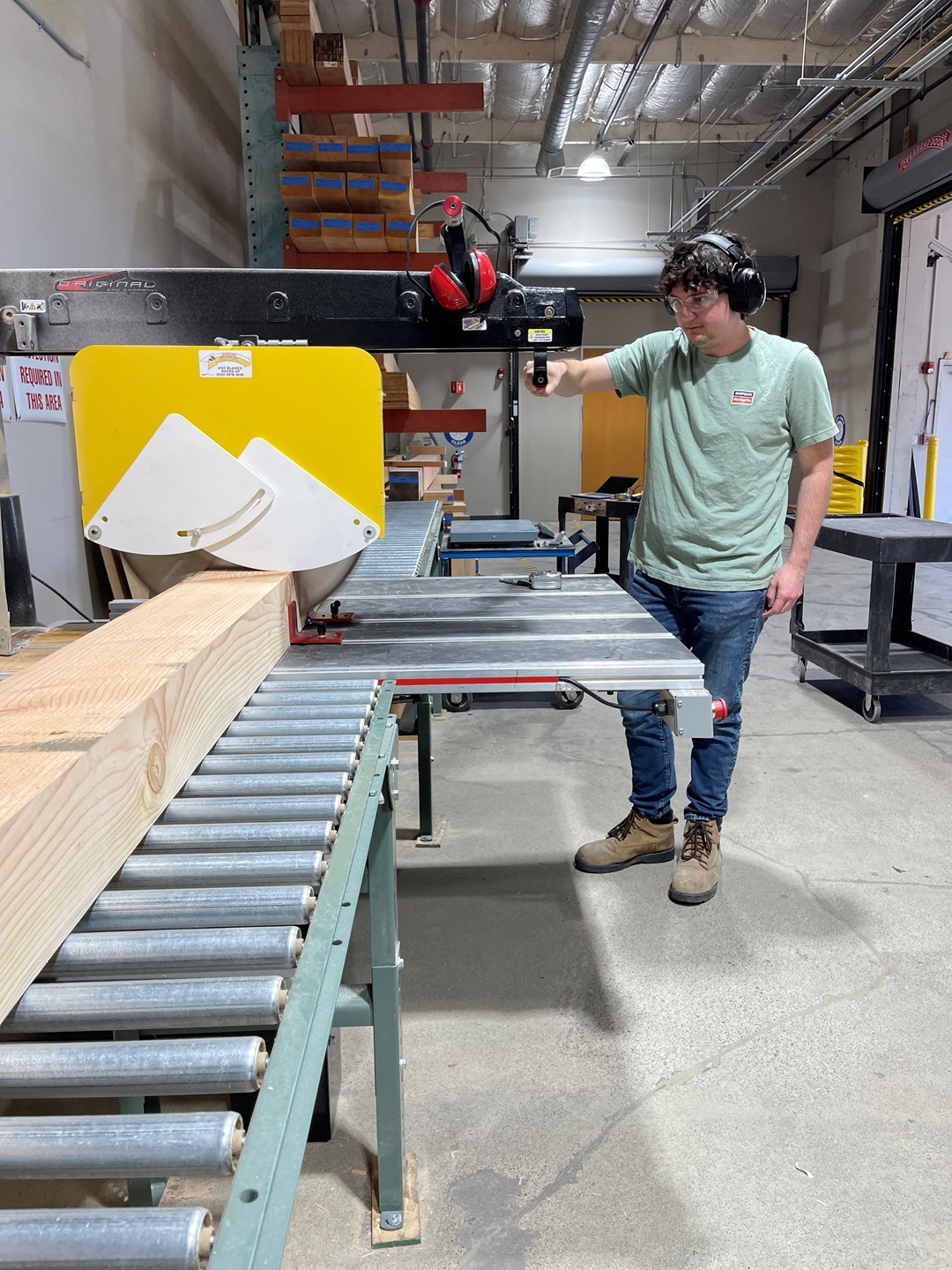
I’ve had the opportunity to work with and learn from everyone in the lab through the different projects I’ve participated in. I primarily work with Sean, Chris and Tom, who taught me the process an engineer’s testing will go through based on the specific needs of the project. The projects that they work on range from tensile and shear testing, to pull-through and withdrawal tests on small to medium scales. On other projects, I work with Santos, Andrew, Jackson and Jeorge using the larger-scale machines. Working on larger-scale projects requires more complicated builds and setups to properly collect the required data. In both sections of the lab, I’ve helped test a variety of items, such as fasteners, rods, brackets and many more potential Simpson products. Along with building small- or large-scale projects, the most important job I found myself doing was screening wood; although the task can be repetitive and painstaking, every project requires wood at very specific conditions to provide the most accurate results to the engineers. My favorite project was building a bench and an elevated planter box for the Simpson scholarship students to use as a model for their own builds when they visited us later in the summer.

Through my summer internship, I’ve quickly learned the procedures used by technicians to provide the engineers with proper data. These procedures range from understanding how to read an engineer’s work order to mastering correct tool use and data collection to provide the best results. Some of the larger builds required teamwork to construct the complex test designs, so clear and concise communication was important not only to constructing the project, but to ensuring a safe working environment. The company’s culture was something I had not experienced before at other jobs. Early into my internship, the lab celebrated several coworkers’ birthdays that fell during the same two-week period. Joining in this and other interactions around the office, I could see that there was a strong sense of comradery and compassion among all the lab workers.

As an electrical engineering undergraduate, I understood that some of the skills I had been taught throughout my internship may not be relevant to my career path; however, my goal was to understand the relationship between engineers and technicians. This understanding is largely ignored in academics, but as a developing engineer I believe it’s critical to grasp the work that goes into building and testing a project. When an engineer is exposed to the constraints and effort that goes into testing, it can lead to stronger communication and faster, more efficient timelines. Along with this, I believe the most important skill I have refined is the proper use of tools to construct the projects.
A tip I will leave for future interns working at Simpson is to make sure to ask your coworkers about what they do and how it contributes to the company. Many employees are very passionate about their work and would be happy to teach you about everything that goes into it.
