




The ASCE Timber-Strong Design Build (TSDBSM) Competition team, “Shiver Yer Timbers,” at the Colorado School of Mines in Golden, CO, finished an incredible year. Over the course of the 2024-2025 academic year, we dedicated countless hours to designing, fabricating and learning about timber design. Our team was composed of eight students: Lucas Baum, Maddie Gotlieb, Gavin Nelson, Jordi Ramos Nunez, Alex Reil, Madelyn Riley, Zaid Safian and Tyler Worley. Advisors included: Dr. Hongyan Liu, Garrett Erickson, David Sparks and Dr. Shilling Pei.
During the initial design process back in September, three general goals were set. First, we wanted a structure that was architecturally unique. To do this, we created a combination of a hip roof and a gable roof that added a sleekness to the structure and made it stand out from typical monoslope or split roof designs. Our team titled this type of roof “Gavin’s Gable,” after the team member who created the design.

Second, we all agreed to focus on speeding up the build time of the structure. Taking inspiration from Japanese wood-working techniques, our design implemented an interlocking dowel system. This reduces the number of metal connectors and fasteners required, thereby improving build time at competition.
These choices ultimately supported our third and final goal: to win the regional competition at CSU and represent Mines at the national exhibition at California Polytechnic State University in San Luis Obispo, CA.

Early stages of our efforts included copious structural calculations, budgeting, and building information modeling. As none of us had any prior experience with the design of wood structures, the learning curve in designing this building with both an adequate vertical and lateral load path proved to be challenging. Fortunately, we loved a good challenge. The difficulties with structural calculations decreased as we put in the time to learn more about the NDS, SDPWS, the Simpson Strong–Tie Manual, and continuous load paths from our advisors, David Sparks, P.E., and Dr. Shilling Pei, as well as videos provided by Simpson Strong–Tie.
Not only did we learn about wood design, but we also learned about where our lumber comes from. Montrose Forest Products, a lumber mill located in Montrose, CO, generously donated the studs used to build our structure. Team members Tyler Worley and Jordi Ramos Nunez visited the mill to pick up the donation and to learn more about the lumber harvesting process through a tour of the mill hosted by Scott Locke.
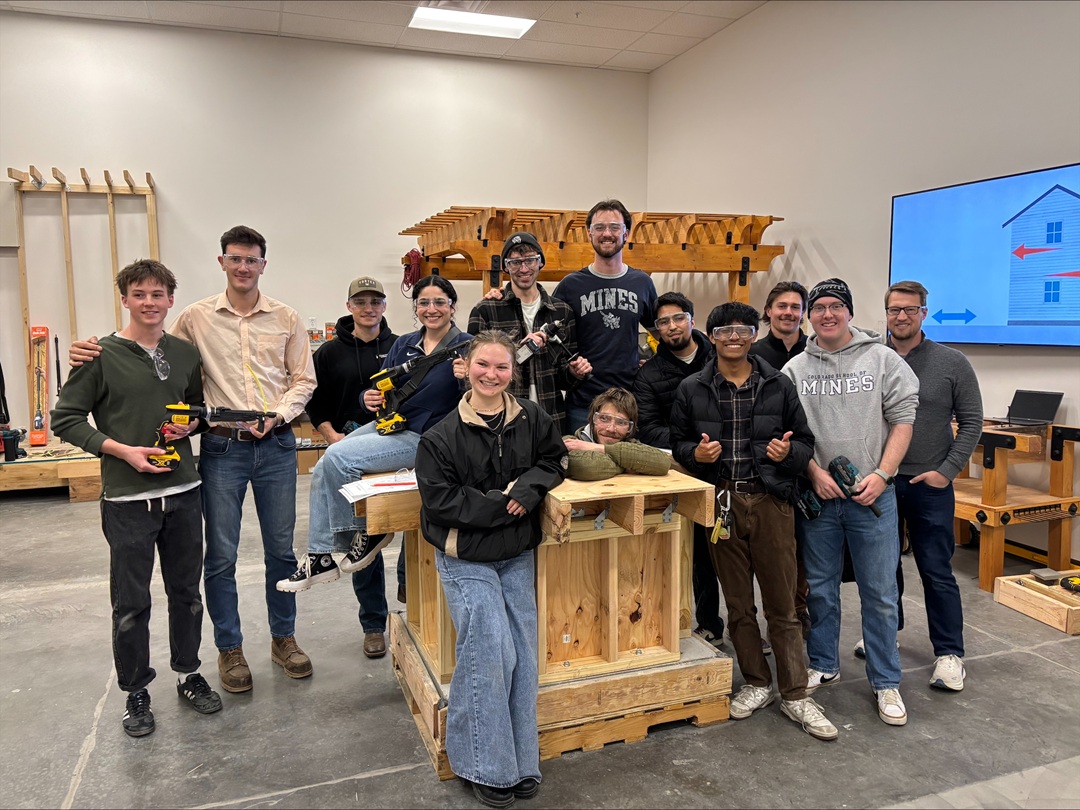
We took a trip to one of Simpson Strong-Tie’s warehouses in Denver to learn more about wood construction and hardware, as well as the important role Simpson Strong-Tie plays in structural engineering. We took a deeper look at the load path and learned more about the importance of both creating and interpreting construction drawings. We discovered this in Simpson Strong-Tie’s lab, where we were given materials to fabricate a small structure based on construction drawings provided. It was a valuable lesson in understanding the importance of creating clear drawings as an engineer, as well as gaining more hands-on experience building with our hands. It was also very fun to try out all sorts of Simpson Strong-Tie hardware. This trip made us think more deeply about how judges would interpret our drawings, and about how to communicate a clear load path in our project.

It also helped us learn more about designing for the builder. Engineers often tend to miss how a design will actually be built, and these problems often come up in the middle of construction, when a builder recognizes something so obvious that shouldn’t have been missed, like a hanger not having enough space to be installed properly. We carried these lessons into the fabrication process, where they proved to be invaluable.
After completing the design process in January, our team shifted focus to fabrication, where space constraints, tight learning curves, and time management concerns were no strangers to us. The members of our team had backgrounds ranging from years of construction experience to none at all, which provided many opportunities for learning new skills. As each member of our team became familiar with the tools and processes of construction, we settled into a rhythm. At the beginning of each day, our team divided into groups to focus on different tasks; the more time-intensive tasks, such as notching studs and building the roof system, were begun earlier in the process to avoid further delays to our congested schedule. Most of us would agree that this was the fun part of the project, as we were outside building stuff with our hands and not stressing over calculations.

Our structure came together just in time for the regional competition in Fort Collins, CO. Prior to build day, we had never fully assembled our entire structure, so careful planning was critical. After months of learning, designing, planning, drawing and building, we were able to accomplish our goal that was set back in September. Competing against the South Dakota School of Mines and the University of Wyoming, we won first overall in the Rocky Mountain Regional Conference in the ASCE Timber-Strong Design Build SMCompetition! We also won first place for “Best in Show” and for our BIM model. 
Proud of our accomplishment, we pursued the second part of our goal: Traveling to Cal Poly in San Luis Obispo to participate in the national competition showcase. Due to the unique attributes of our design, our team was chosen to participate in the showcase. Traveling to San Luis Obispo was a rewarding experience, enabling us to learn more about the origins of the competition and how it helps prepare future structural engineers from all over the country. In collaboration with other national qualifying teams and Timber-Strong judges, we discussed how to improve the competition and make it even more beneficial to those who participate. The national competition allowed us to see what other top teams came up with, which proved to be educational for everyone involved.
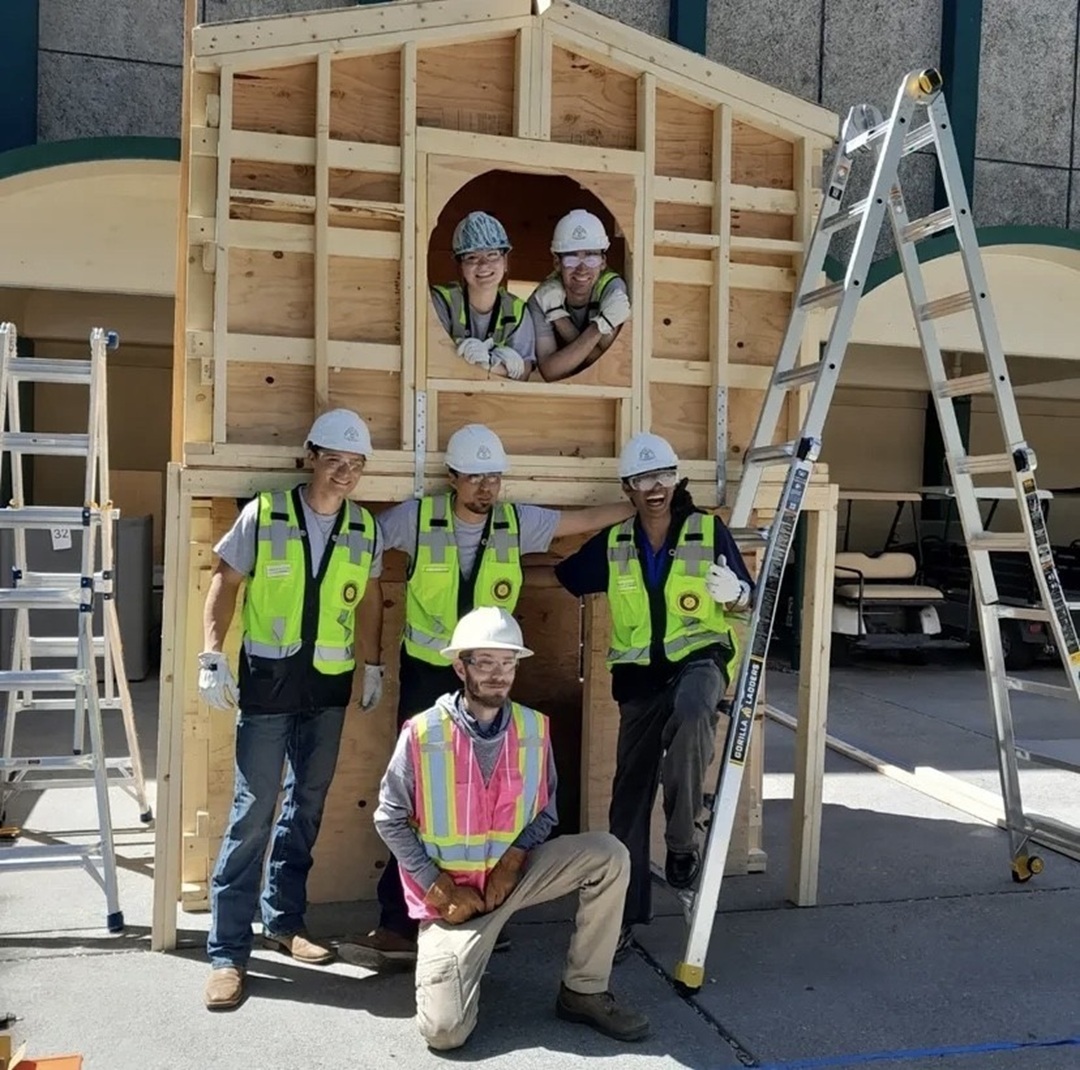
This competition offered the opportunity for students to engage in both design and construction, something that budding structural engineers often do not get the chance to practice. The competition also allowed participating students to engage with other competition participants and industry professionals. It is because of this that the Mines team will remain committed to ensuring this competition is able to continue for years to come, with the ultimate goal of having a national competition with more participating schools that are supported by ASCE. It is in search of this goal that the Mines team sought to make connections with other chapters and industry professionals to work towards the continuation of the program and to continue to voice its merits in the year ahead.
After some reflection, all of us agree that the Timber-Strong Design Build Competition was a very rewarding and valuable experience all around. It allowed us to know the importance of all aspects of construction, ranging from design to BIM modeling to fabrication. This year helped us at Colorado School of Mines learn more about wood design that will carry on into their professional careers. We are proud of the fact that we accomplished all of our goals that we set back in September of 2024, and the Timber Strong Design Build Competition is something that the entire team from the Colorado School of Mines will look at fondly in the years to come. Colorado School of Mines hopes to become a powerhouse in the competition through the efforts of the 2025-2026 team.
