


QuickFrames Q&A: Top Questions Answered

In this post, we follow up on our March webinar, Innovative Structural Steel Solutions, Part 2 — QuickFrames, by answering some of the interesting questions raised by attendees.

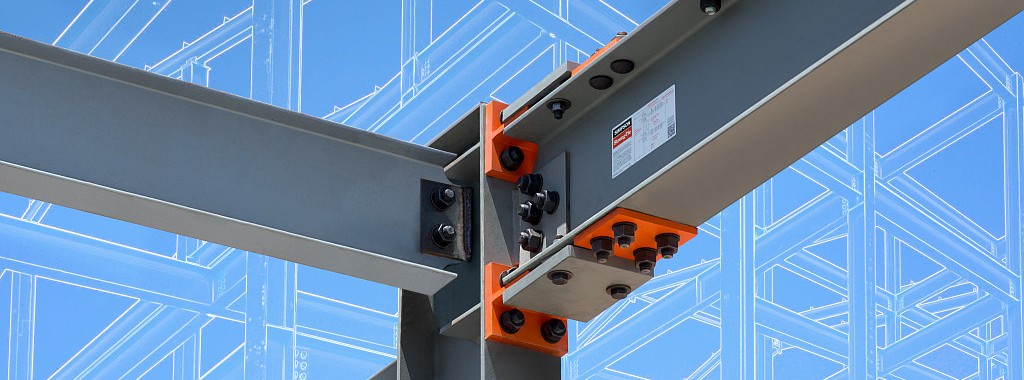
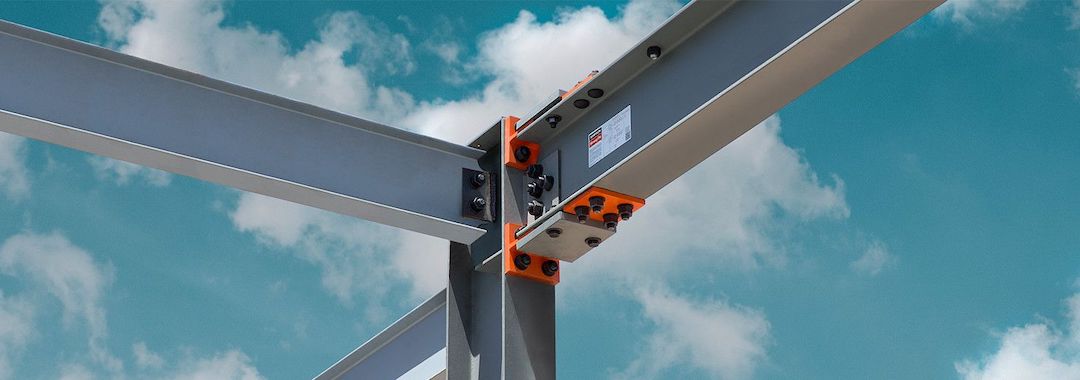
During the webinar, we explored QuickFrames, a pre-engineered, adjustable framing solution that simplifies structural support for rooftop and floor openings in commercial buildings. We examined common market challenges and the limitations of traditional angle iron and channel steel frames, emphasizing the need for more adaptable framing solutions. By comparing QuickFrames to traditional welded steel frames, we highlighted its fully customizable, bolt-on design, simplifying coordination, eliminating field fit-up issues, and reducing labor, installation time, and overall costs.
Continue Reading

Find Simpson Strong-Tie® Strong Frame® Moment Frames on the Beach

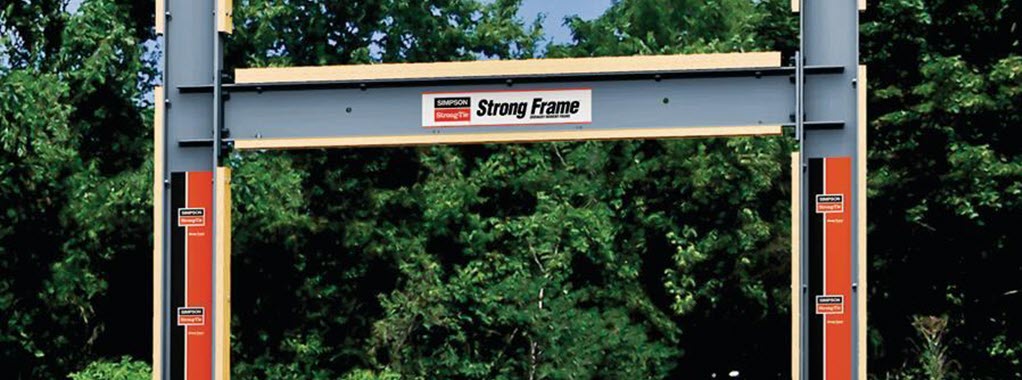
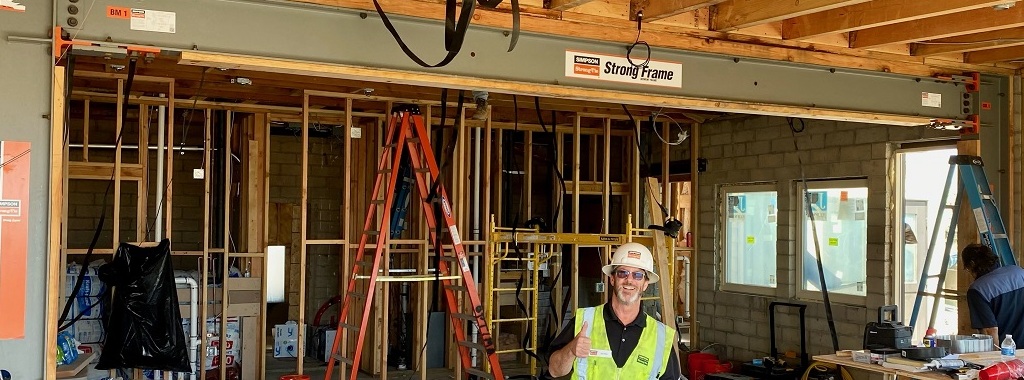
Our Orange County Residential Territory Sales Manager Joe Polder recently worked on a Strong Frame project in Seal Beach, California. Joe gives insight into what happens from the planning to the installation of a Strong Frame on the jobsite. Learn how our Strong Frame provided the perfect solution for this restaurant and helped maintain the jobsite schedule. 

Continue Reading

NOVA airs episode featuring Strong Frame® Special Moment Frame Testing for NEES-Soft

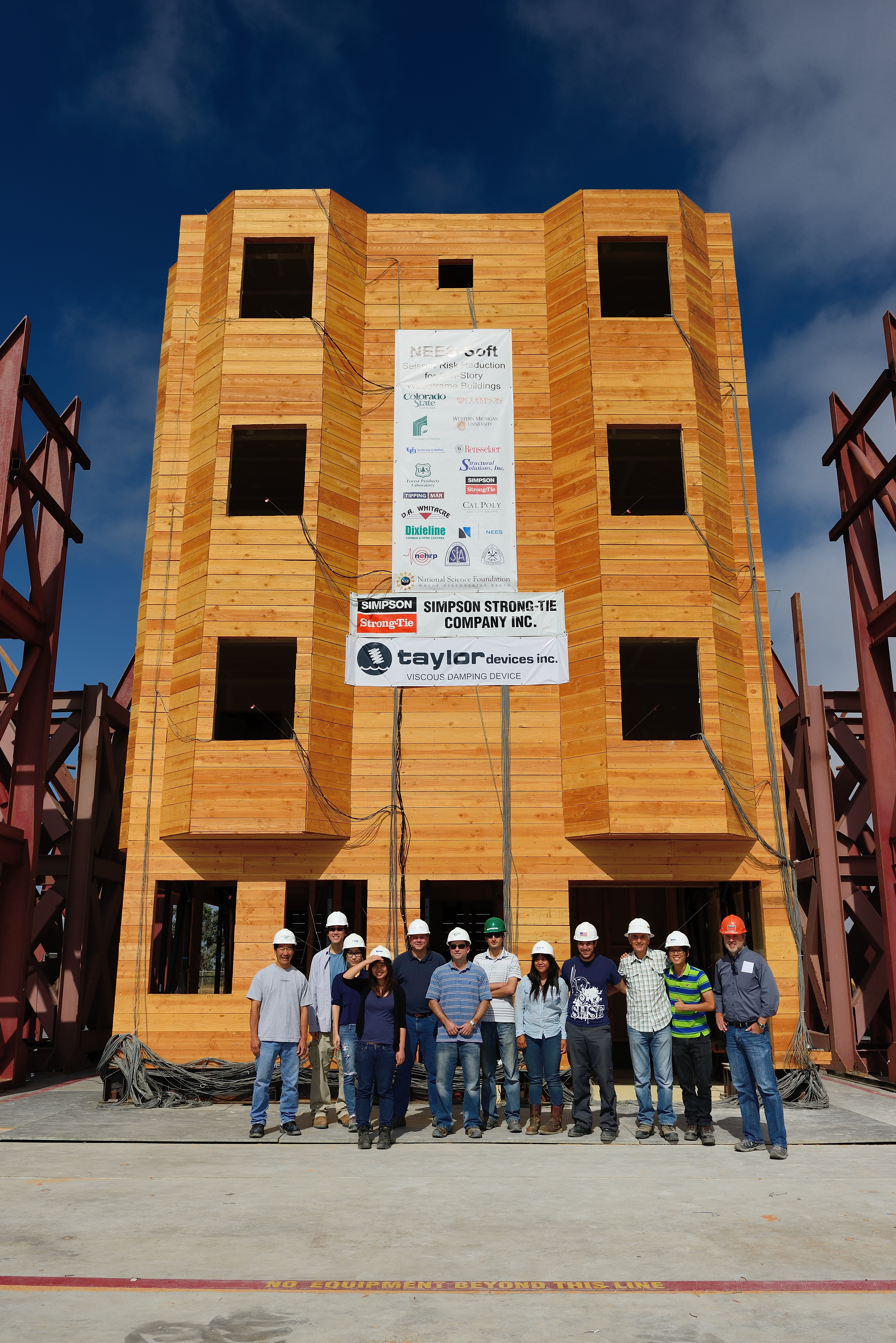
SEP_3617_group_photoNOVA, the highest rated science series on television, recently aired a segment on the Colorado State University-led NEES-Soft project that tested Simpson Strong-Tie® Strong Frame® special moment frames as a seismic retrofit solution for soft-story buildings. Simpson Strong-Tie and our special moment frame were prominently featured in the clip. You can watch the entire “Making Stuff Safer” episode on PBS here.

Breaking News: Simpson Strong-Tie® Strong Frame® Special Moment Frame Testing Today

Today the NEES-Soft project has begun testing the steel Simpson Strong-Tie® Strong Frame® Special Moment Frame as a retrofit option for soft-story buildings at the NEES outdoor shake table facility at UC San Diego. The testing is focused on validating the FEMA P-807 design procedure, which attempts to create a least-cost retrofit solution by only retrofitting the garage areas of problem buildings.Continue Reading

Steel Moment Frame Beam Bracing

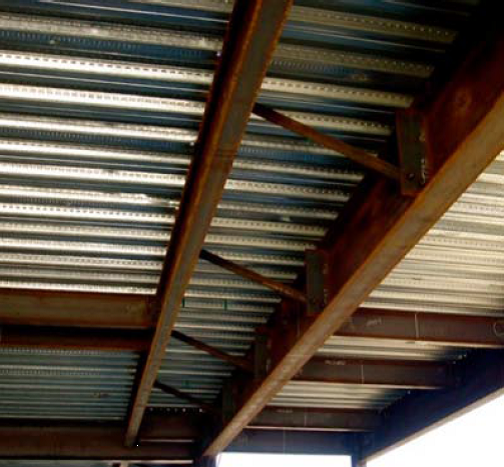
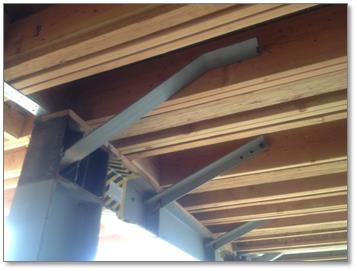
In a previous blog post on soft-story retrofits, I briefly discussed beam bracing requirements for moment frames. This week, I wanted to go into more detail on the subject because it’s important to understand that a typical steel moment frame requires lateral beam bracing to develop its full moment capacity. Figure 1 below shows two common methods of beam bracing. While on the surface determining beam bracing requirements may not appear complicated, there are several items that could prove it to be more challenging than you might think, especially when steel moment frames are used in light frame construction.

Figure 1: Steel Beam Bracing

(A) Braced with kicker and metal deck(1)
(B) Braced with kicker and wood joist/beams(2)

Before going into beam bracing in steel moment frames, it is important to discuss the behavior of a simply supported beam under gravity load. Short beams (Lb < Lp)[3], might not require bracing to achieve the full plastic moment of the beam section. However, when a beam is long (Lb > Lr) and without bracing, the beam can twist or buckle out-of-plane.  Figure 2 illustrates these two behaviors along with the case where the beam length is somewhere in between the two (e.g., Inelastic lateral torsional buckling). In addition, if beam sections are non-compact, flange local buckling (FLB) or web local buckling can occur prior to reaching the beams full plastic moment.

Continue Reading