




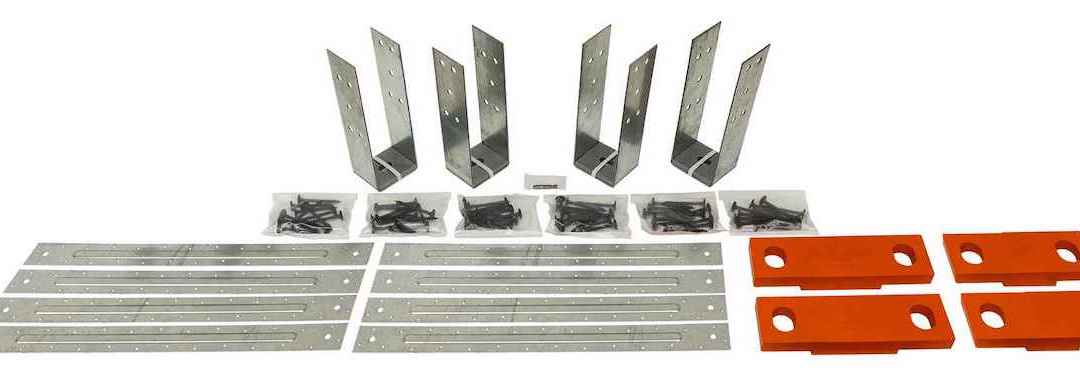
Many of you reading this may already be familiar with our Strong-Wall site-built portal frame system, or PFS for short. Simpson Strong-Tie launched the PFS last spring to provide designers, builders and contractors in prescriptive markets with a simple and cost-effective solution to meet code-prescribed wall bracing requirements for narrow wall widths.
Category: Strong-Wall Site-Built Portal Frames
Our code-listed Strong-Wall site-built portal frame system provides designers, builders and contractors in prescriptive markets with an easy way to meet code required wall-bracing requirements with narrow wall widths.

Questions Answered: Strong-Wall® Site-Built Portal Frame System
In this post, we follow up on our April 17 webinar, Meeting Braced-Wall Requirements: A New Portal Frame Solution, by answering some of the interesting questions raised by attendees.
During the webinar, we discussed how the Strong-Wall Site-Built Portal Frame System (PFS) provides designers, builders and contractors in prescriptive jurisdictions with a new alternative to IRC wall-bracing methods. In case you weren’t able to join our discussion, you can watch the on-demand webinar and earn PDHs and CEUs here.
Continue Reading

Flexible or Rigid? Multi-Story Light-Frame Structure Design Considerations
I like to think I’m flexible, but I’ve been accused of being rigid at times. I guess that’s what therapy is for. If you were to ask a light-frame structure diaphragm that same question, you would likely get multiple conflicting answers. The 1988 UBC first introduced parameters to evaluate diaphragm rigidity. Earthquake Regulations Section 2312(e)6 stated:
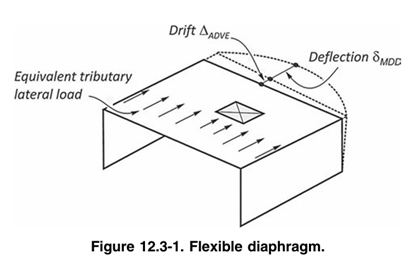
Provision shall be made for the increased shears resulting from horizontal torsion where diaphragms are not flexible. Diaphragms shall be considered flexible for the purposes of this paragraph when the maximum lateral deformation of the diaphragm is more than two times the average story drift of the associated story. This may be determined by comparing the computed midpoint in-plane deflection of the diaphragm under lateral load with the story drift of adjoining vertical resisting elements under equivalent tributary lateral load.