



Designing Resilience: NEESWood Capstone a Decade Later

In 2009, Simpson Strong-Tie participated in an unprecedented research event to highlight the importance of earthquake-resistant wood construction.

The event, the world’s largest earthquake test, was a collaborative Network for Earthquake Engineering Simulation project. It teamed academics, engineers, and industry researchers from around the world to subject a structure to what engineers refer to as the “maximum considered event” (MCE), a large, rare earthquake projected to occur, on average, approximately every 2500 years.
Continue Reading

Flexible or Rigid? Multi-Story Light-Frame Structure Design Considerations

I like to think I’m flexible, but I’ve been accused of being rigid at times. I guess that’s what therapy is for. If you were to ask a light-frame structure diaphragm that same question, you would likely get multiple conflicting answers. The 1988 UBC first introduced parameters to evaluate diaphragm rigidity. Earthquake Regulations Section 2312(e)6 stated:

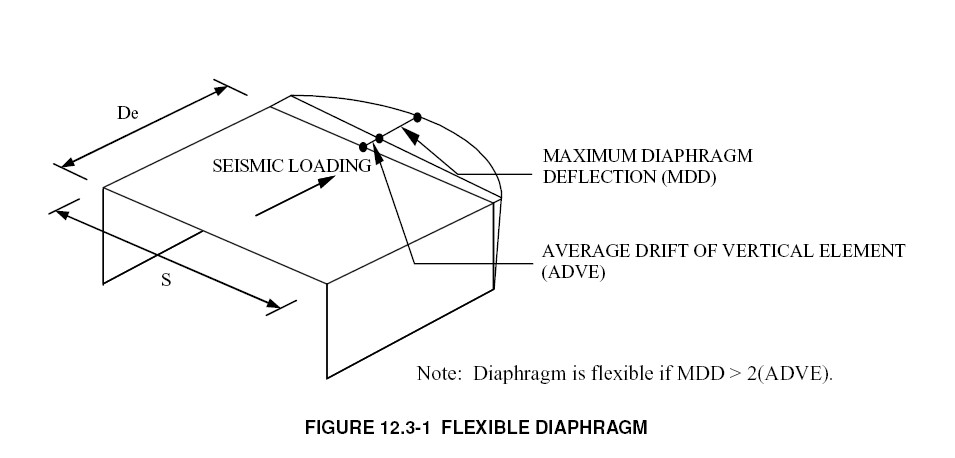
Figure 1. Flexible Diaphragm Definition from ASCE 7-05

Provision shall be made for the increased shears resulting from horizontal torsion where diaphragms are not flexible. Diaphragms shall be considered flexible for the purposes of this paragraph when the maximum lateral deformation of the diaphragm is more than two times the average story drift of the associated story. This may be determined by comparing the computed midpoint in-plane deflection of the diaphragm under lateral load with the story drift of adjoining vertical resisting elements under equivalent tributary lateral load.

Continue Reading