




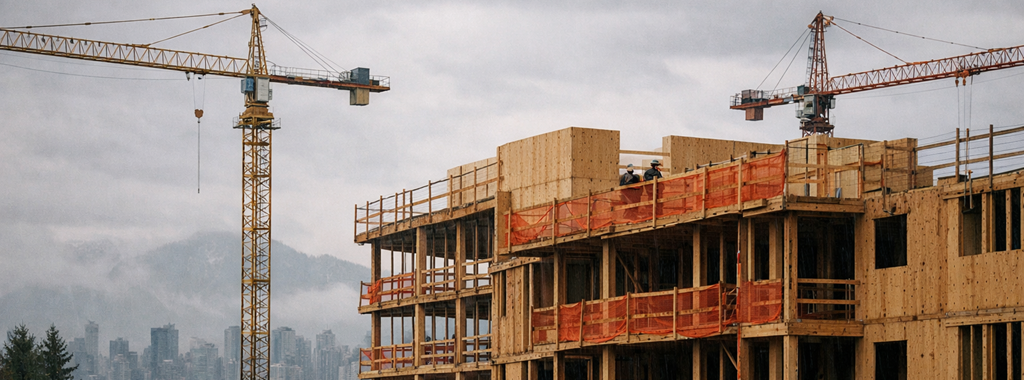
When I graduated from university in 2013, British Columbia had already been allowing six-storey light-frame wood buildings via its provincial building code for a few years. Shortly thereafter, I joined Simpson Strong-Tie and became more familiar with practices in the other western provinces (Alberta, Saskatchewan, and Manitoba) which took a bit longer to embrace these six-storey structures. Over the past twelve years, it’s been interesting to watch their popularity rise due to increased demand for housing and sustainability, with the industry’s confidence growing alongside this evolution.
Tag: anchor tiedown systems
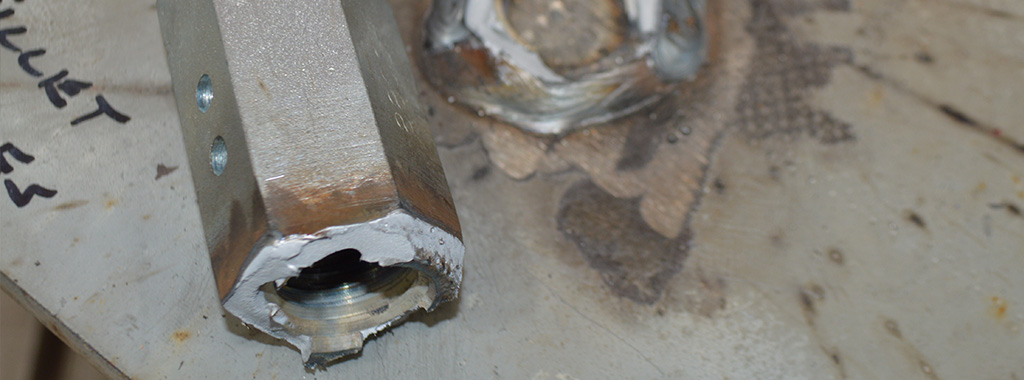
Rod-to-Steel-Beam Connections for Anchor Tiedown Systems: Rod Welding, Brittle Failure, and Alternative Connections
Continuous rod tiedowns are a common way to restrain shearwall overturning in light-frame structures. Anchoring the rod run in a steel beam can be challenging, however, because the holdown typically aligns with the beam’s web and thus cannot pass through the beam. Welding, on the other hand, can cause brittleness and fracture of the rod or coupler at the location of the weld, especially in high-strength steel rods and couplers. An effective alternative also using high-strength rods is provided by the Simpson Strong-Tie® ATS-SBC steel-beam connector, which comes with a steel plate whose flat edges can be fillet welded to the steel beam or embed plate without brittle failure. Scott Fischer, P.E., of Simpson Strong-Tie explains the results of our lab testing in the following post.
Continue Reading