


Rebuilding with Simpson Strong-Tie Products After Hurricane Sandy

Our factory in Gallatin, TN held a Fastener Summit Meeting this past June, which brought together people from all areas of our fastener business. Somewhere, sometime we started calling these meetings “Summits” and the name stuck. The purpose of the Summit is to facilitate candid discussions about what we need to do to better support our customers’ needs through new product development, new application testing, literature, training, or sales distribution.

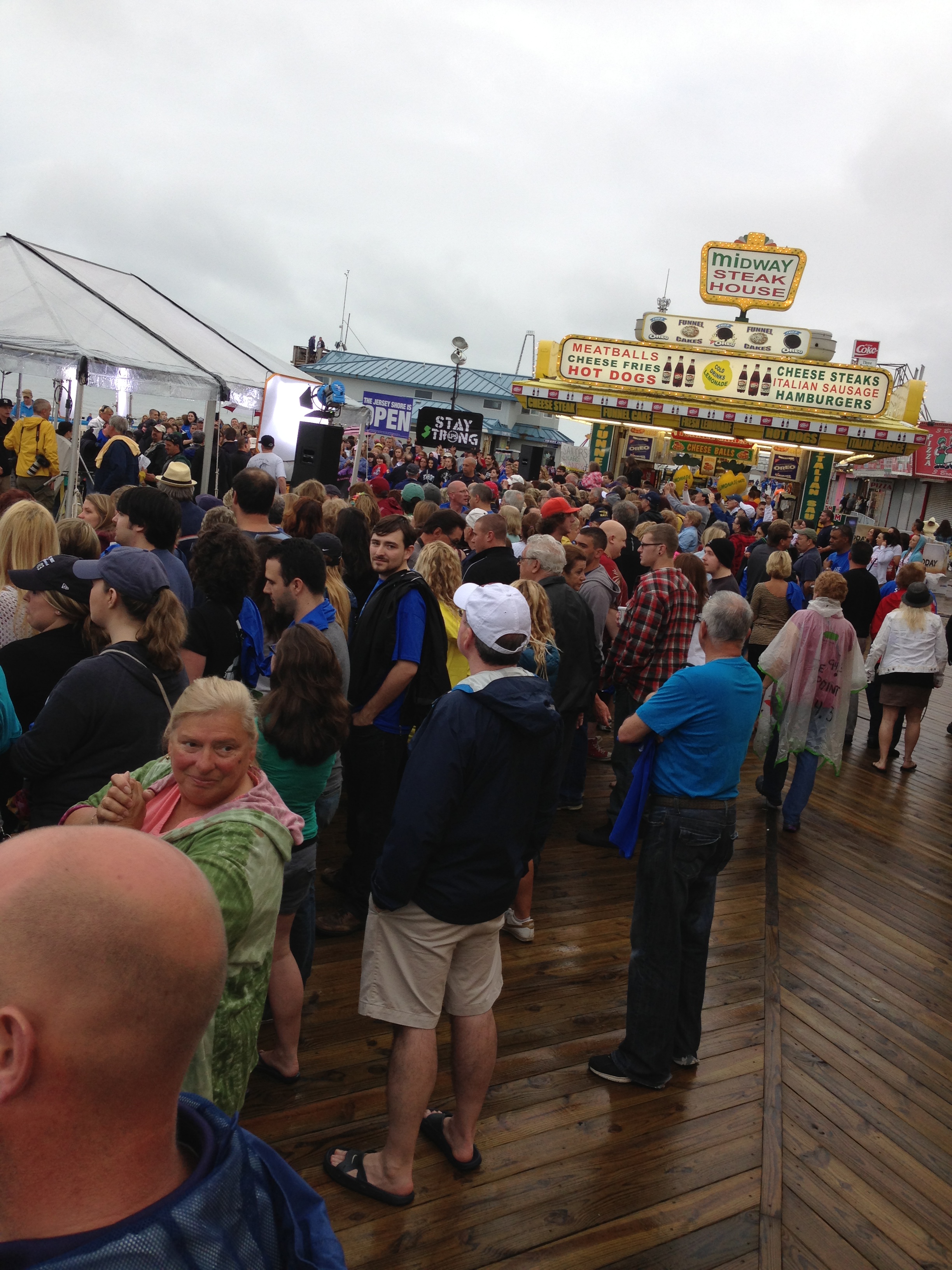
One of our fastener sales specialists shared a great story about a New Jersey town’s decision to build a better boardwalk following Superstorm Sandy. The town of Seaside Heights decided to design and build a boardwalk to better address future storms. Along with being a local icon, the boardwalk is an integral part of the town’s economy.
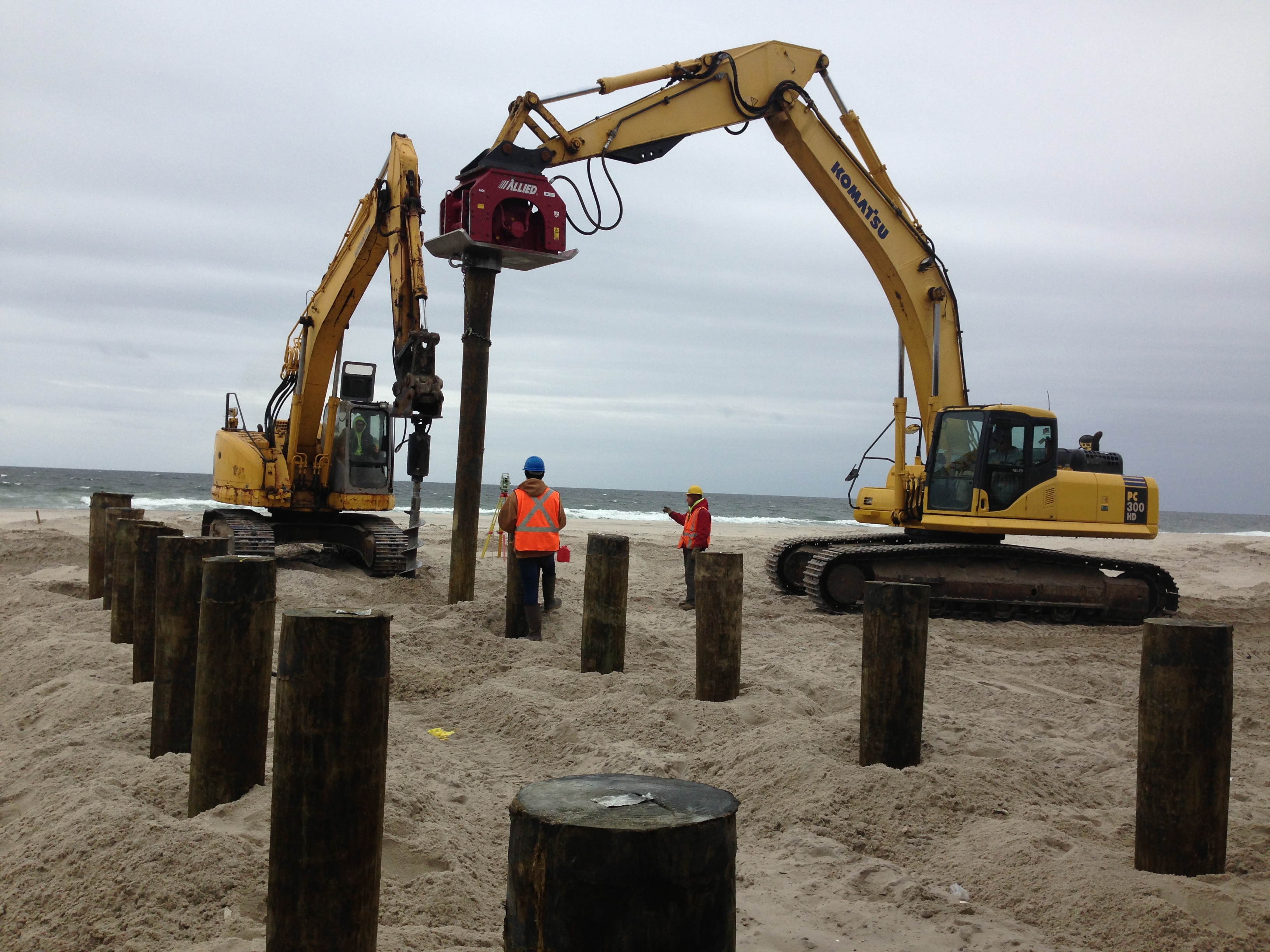
Seaside Heights boardwalk rebuild.

Working hand in hand with the town’s borough officials, the project’s engineering firm and contractor, our Columbus, OH branch worked to tirelessly to develop construction solutions to save time and money on this critical project. For Simpson Strong-Tie, this involved testing and ramping up production of stainless steel product to ensure no delays for the project.

A little over two months after Seaside Heights Mayor Bill Akers drove the first deck board screw using our Quik Drive auto-feed screw system, the boardwalk was complete. NBC’s Today Show broadcast live from the boardwalk with New Jersey Governor Chris Christie on May 24. There’s also a cool video on the New York Fox News website showing different time lapse views of the build here.
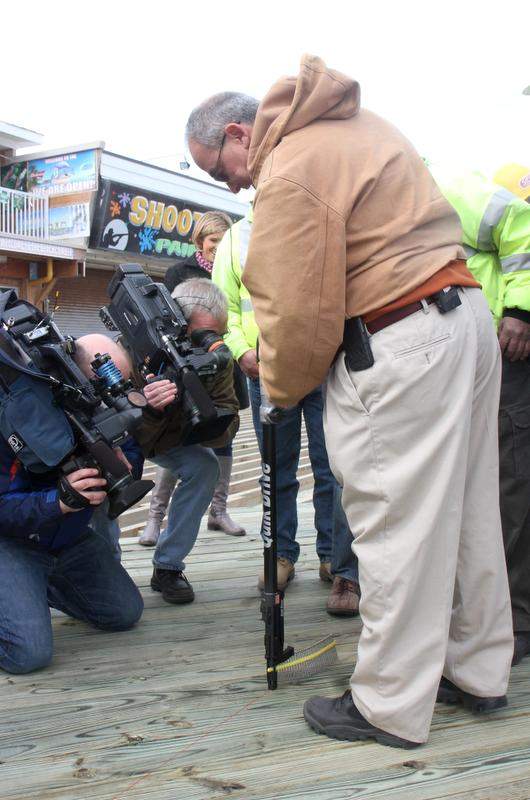
Seaside Heights Mayor Bill Akers drive in the first screw.
Seaside Heights Mayor Bill Akers drives in the first screw.
The Today Show airs live from the reconstructed boardwalk.
NBC’s Today Show airs live from the reconstructed boardwalk.

You can read the full story in the July issue of our Structural Report newsletter.

– Paul

What Did Sandy Teach Us?

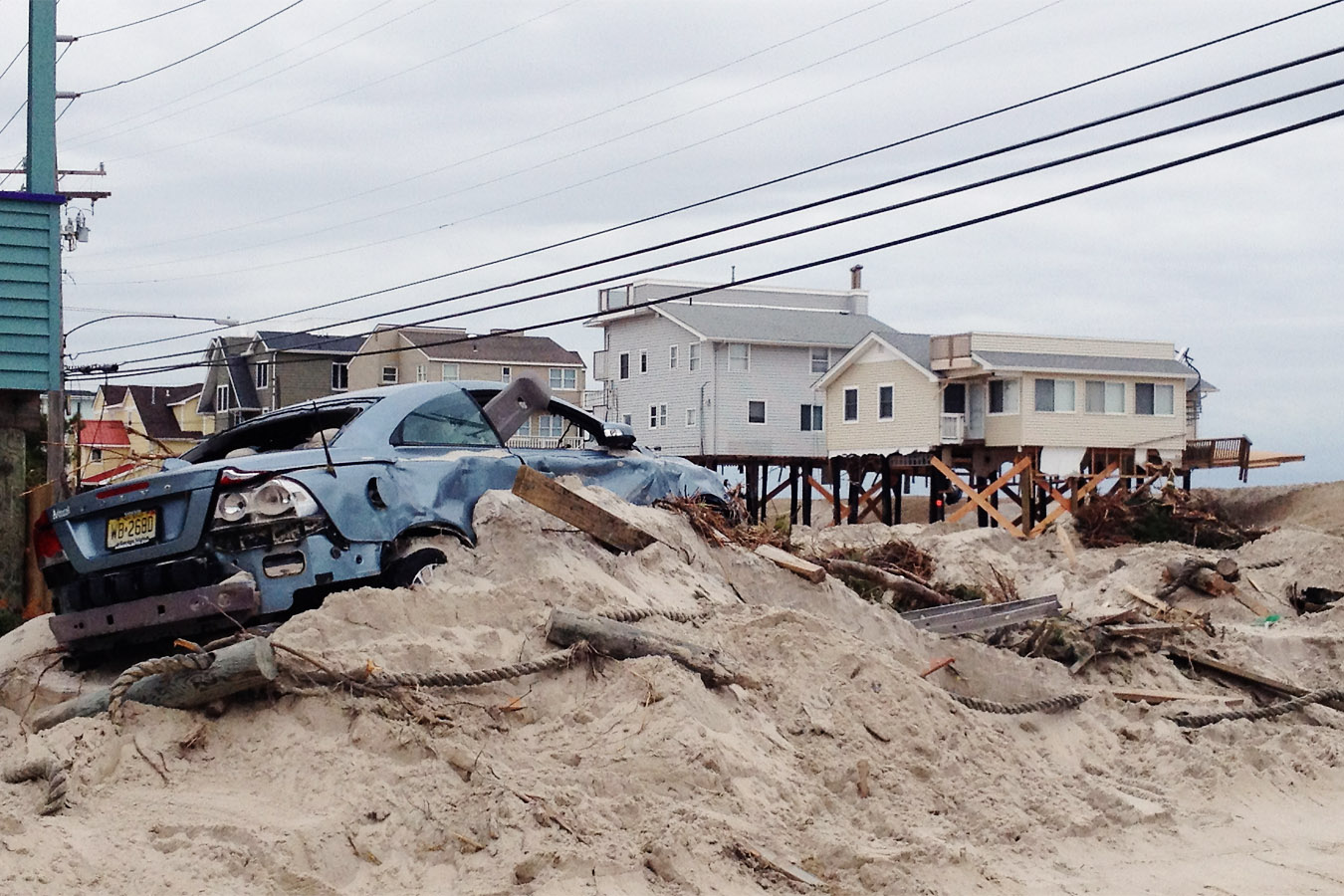
In the weeks following Hurricane Sandy, I had an opportunity to visit some of the hardest hit communities in the region. At the time, many of New Jersey’s barrier islands were still completely closed off to civilian traffic and all accessible bridges were blocked by military guards. Our local territory manager has great relationships with building departments, so we were able to walk portions of Long Beach Island, NJ with an inspector. The storm surge washed out several sections of the protective sand dunes on the south end of the island in the neighborhood of Holgate and this is where we spent much of the day.

Holgate, NJ
Holgate, NJ
Scoured foundation temporarily shored. Holgate, NJ.

For a structural engineer, there was a lot to observe and many things I could write about here (maybe a future post), but what strikes me the most when looking back is the long- term impact this event will have on the region. The cost of Sandy goes beyond the loss of life and property (72 lives, $50 billion and growing). It would be difficult to estimate a dollar amount that accounts for the displacement of people and disruption to their lives, the hit to local economies that depend heavily on tourism, and the effect on the national economy and taxpayers; but I imagine it would be a staggering sum. So what, if anything, can structural engineers do about it?Continue Reading

Are the Load Combinations Balanced?

In April’s post about the Omega Factor, one commenter asked of the 1.2 increase allowed by ASCE 12.4.3.3, “Why do they allow a stress increase for allowable combinations? Seems unconservative for steel now that they have essentially balanced the ASD capacity with LRFD.”

To be honest, I have never spent much time analyzing which design methodology was more or less conservative. If I was designing with wood I would use ASD, and if it was with concrete I would use LRFD. Steel was strictly ASD early on in my design career, but LRFD usage grew. The question about balance made me curious. Are the load combinations balanced?

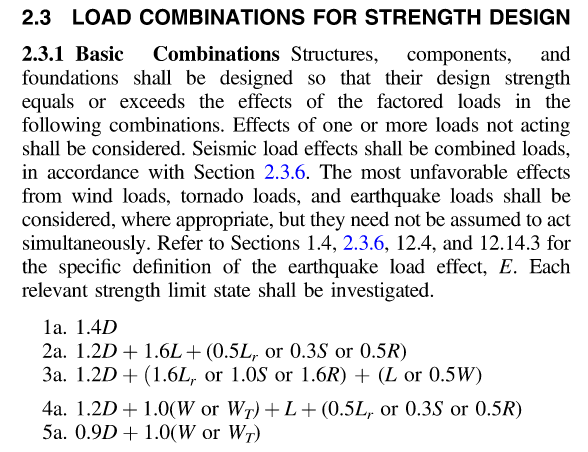
ASCE7-22 Basic ASD Load Combinations
ASCE7-22 LRFD Load Combinations

Of course, just comparing the load combinations would be meaningless. We know the LRFD combinations result in higher design forces. But those higher forces are compared to higher design strengths. So we need to normalize things.

Continue Reading

Storm Shelters in the Wake of the Oklahoma Tornado

As we continue to learn more about the devastation in Oklahoma from the EF-5 tornado that struck the city of Moore and surrounding areas on Monday, many building professionals and homeowners are questioning the safety of their homes and other structures in tornado-prone areas. Winds of the recent storm reached speeds up to 210 miles per hour and destroyed hundreds of homes, businesses, schools and hospitals. Many structures were leveled to their foundations. The question that is posed after an event like this is – can you build a tornado-resistant home or structure?

A recent article in the Huffington Post asked that question to several design professionals, including our own resident code expert, Randy Shackelford, P.E., a Simpson Strong-Tie engineer based in McKinney, Texas. While designing a tornado-proof home is not practical or economical, properly designed storm shelters can save lives. Take a look at the Huffington Post article here.

Last year, I wrote a post about Building a Storm Shelter to ICC-500 Design Requirements, which presents the most economical solution to resisting the strongest of tornadoes. We’ve also covered this topic from various angles in the blog, from design – a post about Code-Plus Programs that provides some guidelines for building structures that are more resistant to hazards than what the code requires, Designing Light-Frame Wood Structures for Resisting Tornadoes and checking for Building Drift – to addressing specific parts of a structure, such as Preventing Roof Tiles from Becoming Wind-Borne Debris and Roof Deck Design Considerations for High Wind Events. Our Technical Bulletin about how to strengthen dwellings in tornado-prone areas provides further information.

Our thoughts and prayers continue to be with everyone affected by the Oklahoma tornado. We are thankful to report that our local sales reps and families in that area are safe. If you have additional thoughts about the tornado and storm protection, please leave me a comment.

– Paul

The Omega Factor

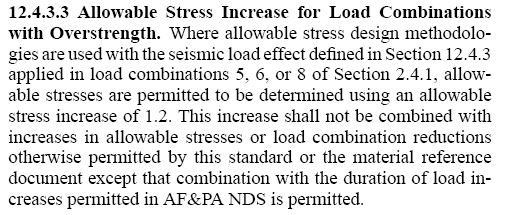
Section 12.4.3.3 of ASCE 7-05 (or -10) deals with overstrength (Ωo) load combinations and allows a 1.2 increase in allowable stress when using these combinations. We received a question from a customer last week asking if the 20% increase applies to Simpson Strong-Tie connectors. The simple answer is yes. When demand loads are based on amplified seismic forces, connector allowable loads may be increased by 1.2 per Section 12.4.3.3.

Image credit: ASCE 7-05.

Since the increase may be combined with the duration of load increases permitted in the NDS, you would apply the 1.2 increase to connector allowable loads at a load duration of 1.6, which makes the overstrength factor a little less terrible.

The question got me thinking a little more about overstrength load combinations, so I wanted to discuss what they are used for. It also made me think about a sales meeting several years ago where one of our engineers was addressing a question about an application that required a design using amplified seismic forces. A salesperson asked why the forces needed to be amplified and he said, “Well, there’s this Omega subzero factor…” Never speak in Greek letters to salespeople. They call him Omega Subzero to this day.

So why does the code have amplified forces?

Continue Reading

Is Designing with Wood Easy?

In college, I spent some of my free time either attending seminars or reading about high profile structural engineering projects. These projects tend to be noteworthy due to their massive scale or their use of innovative construction technologies (often both). Taipei 101 is 508 meters tall, and used to be the tallest building in the world. The Burj Khalifa has surpassed it as not only the tallest building in the world, but as the tallest manmade structure at 828 meters.

I never thought I would design the world’s tallest buildings, but I did think it would be cool to work on some mid-rises. I never did. My design firm didn’t do that type of work – which looking back, was a good thing for me. We worked on a lot of everything, including commercial, industrial, multi-family and mixed-used projects. The variety of projects meant designing with all the major building materials, including concrete, steel, masonry, and wood. Reviewing my project portfolio and thinking about what was really satisfying to work on, the projects that stand out most were wood-framed.

Continue Reading

Code Reports: Uniform Application of Code Intent in a Diverse Environment

Woodworks invited me to do a presentation on Testing and Evaluation of Products for Wood-framed Construction, and I found you can’t really talk about testing without talking about the test standards and criteria used in product evaluations. Usually the goal in testing to these standards is to show compliance with the intent of the building code and have the product listed in a code report.

Why not just follow the code?

Innovative architectural and structural building products not addressed by the building code are in every building. Revisions to the building code are considered on a three-year cycle and some standards are on a five-year cycle. Sometimes it may take several cycles to address a new building product.

Continue Reading

So, What’s Behind A Screw’s Allowable Load?

This is Part 2 of a four-part series I’ll be doing on how connectors, fasteners, anchors and cold-formed steel systems are load rated. Read Part 1 and Part 1A.
These loads just can’t be right! Occasionally, I get this statement from engineers. This happens when they have been specifying commodity fasteners based on NDS load values and they get their first look at our higher screw values. Then the call comes in. They want to talk to someone to confirm what they are seeing is correct. I assure them the loads are right and give them this brief overview of how we got here:
Our first structural screw, the Simpson Strong-Tie(R) Strong-Drive(R) SDS, was originally load rated by plugging the bending yield strength and diameter into the NDS yield limit equations and using the load value from the governing failure mode. As later editions of the NDS modified the calculations and we did more testing, we found that the tested ultimate load of the SDS screw could be as much as ten times greater than the allowable load generated from the NDS equations.
Continue Reading

Soft-Story Retrofits

In February 2007 I had the opportunity to volunteer for a Soft-Story Sidewalk Survey for the San Francisco Department of Building Inspection. The purpose of the survey was to inventory buildings in San Francisco that appeared superficially to have soft or weak first stories. The volunteers were given a list of addresses to review and we recorded if the building was more than three stories tall, had five or more dwellings, and estimated what percentage of the ground level had openings in the walls. No structural analysis going on, just counting stories, mailboxes, doors and windows.

San Francisco soft-story structure. Photo credit: USGS.
San Francisco soft-story structure failure. Photo credit: USGS.
A collapsed house in San Francisco from the 1989 Loma Prieta earthquake. Photo credit: Adam Teitelbaum, AFP, Getty Images.
A collapsed soft-story in San Francisco from the 1989 Loma Prieta earthquake. Photo credit: Adam Teitelbaum, AFP, Getty Images.

Continue Reading

Tell Us Your Genuine Story for a Chance To Win!

You may have noticed that the cover of our new 2013-14 Wood Construction Connectors Catalog features the word GENUINE. What do we mean by Genuine Simpson Strong-Tie Connectors? It’s really based on our roots and our founder Barclay Simpson, who made his very first connector for a customer in 1956. Barc believed in doing whatever it took to help the customer succeed.Today, helping the customer remains our number one priority. Whether that’s being on a jobsite to help with a product installation, spending endless hours on R&D and product testing or making sure our products get to our customers on time. This is what we promise to do everyday, and we do it genuinely.Continue Reading