





With the use of engineering software tools, structural engineers can design buildings faster and more efficiently than ever before. In this blog post, Clifton Melcher, P.E., a senior project manager for cold-formed steel connectors, discusses the various enhancements included in version 2.5 of Simpson Strong-Tie® CFS Designer™ software.
Continue Reading
Category: Uncategorized
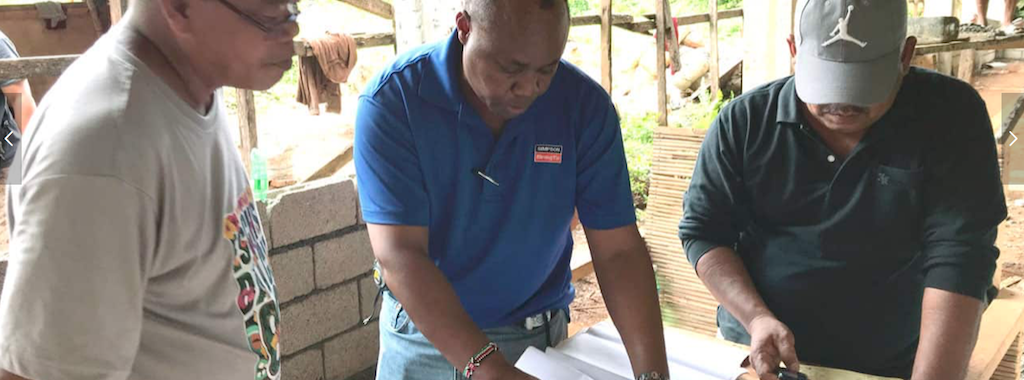
Simpson Strong-Tie Build Change Fellow Visits Colombia
This week’s post was written by James P. Mwangi, Ph.D., P.E., S.E. — our first annual Simpson Strong-Tie Engineering Excellence Fellow with Build Change. As part of his fellowship, he’s submitting reports about his work supporting the Build Change initiative. This is the third in a series of four.
Continue Reading
Happy Independence Day 2018
Thank you for stopping by! We’re taking a brief break today so Simpson Strong-Tie team members can celebrate the Fourth of July with family and friends.
Continue Reading

Best Practices: The Art of the RFI
Nothing will ruin your day faster than getting a call from a builder reporting an issue with trusses you’ve designed. You hear their frustration as they are faced with a potential delay and additional work to implement a fix. We all desire to eliminate those calls from our daily business, and one way to do so is to work only on jobs with a perfect set of drawings. You know, the drawings with dimensions that are 100% correct, have no errors in the listed wall heights, the heel heights are clearly spelled out with the location of the HVAC equipment and lines identified, and every load path is well thought out.
The truth, though, is that there’s really no such thing as a perfect set of drawings, because there will always be some area needing further clarification to ensure the trusses you design won’t have issues. Although this reality is typically viewed as a source of frustration, it can be an opportunity to provide extra value to your customers by helping them resolve issues before they become a problem in the field. To do this requires a trained eye to identify issues and the use of an RFI (Request for Information) to work through these issues with the appropriate parties involved. In this article, we will walk through some best practices of using an RFI to help eliminate those calls.
Continue Reading

Study Shows Effectiveness of Hazard Mitigation Measures
When properly enforced, building codes are very effective for ensuring that buildings meet certain minimal requirements for strength and safety. Recent studies by the National Institute of Building Sciences (NIBS) have shown, however, that additional risk-mitigation measures can be beneficial even in proportion to the added costs. In the following post, Randy Shackelford, P.E., of Simpson Strong-Tie, shares some of the NIBS 2017 study benefit-cost results for two mitigation types — building beyond minimum code requirements, and federal mitigation grants.
Continue Reading

New NCSEA Survey Promoting Stronger Connections Among Structural Engineers
Structural engineers mostly take rightful pride in their skills and the importance of what they do. In other respects, however, job satisfaction can be uneven within the field, without much opportunity for engineers to address questions of professional engagement, mentorship, compensation or equity. The Structural Engineering, Engagement, and Equity (SE3) survey, sponsored by NCSEA, is an attempt to remedy this shortcoming. In the following post, Annie Kao, a structural engineer with Simpson Strong-Tie, gives an overview of this development.
Continue Reading

Construction Referees: Evaluation Processes for Alternative Building Products
In a perfect world, every single product used in building would undergo a rigorous, independent evaluation process to determine its compliance with established safety codes and standards prior to its appearance in the market. “Alternative” building products and design methods are very much a reality of the construction industry, however. All the same, when Designers and building officials must decide whether to specify or approve such products, there are still review organizations and processes that help them evaluate whether or not the products meet the required safety standards to protect the public. In this post, Jeff Ellis, Simpson Strong-Tie Technical Manager, Engineering Operations, delineates the process involved when an evaluation service entity, such as ICC-ES, issues an evaluation report (ER) for an alternative building product or method.
Continue Reading
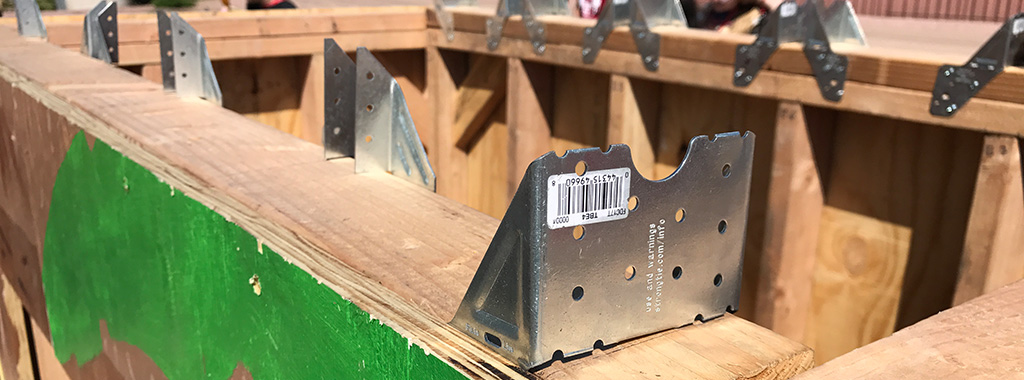
Timber Strong Gives Engineering Students Real-World Experience
Structural engineering, like every other research field, advances by educating new generations of students in the principles and practice of the discipline. Knowing that, Simpson Strong-Tie has teamed with the Binational Softwood Lumber Council and the American Wood Council to co-sponsor and coordinate the Timber Strong Design-Build Competition, an annual design contest held at the ASCE Pacific Southwest Conference in Tempe, Arizona.
Engineering students will test their civil and environmental engineering skills this spring when they compete in the annual Timber Strong Design-Build Competition. Eighteen universities will send teams of students to Tempe, Arizona, to participate at the American Society of Civil Engineers (ASCE) Pacific Southwest Conference (PSWC).
The objective of the competition, taking place April 12–14, is to give students valuable real-world engineering design experience:
Continue Reading

What Building Professionals Need to Know About Construction Loading
Understanding construction loading is important as it relates to the acceptable practices in terms of staging and storing construction materials prior to installation. What does “construction loading” mean? This term describes materials and people that are present during the course of construction. It refers to any construction material that is stacked and/or staged on the trusses for any length of time prior to the installation of said materials. This also includes those individuals that are working or walking on the trusses during the course of construction.
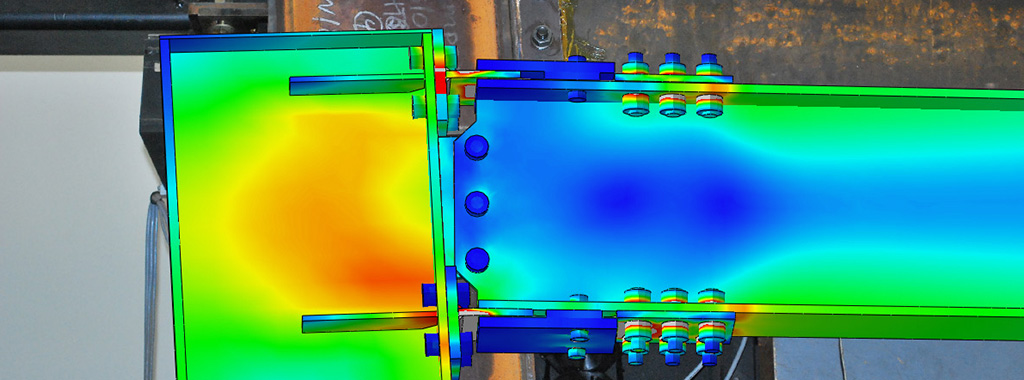
How Computer Simulation Can Power Innovation
Computer-simulated product testing is being used increasingly in modern engineering and manufacturing because it provides a low-risk, time- and cost-efficient means of modeling system performance using a wide array of variables before a physical prototype has been created. The following Blog post outlines some of the uses and advantages of integrating this technology into the product development process.Continue Reading