



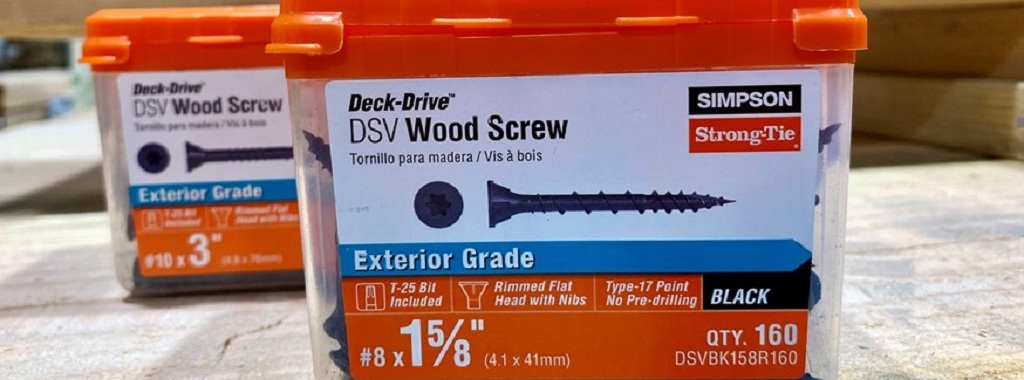
Don’t let the name fool you; the Deck-Drive™ DSV Wood screw is more than just a deck screw. It’s not only great for preservative-treated decking, but can also be used for general framing and construction as well. The variety of sizes makes this a multipurpose screw that can accomplish many of your wood-to-wood fastening needs.
Tag: ICC
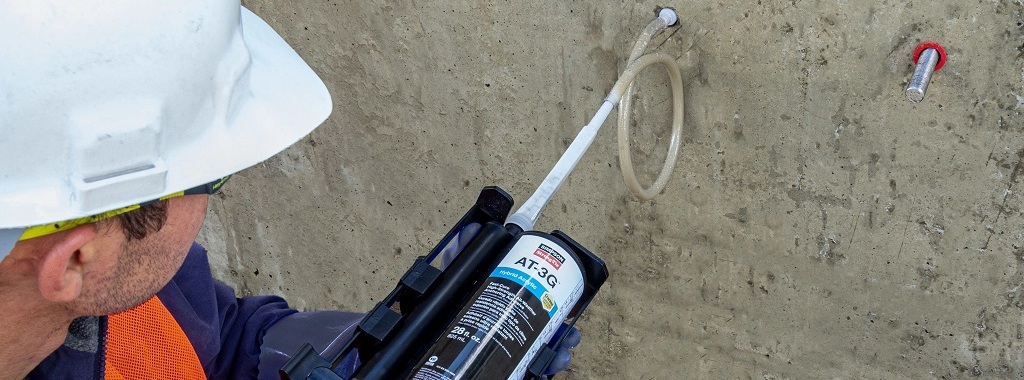
Introducing AT-3G™: Your high-strength cold-weather, fast-cure anchoring adhesive
In general, post–installed adhesive anchor design per ACI 318 Chapter 17 is relatively straightforward. In practice, however, post–installed anchorage can often become challenging because of fast–track project schedules, supply issues, ever-changing weather conditions, design conflicts/changes, or unexpected field conditions.
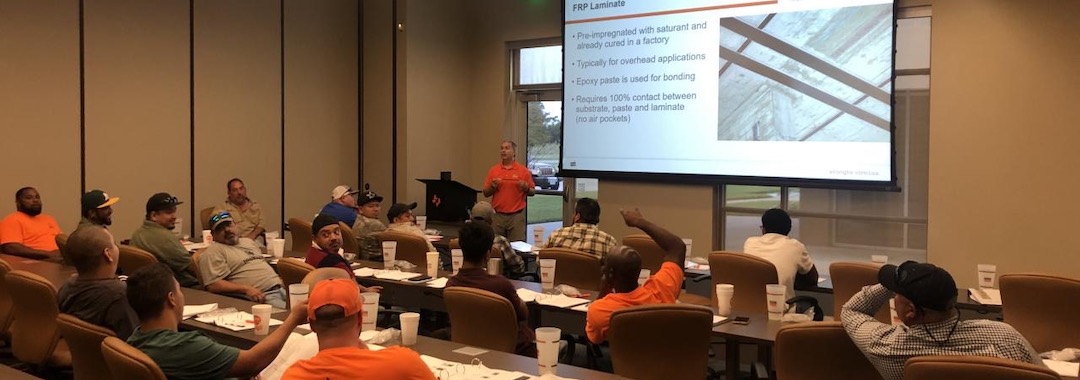
Trainer to the Pros — How Simpson Strong-Tie Educates the Industry
Did you know that Simpson Strong-Tie offers free education and training to the construction industry?
Indeed, we do. For several decades, Simpson Strong-Tie has made a commitment to supporting the development of our industry, and each year we educate tens of thousands of industry pros — engineers, architects, dealers, contractors and building inspectors — about the latest building code updates and best construction practices.

Good Ideas Come from Many Places — “Necessity Is the Mother of Invention”
You never know where the next great product idea or innovation is going to come from — some of our best new ideas originate with the customers who use our current products. At Simpson Strong-Tie, we welcome any inspiration that can help us serve our customers’ needs even better. With so much competition, however, and because so much research and testing are entailed in developing each new product, the criteria that an idea must meet to gain eventual acceptance are necessarily quite rigorous. In this post, Steve Rotzin, Manager of Intellectual Property and Legal Services at Simpson Strong-Tie, outlines some of these criteria for your consideration.
All of us, at one time or another, dream up a product idea of some sort. My wife was once sanding the tongue-and-groove boards of our living room ceiling and she thought of a very cool idea of gloves that had Velcro on them and users could interchange sandpaper of various grit on any finger of the glove. If you’ve ever sanded anything, this actually made a lot of sense especially for complex shapes and tough to reach spots. I researched it and found out that someone had already thought of it and “patented it.”
Continue Reading

Are You Ready to Design Post-Installed Anchors in Cracked Masonry?
Design criteria for cracked-concrete masonry units are finally available for adhesive anchors.
It has been over 15 years since cracked concrete changed the way anchorage to concrete was qualified and designed. The ICC International Building Code (IBC) 2003 referenced American Concrete Institute (ACI) 318-02 Appendix D as a design provision for both cast-in-place and post-installed anchors into concrete. Appendix D was the first introduction of cracked concrete to designers. These design provisions required mechanical anchors to be qualified per ACI 355.2, which mandated testing of anchors in cracks. The Masonry Society (TMS) 405 has not addressed cracks in concrete masonry units since the code’s introduction to concrete in 2003. The Concrete and Masonry Anchor Manufacturers Association (CAMA) has taken on the task of introducing cracked masonry unit testing, qualification and design by updating Acceptance Criteria AC58. These criteria were developed to address the testing and qualification of adhesive anchors in grouted, hollow, and partially grouted concrete masonry units, as well as in brick masonry units.

Code Corner: New Year, New Code Developments
Happy new year! A new year brings new developments on the Building Code front. A summary of relevant code activities follows.
Continue Reading
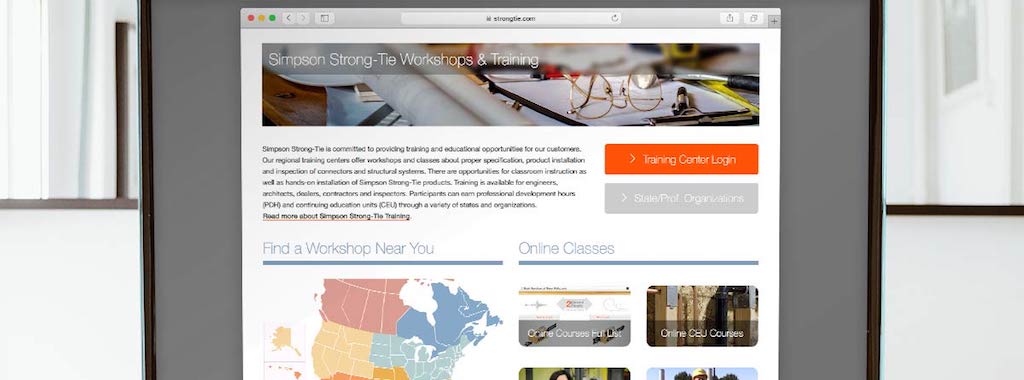
Keeping Up with Continuing Education (for Free!): Three New Online Courses to Check Out
In this post, Brittney Price, manager of content development for Product & Customer Training, discusses the training offered by Simpson Strong-Tie for customers’ professional development and continuing education credits. The training is offered in online courses and recorded webinars as well as live workshops around the country. The most recent offerings cover the topics of delegated design; code requirements for conventionally framed roofs; and deck inspections.
Continue Reading
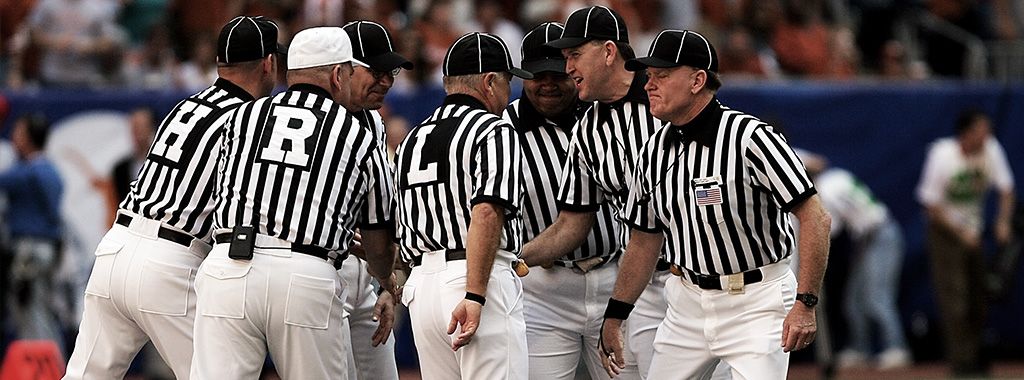
Construction Referees: Evaluation Processes for Alternative Building Products
In a perfect world, every single product used in building would undergo a rigorous, independent evaluation process to determine its compliance with established safety codes and standards prior to its appearance in the market. “Alternative” building products and design methods are very much a reality of the construction industry, however. All the same, when Designers and building officials must decide whether to specify or approve such products, there are still review organizations and processes that help them evaluate whether or not the products meet the required safety standards to protect the public. In this post, Jeff Ellis, Simpson Strong-Tie Technical Manager, Engineering Operations, delineates the process involved when an evaluation service entity, such as ICC-ES, issues an evaluation report (ER) for an alternative building product or method.
Continue Reading
Building Code Update: 2018 IBC to Reference ASCE 7-16
In early December, ICC posted the preliminary results of the Group B Online Governmental Consensus Vote, which included structural changes to the IBC, IEBC and IRC. ICC reports that there were more than 162,000 votes cast by eligible Voting Members during the three-week online voting period.
One subject of interest to building Designers, builders and some building-material suppliers was the disposition of a group of code changes that adopted ASCE 7-16 as the reference standard on loads for the IBC and IRC, and changed other parts of the IBC and IRC to reflect that.
The most controversial part of adopting the new ASCE 7-16 standard was its increase in roof component and cladding loads. The higher pressure coefficients in some cases raised the concern that the cost of roofing, roofing materials and roof repairs would be increased. Other items that raised some opposition were the new chapter on tsunami loads and the increase in deck and balcony live loads from 40 psf to 60 psf.
Despite these concerns, ICC members voted to approve the code change that adopted ASCE 7-16 as the reference for loads in the 2018 IBC, IRC and IEBC.
Along with that specific change, several other related changes were approved to correlate the IBC with adoption of ASCE 7-16. These included changes to Section 1604, General Design Requirements; adding in a new Section 1615 on Tsunami Design Requirements; modifications to Section 1613 so that seismic design requirements match ASCE 7-16; and deletion of Section 1609.6, Alternate All-Heights Method for wind design. On this last item, the argument was that since ASCE 7 now includes a simplified wind load design method, a competing method is not needed in the IBC.
Interestingly, a change to remove Strength Design and Allowable Stress Design load combinations from the IBC, which was approved by the IBC Structural Committee, was overturned and denied by the ICC Member voters. So those will remain in the IBC.
For the IRC, even though ASCE 7-16 will be shown as the referenced load standard, most changes to the actual code language relating to the new standard were denied. Items that were specifically denied included adoption of ASCE 7-16 wind speed maps, adoption of ASCE 7-16 roof pressure loading, and adoption of the new higher deck and balcony live loads. So the result is that the IBC and IRC will again be inconsistent with each other regarding wind design. On the other hand, the new USGS/NEHRP Seismic Design Maps were approved.
Future Code Corner articles will address other changes approved for the 2018 IBC and IRC.

Hurricane Strong
This week will see the ultimate combination of events intended to raise public awareness of the necessity for disaster-resistant construction: It is week three of ICC’s Building Safety Month; National Hurricane Preparedness Week, as proclaimed by the U.S. president; the NOAA Hurricane Awareness Tour of the Gulf Coast; and the kickoff of the new HurricaneStrong program.
The ICC says that “Building Safety Month is a public awareness campaign to help individuals, families and businesses understand what it takes to create safe and sustainable structures. The campaign reinforces the need for adoption of modern, model building codes, a strong and efficient system of code enforcement and a well-trained, professional workforce to maintain the system.” Building Safety Month has a different focus each week for four weeks. Week One is “Building Solutions for All Ages.” Week Two is “The Science Behind the Codes.” Week Three is “Learn from the Past, Build for Tomorrow.” Finally, Week Four is “Building Codes, A Smart Investment.” Simpson Strong-Tie is proud to be a major sponsor of Week Three of Building Safety Month.
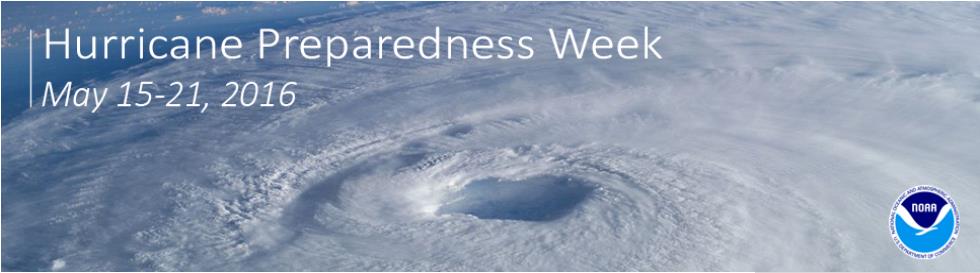
National Hurricane Preparedness Week is recognized each year to raise awareness of the threat posed to Americans by hurricanes. A Presidential Proclamation urged Americans to visit www.Ready.gov and www.Hurricanes.gov/prepare to learn ways to prepare for dangerous hurricanes before they strike. Each day of the week has a different theme. The themes are:
⦁ Determine your risk; develop an evacuation plan
⦁ Secure an insurance check-up; assemble disaster supplies
⦁ Strengthen your home
⦁ Identify your trusted sources of information for a hurricane event
⦁ Complete your written hurricane plan.
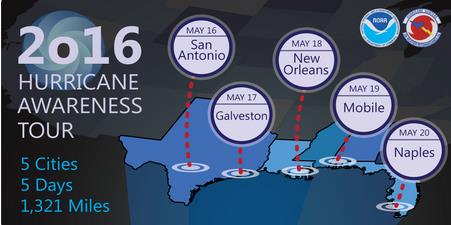
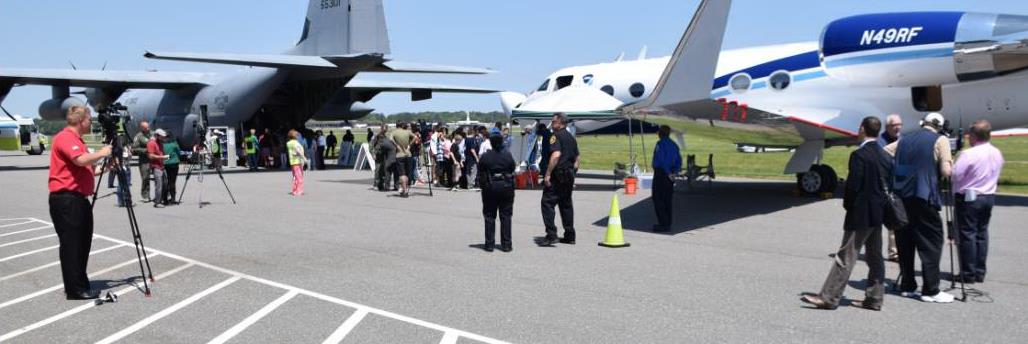
This week also marks the NOAA Hurricane Awareness Tour, where NOAA hurricane experts will fly with two of their hurricane research aircraft to five Gulf Coast Cities. Members of the public are invited to come tour the planes and meet the Hurricane Center staff along with representatives of partner agencies. The goal of the tour is to raise awareness about the importance of preparing for the upcoming hurricane season. The aircraft on the tour are an Air Force WC-130J and a NOAA G-IV. These “hurricane hunters” are flown in and around hurricanes to gather data that aids in forecasting the future of the storm. As with Hurricane Preparedness Week, each day of the tour features a different theme. Simpson Strong-Tie is pleased to be a sponsor for Thursday, when the theme is Strengthen Your Home. Representatives from Simpson Strong-Tie will be attending the event on Thursday to help educate homeowners on ways to make their homes safer.
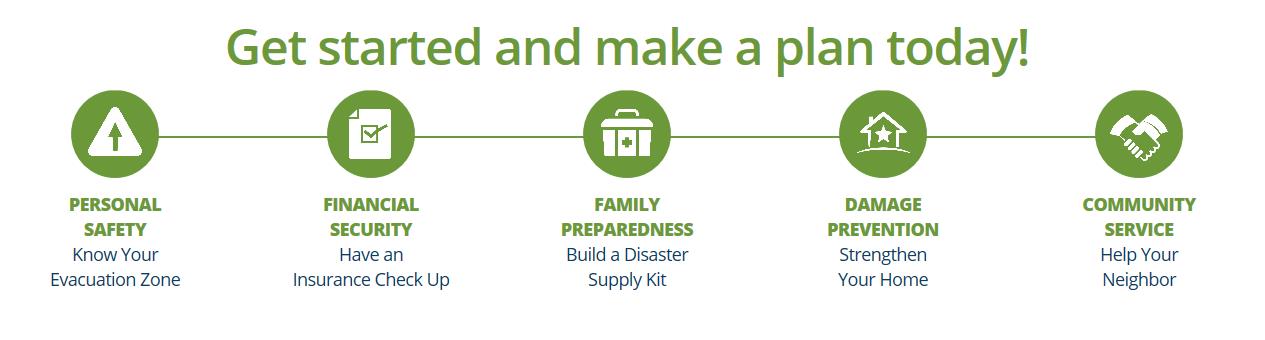
Finally, this week is the official kickoff of a new hurricane resilience initiative, HurricaneStrong. Organized by FLASH, the Federal Alliance for Safe Homes and in partnership with FEMA, NOAA and other partners, the program aims to increase safety and reduce economic losses through collaboration with the most recognized public and private organizations in the disaster safety movement. HurricaneStrong is intended to become an annual effort, with activities starting prior to hurricane season and continuing through the end of the hurricane season on November 30. To learn more, visit www.hurricanestrong.org.
Experts consider these public education efforts to be more important every year, as it becomes longer since landfall of a major hurricane and as more and more people move to coastal areas. The public complacency bred from a lull in major storms has even been given a name: Hurricane Amnesia.
All these efforts may be coming at a good time, assuming one of the hurricane season forecasts is correct. A forecast from North Carolina State predicts an above-average Atlantic Basin hurricane season. On the other hand, forecasters at the Department of Atmospheric Science at Colorado State University are predicting an approximately average year.
Are you prepared for the natural hazards to which your geographic area is vulnerable? If not, do you know where to get the information you need?