


Understanding and Meeting the ACI 318 – 19 Chapter 17 Ductility Requirements – A Design Example

If you’re one of the many engineers still sorting through the anchorage design provisions in ACI 318-19 Chapter 17, this blog will help clarify what’s required to achieve a ductile-performing anchorage. Current building codes (such as the 2024 IBC) reference ACI 318-19 Chapter 17 as the governing provisions for designing a wide variety of anchor types, including expansion, undercut, adhesive, screw, and cast-in-place anchors in concrete. This blog post will focus on Section 17.10.5.3(a) for anchors located in regions of moderate to high seismic risk. We’ll walk through what these requirements mean using a simple design example.

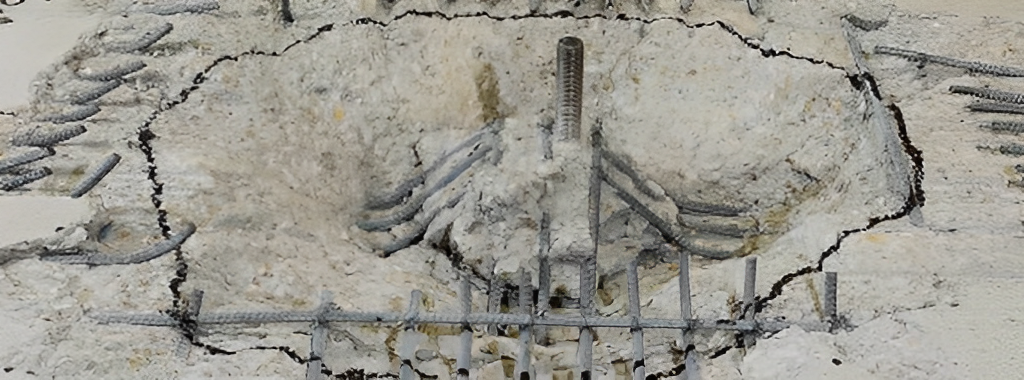
Ductility is a benefit in seismic design. A ductile anchor system is one that exhibits a meaningful degree of deformation before failure occurs. However, ductility is distinct from an equally important dimension called strength. Add strength, and a ductile steel element like the one shown in Figure 1 can now exhibit toughness. During a serious earthquake, a structural system with appreciable toughness (i.e., one that possesses both strength and ductility in sufficient degree) can be expected to absorb a tremendous amount of energy as the material plastically deforms and increases the likelihood that an outright failure won’t occur. Any visible deformations could help determine if repair is necessary.
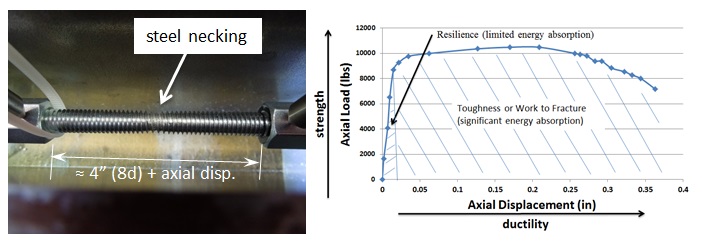
Figure 1 – ½" mild steel threaded rod tensilely loaded to failure (starting stretch length = 8d)
Figure 1 – ½” mild steel threaded rod tensilely loaded to failure (starting stretch length = 8d)

Let’s start off with a simple example that will cover the essential requirements for achieving ductility and applies to any type of structural anchor used in concrete. We’ll arbitrarily choose a post-installed adhesive anchor. This type of anchor is very common in concrete construction and is used for making structural and nonstructural connections that include anchorage of sill plates and holdowns for shear walls, equipment, racks, architectural/mechanical/electrical components and, very frequently, rebar dowels for making section enlargements. We’ll assume the anchor is limited to resisting earthquake loading in tension only and is in seismic design category C – F. Section 17.10.5.2 requires that if the strength-level earthquake force exceeds 20% of the total factored load, that the anchor be designed in accordance with section 17.10.5.3 and 17.10.5.4. We will focus on achieving the ductility option, (a), of 17.10.5.3.

To understand anchor ductility we need to first identify the possible failure modes of an anchor. Figure 2 shows the three types of failure modes we can expect for an adhesive anchor located away from a free edge. These three failure modes generically apply to virtually any type of anchor (expansion, screw, cast-in-place or undercut). Breakout (Nb) and pullout (Na) are not considered ductile failure modes. Breakout failure (Nb) can occur very suddenly and behaves mostly linear elastic and consequently absorbs a relatively small amount of energy. After pullout failure (Na) has been initiated, the load/displacement behavior of the anchor can be unpredictable, and furthermore, no reliable mechanism exists for plastic deformation to take place. So we’re left with steel (Nsa). To achieve ductility, not only does the steel need to be made of a ductile material but the steel must govern out of the three failure modes. Additionally, the anchor system must be designed so that steel failure governs by a comfortable margin. Breakout and pullout can never control while the steel yields and plastically deforms. This is what is meant by meeting the ductility requirements of Chapter 17.
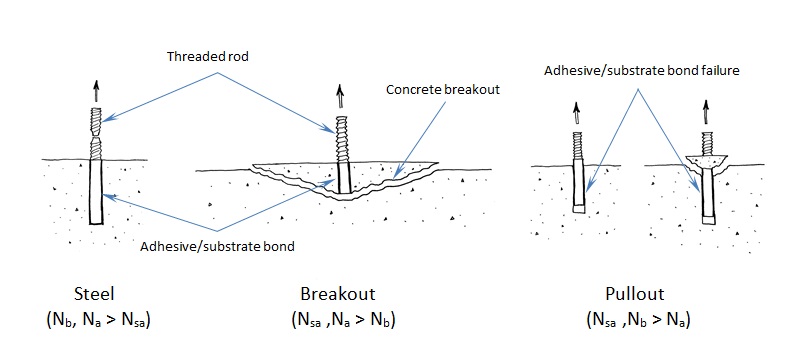
Figure 2 –Three possible failure modes for an adhesive anchor loaded in tension
Figure 2 – Three possible failure modes for an adhesive anchor loaded in tension

Getting back to our design example, we have a single post-installed 5/8” diameter ASTM F1554 Gr. 36 threaded rod that’s embedded 12” deep, in a dry hole, in a concrete element that has a compressive strength of 2,500 psi. The concrete is 18” thick and we assume that the edge distance is large enough to be irrelevant. For this size anchor, the published characteristic bond strength is 743 psi. Anchor software calculations will produce the following information:

The governing design strength is compared to a demand or load combination that’s defined elsewhere in the code.

Here’s the question: Before proceeding with the remainder of this blog, judging by the design strength values shown above, should we consider this anchorage ductile? Your intuition might tell you that it’s not ductile. Why? Pullout clearly governs (i.e., steel does not). So it might come as a surprise to learn that this adhesive anchor actually is ductile!

To understand why, we need to look at the nominal strength (not the design strength) of the different anchor failure modes. But first let’s examine the equations used to determine the design strength values above:
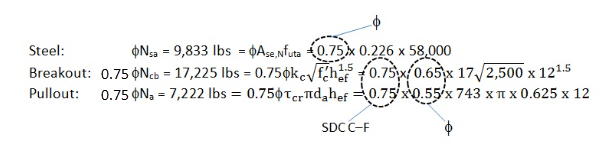
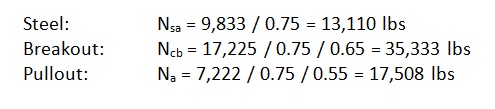
The above values incorporate the notation φ (“phi”) and a mandatory 0.75 reduction factor for nonductile failure modes (Ncb ,Na) for applications located in high seismic areas (seismic design category C–F). The φ factor is defined in section 17.5.3. However, manufacturers will list factors specific to their adhesive based on anchor testing. The mandatory 0.75 reduction comes from section 17.10.5.4 and is meant to account for any reduction associated with concrete damage during earthquake loading. The important thing to remember is that the nominal strength provides a better representation of the relative capacity of the different failure modes. Remove these reduction factors and we get the following:
ductility6

Now steel governs since it has the lowest strength. But we’re not done yet. Section 17.10.5.3.(a).(i) of Chapter 17 requires that the expected steel strength be used in design when checking for ductility. This is done by increasing the specified steel strength by 20%. This is to account for the fact that F1554 Gr. 36 threaded rod, for example, will probably have an ultimate tensile strength greater than the specified 58,000 psi. (Interestingly, the ultimate strength of the ½” threaded rod tested in Figure 1 is roughly 74 ksi, which is about 27% greater than 58,000 psi.) With this in mind, the next step would be to additionally meet section 17.10.5.3.(a).(ii) such that the following is met:

By increasing the steel strength by 20%, the nominal strength of the nonductile failure modes (Ncb ,Na) must be at least that much greater to help ensure that a ductile anchor system can be achieved. The values to compare finally become:
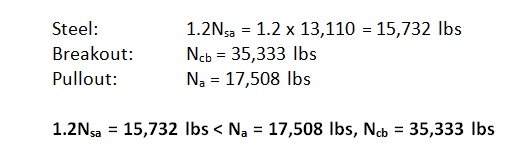
 

ductility8Now steel governs, but one more thing is required. As shown in Figure 3, Section 17.10.5.3.(a).(iii) of Chapter 17 also requires that the rod be made of ductile steel and have a stretch length of at least eight times the insert diameter (8d). Chapter 17 defines a ductile steel element as exhibiting an elongation of at least 14% and a reduction in area of at least 30%. ASTM F1554 meets this requirement for all three grades of steel (Grade 36, 55 and 105) with the exception of Grade 55 for anchor nominal sizes greater than 2”. Research has shown that a sufficient stretch length helps ensure that an anchor can experience significant yielding and plastic deformation during tensile loading. The threaded rod shown in Figure 1 was tested using a stretch length of 4” (8d). Lastly, section 17.10.5.3.(a).(iv) requires that the anchor be engineered to protect against buckling.
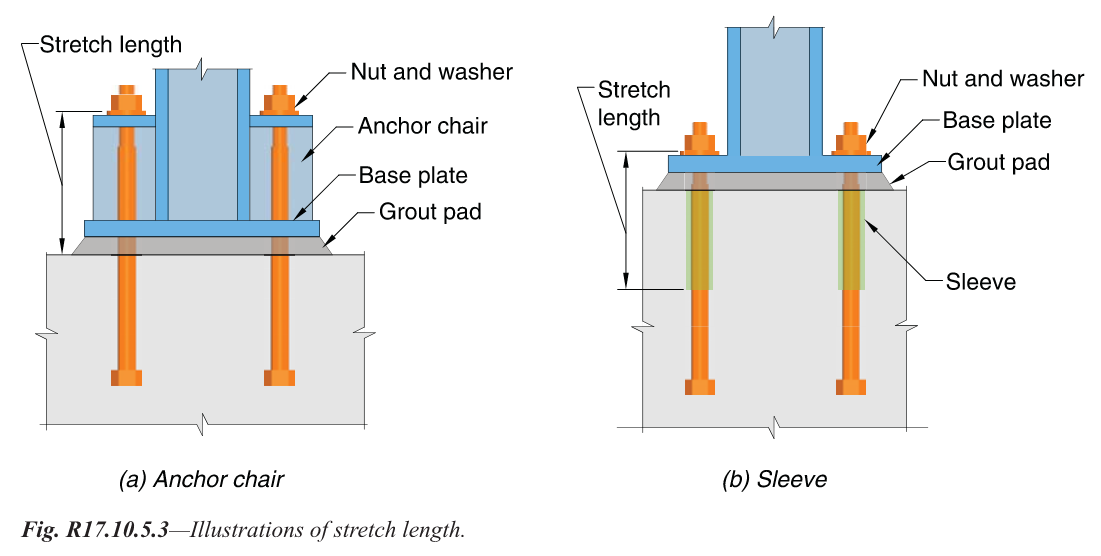
Figure 3 – Stretch length

Chapter 17 of ACI 318-19 doesn’t require that an anchor system behave ductilely. Three additional options exist for Designers in section 17.10.5.3. Option (b) allows for the design of an alternate failure mechanism that behaves ductilely. Designing a base plate (or support) that plastically hinges to exhibit ductile performance is one example. Option (c) involves a case where there’s a limit to how much load can be delivered to the anchor. Although option (c) under 17.10.5.3 falls under the tensile loading section of Chapter 17, the best example would apply to anchorage used to secure a wood sill plate or cold-formed steel track. We know from experiments that the wood crushes or the steel yields and locally buckles at a force less than the capacity of the concrete anchorage. Clearly energy is absorbed in the process. The most commonly used option is (d), which amplifies the earthquake load by Ωo. Ωo can be found in ASCE 7 – 16 for both structural and nonstructural components. The value of Ωo is typically taken to be equal to 2.5 (2.0 for storage racks) and is intended to make the anchor system behave linear elastically for the expected design-level earthquake demand.

These same options exist for shear loading cases. However, achieving system ductility through anchor steel is no longer an option for shear loading according to ACI 318 – 19, because the material probably won’t deform appreciably enough to be considered ductile.

While factors such as edge-distance and embedment-depth restrictions make achieving ductility difficult for post-installed anchors, it should come as some consolation that in many cases the Designer can achieve ductile performance for cast-in-place anchors loaded in tension through creative detailing of reinforcing steel (section 17.5.2.1) to eliminate breakout as a possible failure mode. This has been explored in some detail in two previous Simpson Strong-Tie blogs titled “Anchor Reinforcement for Concrete Podium Slabs” and “Steel Strong Wall Footings Just Got a Little Slimmer.”


Anchor Reinforcement for Concrete Podium Slabs

How often do you get the opportunity to high five a co-worker in the office? Maybe it’s when you just worked through a complex calculation, or finally figured out that tough detail. Whatever it might be, there are times when we should raise a hand and celebrate the hard work that we do. So when we recently relaunched the Simpson Strong-Tie Strong-Rod™ Systems website, which includes a link to our new Shallow Podium Anchorage Solutions, there were a few high fives going around the office. With that in mind, we want to share the latest developments and continue our anchorage-to-concrete blog discussions that began in May 2012, continued with a March 2014 post referencing the Structure magazine article on anchor testing, and more recently one discussing our release of anchor reinforcement solutions for Steel Strong-Wall® shearwall to grade beams.

Continue Reading

Holdown Anchorage Solutions

A common question we get from specifiers is “What anchor do I use with each holdown?” Prior to the adoption of ACI 318 Chapter 17, this was somewhat simple to do. We had a table that listed which anchor worked with each holdown.

During the good old days, anchor bolts had one capacity and concrete wasn’t cracked. ACI 318 Chapter 17 gives us reduced capacities in many situations, different design loads for seismic or wind and reductions for cracked concrete. These changes have combined to make anchor bolt design more challenging than it was under the 1997 Uniform Building Code.

This blog has had several posts related to holdowns. So, What’s Behind a Structural Connector’s Allowable Load? (Holdown Edition) explained how holdowns are tested and load rated in accordance with ICC-ES Acceptance Criteria. Damon Ho did a post, Use of Holdowns During Shearwall Assembly, which discussed the performance differences of shearwalls with and without holdowns, and Shane Vilasineekul did a Wood Shearwall Design Example. So I won’t get in to how to pick a holdown.

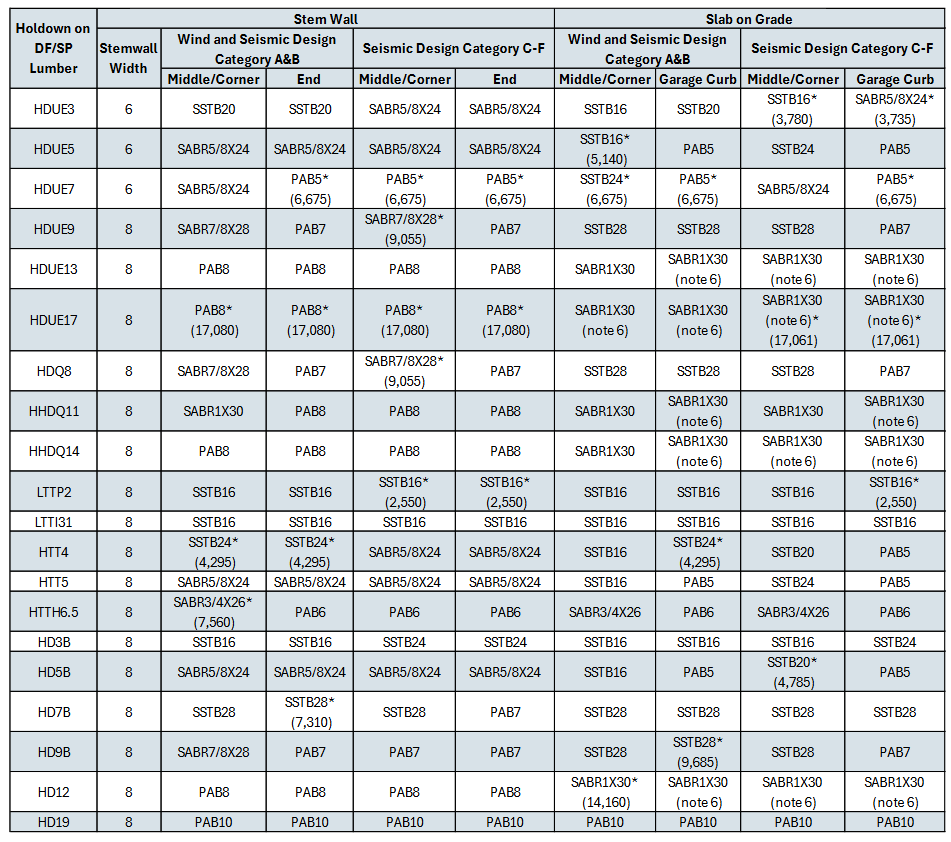
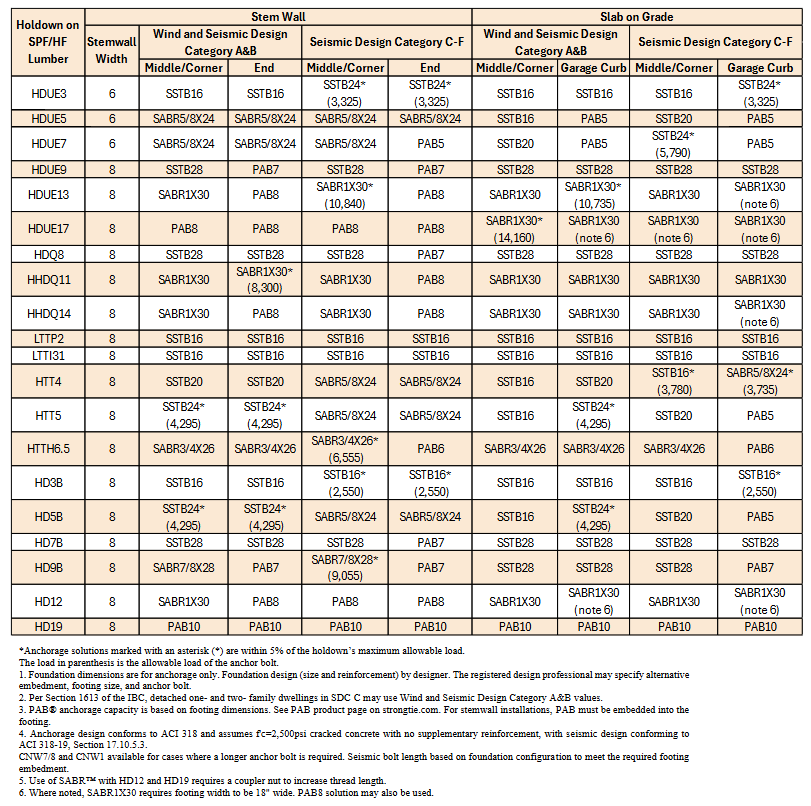
Once you have determined your uplift requirements and selected a post size and holdown, it is necessary to provide an anchor to the foundation. To help Designers select an anchor that works for a given holdown, we have created different tables that provide anchorage solutions for Simpson Strong-Tie holdowns.

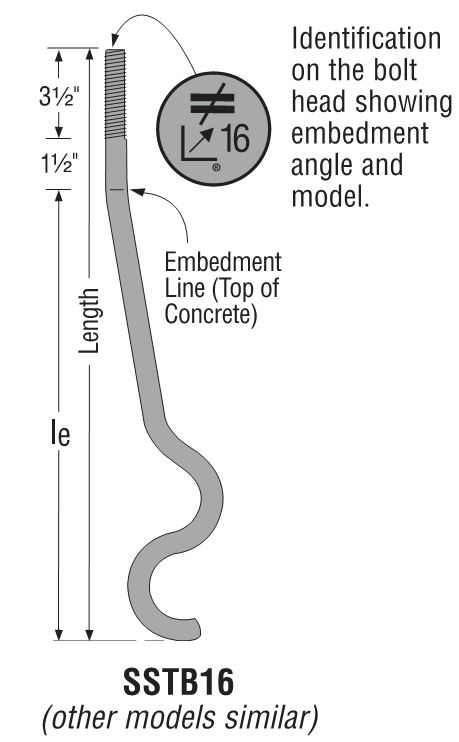
SSTB Anchor Bolt
SSTB Anchor Bolt
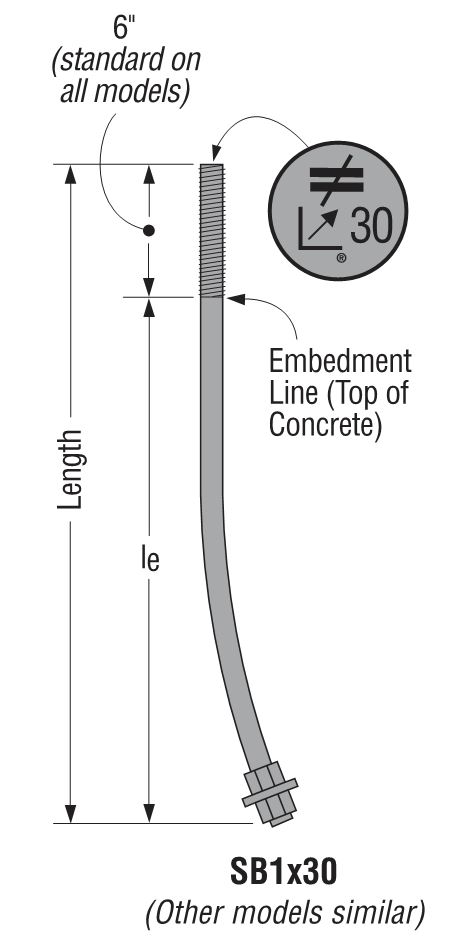
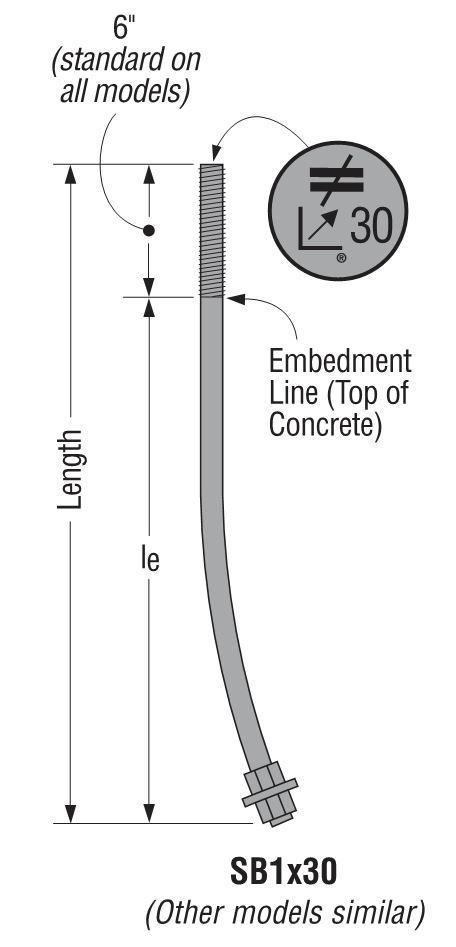
SB Anchor Bolt
SB Anchor Bolt
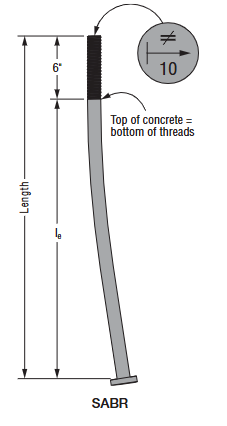
SARB Anchor Bolt
SARB Anchor Bolt

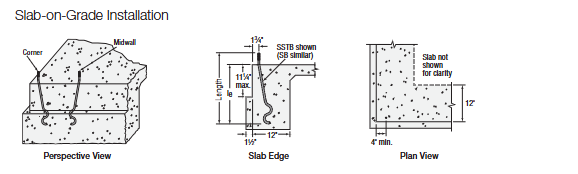
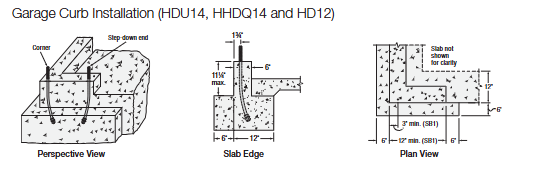
Our current catalog has addressed slab-on-grade, stemwall and grafe curb installation (DF/SP and SPF/HF) to give the most economical anchor design for each post material. The preferred anchor solutions are SSTB, SB or SABR anchors, as these proprietary anchor bolts are tested and will require the least amount of concrete. When SSTB, SB or SABR anchors do not have adequate capacity, we have tabulated solutions for the PAB anchors, which are pre-assembled anchors that are calculated in accordance with ACI 318 Chapter 17.

PAB Anchor Bolts
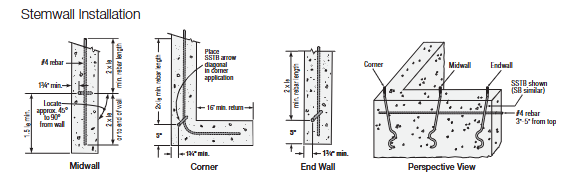
Stemwall Installation
Slab-on-Grade Installation
Garage Curb Installation

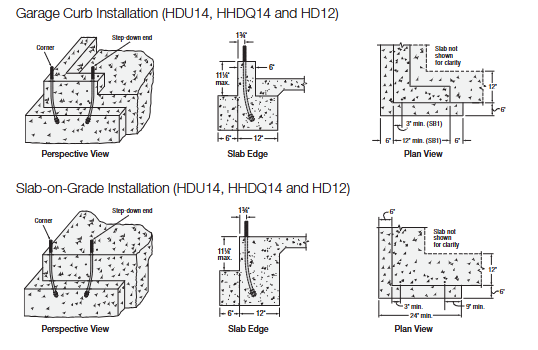
The solutions are designed to match the capacity of the holdowns, which allows the contractor to select an anchor bolt if the engineer doesn’t specify one. They are primarily used by engineers who don’t want to design an anchor or select one from our catalog tables. We received some feedback from customers who were frustrated that some of our heavier holdowns required such a large footing for the PAB anchors, whereas a slightly smaller holdown worked with an SSTB, SB or SABR anchor in a standard 12″ footing with a 1½” pop out.

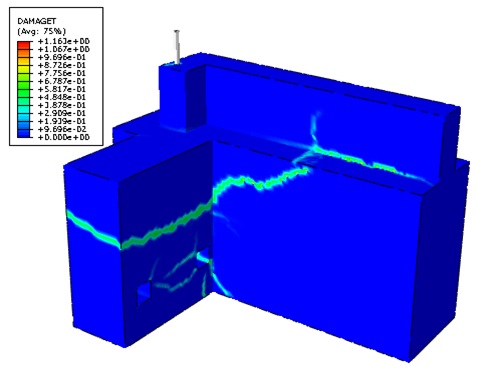
6-in Popout FEA Model
6-in Popout Physical Testing

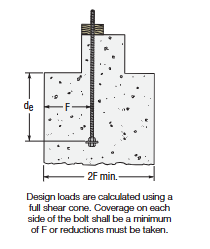
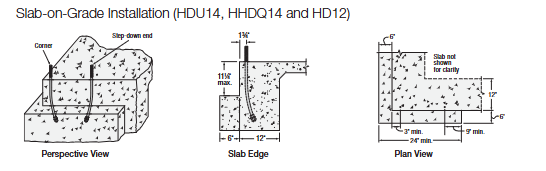
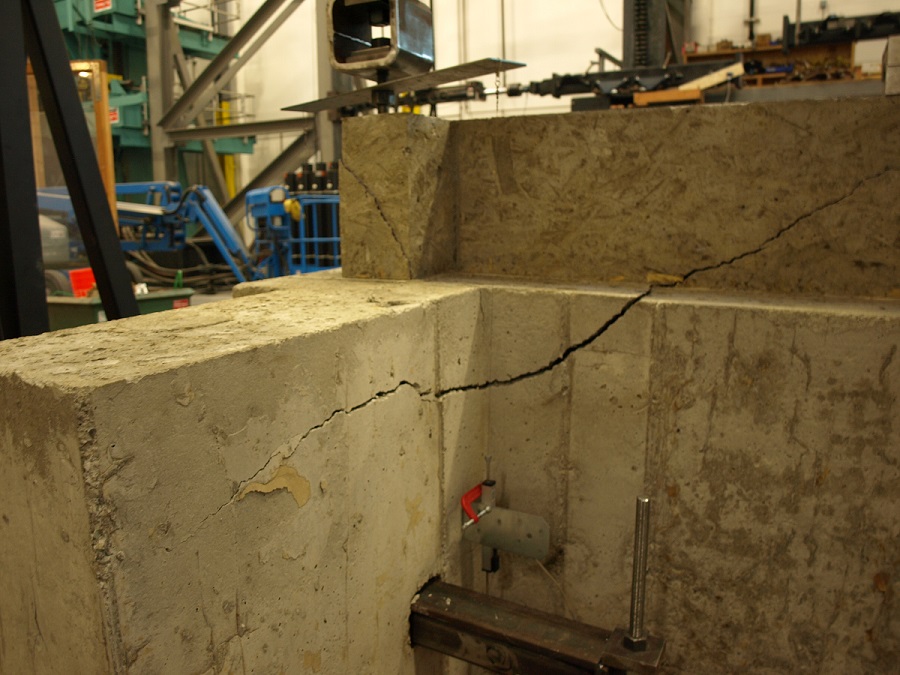
To achieve smaller footings using our SB1x30 and SABR1x30 anchor bolts, we reviewed our original testing and created finite element (FEA) models to determine what modifications to the slab-on-grade foundation details would meet our target loads. Of course, we ran physical tests to confirm the FEA models. With a 6″ pop out, we were able to achieve design loads for HD12, HDUE13, HHDQ14.

HDU14, HHDQ14 and HD12

The revised footing solutions for the heavier holdowns require less excavation and less concrete than the previous Chapter 17 calculated solutions, reducing costs on the installation.

What has been your experience with holdown anchorage? Tell us in the comments below.

An Introduction to the Helical Wall Tie

What do you do when brickwork is in bad condition? Depending on what state the brickwork is in, a tear-down may be called for. However, often brickwork can be restored and strengthened using helical ties such as Simpson Strong-Tie® Heli-Tie™ wall ties and stitching ties. This post introduces these two types of helical ties, which might be just what you need for your next brick restoration project.

Continue Reading

Anchor Testing for Light-Frame Construction

I started off doing a four-part series on how connectors, fasteners, concrete anchors and cold-formed steel products are tested and load rated. I realized that holdown testing and evaluation is quite a bit different than wood connector testing, so there was an additional post on holdowns. We have done several posts on concrete anchor testing (here and here), but I realize I never did a proper post about how we test and load rate concrete products per ICC-ES AC398 and AC399.

AC398 – Cast-in-place Cold-formed Steel Connectors in Concrete for Light-frame Construction and AC399 – Cast-in-place Proprietary Bolts in concrete for Light-frame Construction are two acceptance criteria related to cast-in-place concrete products.

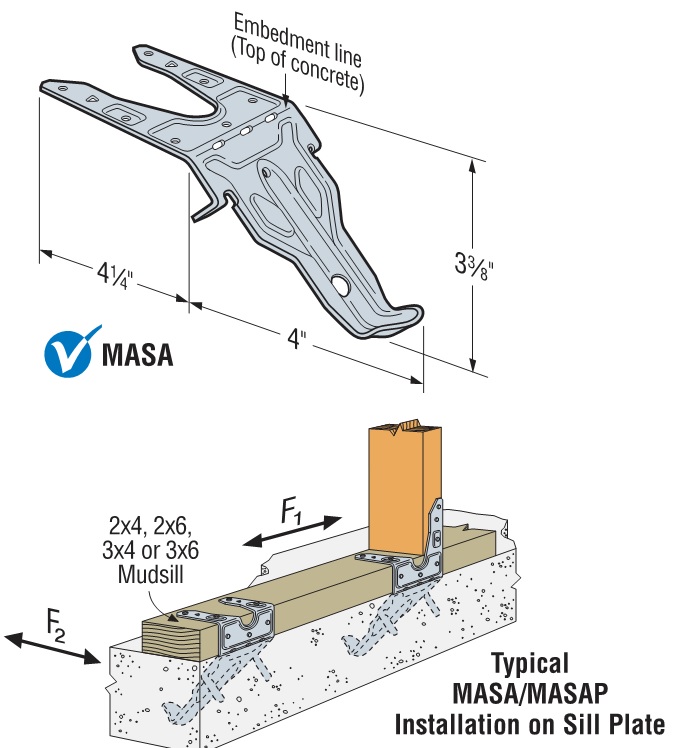
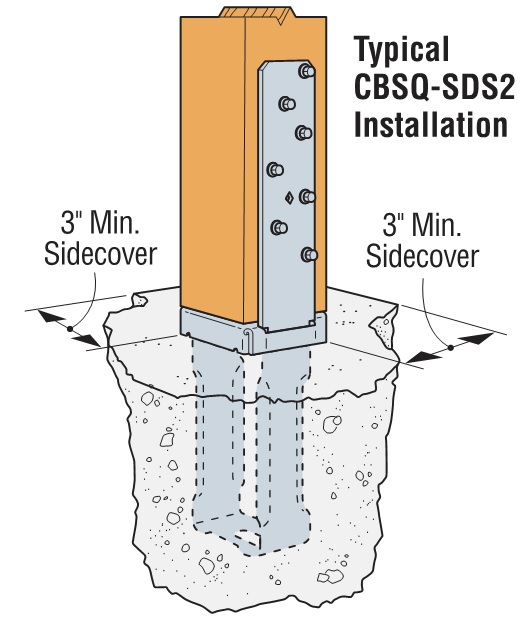
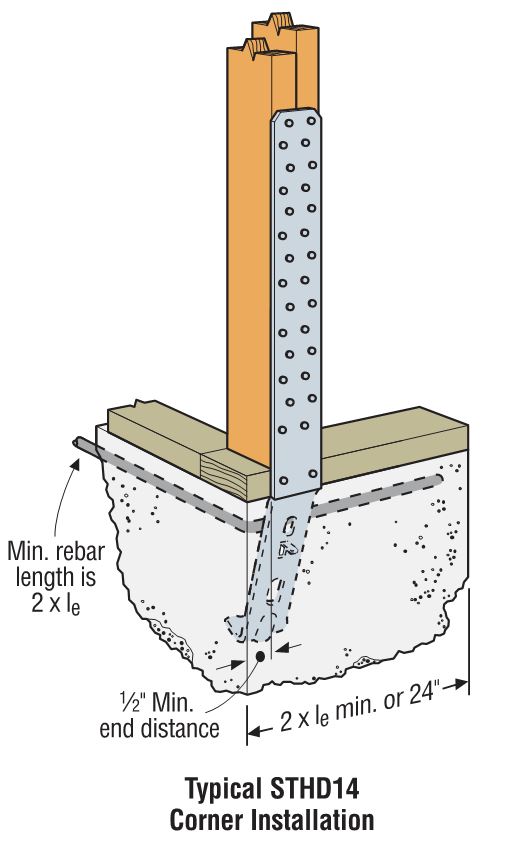
Cold-formed steel connectors embedded in concrete are not considered in ACI 318 Appendix D, so it was necessary to create criteria for evaluating those types of connectors. Some examples of products covered by AC398 are the MASA mudsill anchor, CBSQ post base, and the STHD holdown.

MASA mudsill anchor
MASA mudsill anchor
CBSQ post base
CBSQ post base
STHD holdown
STHD holdown

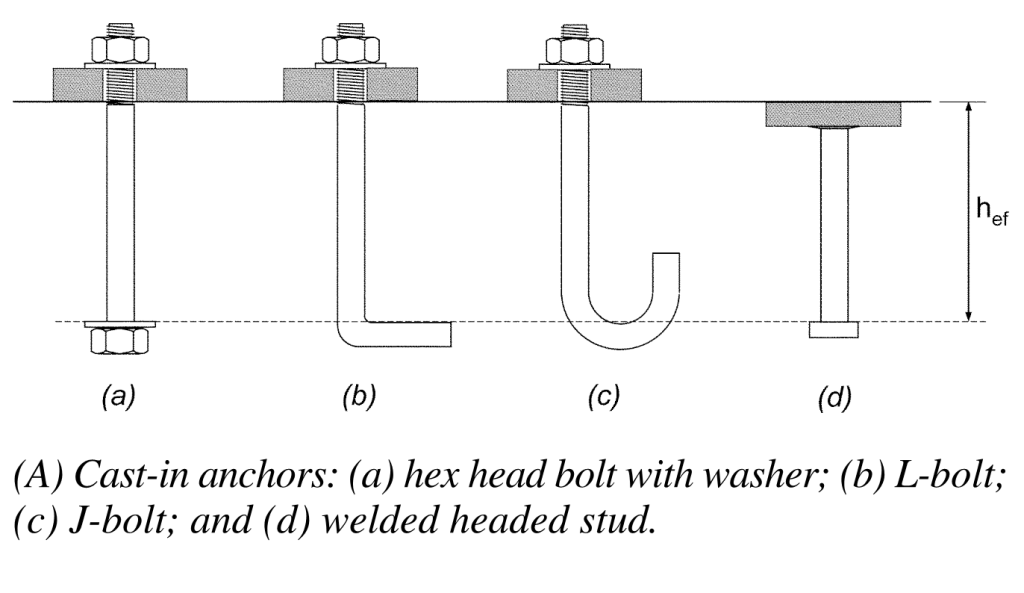
ACI 318 Appendix D addresses the design of cast-in-place anchors. However, the design methodology is limited to several standard bolt types.

ACI 318 Appendix D Cast-in anchors

There are a number of anchor bolt products that have proprietary features that fall outside the scope of ACI 318, so AC399 fills in that gap by establishing test procedures to evaluate cast-in-place specialty anchors. Simpson Strong-Tie SB and SSTB anchor bolts are two families of anchors we have tested in accordance with AC399.

SB Anchor Bolt
SB Anchor Bolt
SSTB Anchor Bolt
SSTB Anchor Bolt

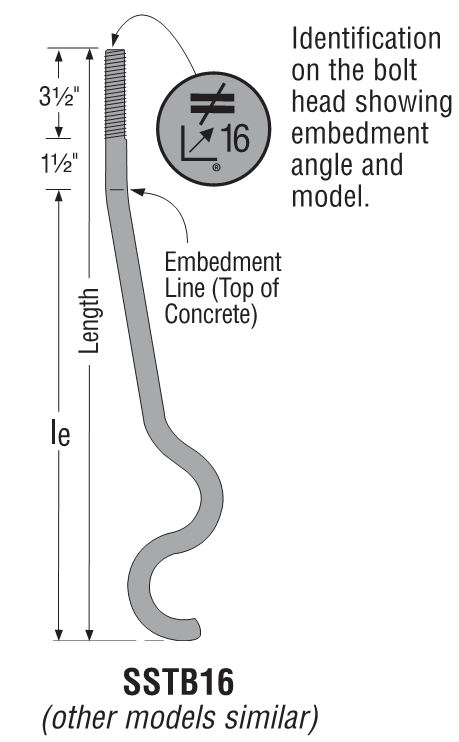
SB and SSTB anchors have a sweep geometry which increases the concrete cover at the anchored end of the bolt, allowing them to achieve higher loads with a 1¾” edge distance. The SSTB is anchored with a double bend, whereas the SB utilizes a plate washer and double nut.

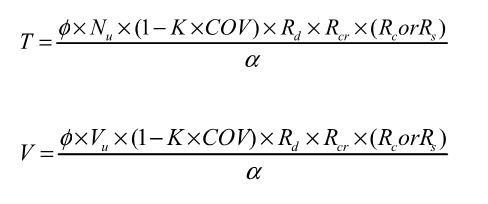
AC398 (concrete connectors) and AC399 (proprietary bolts) are similar in their test and evaluation methodology. AC398 addressing both tension and shear loads, whereas AC399 is limited to tension loads. Testing requires a minimum of 5 test specimens. These are the allowable load equations for AC398 and AC399:

AC398 - Allowable Load Equation
AC398 – Allowable Load Equation
AC399 - Allowable Load Equation
AC399 – Allowable Load Equation

For comparison, here is the standard AC13 allowable load equation for joist hangers:

Allowable Load = Lowest Ultimate / 3

Without getting into Greek letter overload, what are these terms doing?

Nu (or Vu) is the average maximum tested load. Calculating averages is something I actually remember from statistics class. Everything else I have to look up when we do these calculations.

(1 – K x COV) uses K as a statistical one-sided tolerance factor used to establish the 5 percent fractile value with 90% confidence. This term is to ensure that 95% of the actual tested strengths will exceed the 5% fractile value with 90% confidence. COV is the coefficient of variation, which is a measure of how variable your test results are. For the same average ultimate load, a higher COV will result in a lower allowable load.

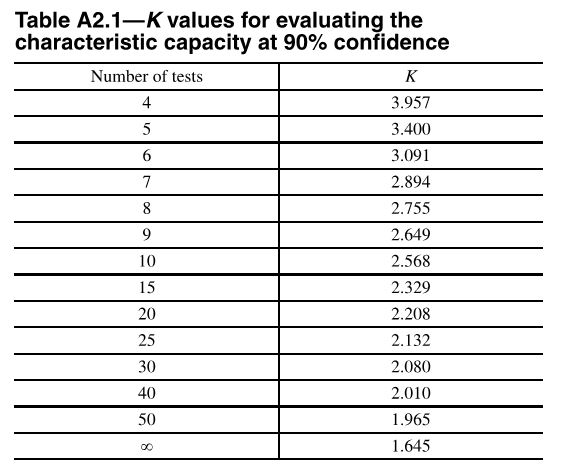
The K value is 3.4 for the minimum required 5 tests, and it reduces as you run more tests. As K decreases, the allowable load increases. In practice, we usually run 7 to 10 tests for each installation we are evaluating.

Table A2.1 – K values for evaluating the characteristic capacity at 90% confidence

Rd is seismic reduction factor, 1.0 for seismic design category A or B, and 0.75 for all others. This is similar to what you would do in an Appendix D anchor calculation, where anchor capacities in higher seismic regions are reduced by 0.75.

Rs and Rc are reduction factors to account for the tested steel or concrete strength being higher than specified. There are some differences in how the two acceptance criteria apply these factors, which aren’t critical to this discussion. Φ is a strength reduction factor, which varies by failure mode and construction details. Brittle steel failure, ductile steel failure, concrete failure and the presence of supplemental reinforcement.

The α factor is used to convert LRFD values to ASD values. So α = 1.0 for LRFD and α = 1.4 for seismic and 1.6 for wind. Both criteria also allow you to calculate alpha based on a weighted average of your controlling load combinations. This has never made a lot of sense to me in practice. If you are going to work through the LRFD equations to get a different alpha value, you might as well do LRFD design.

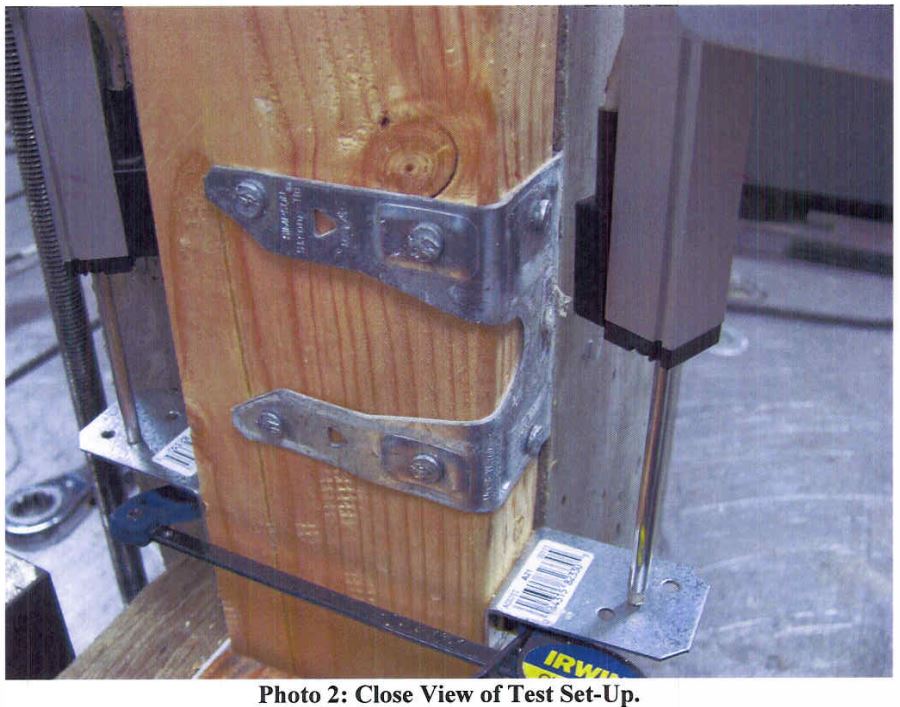
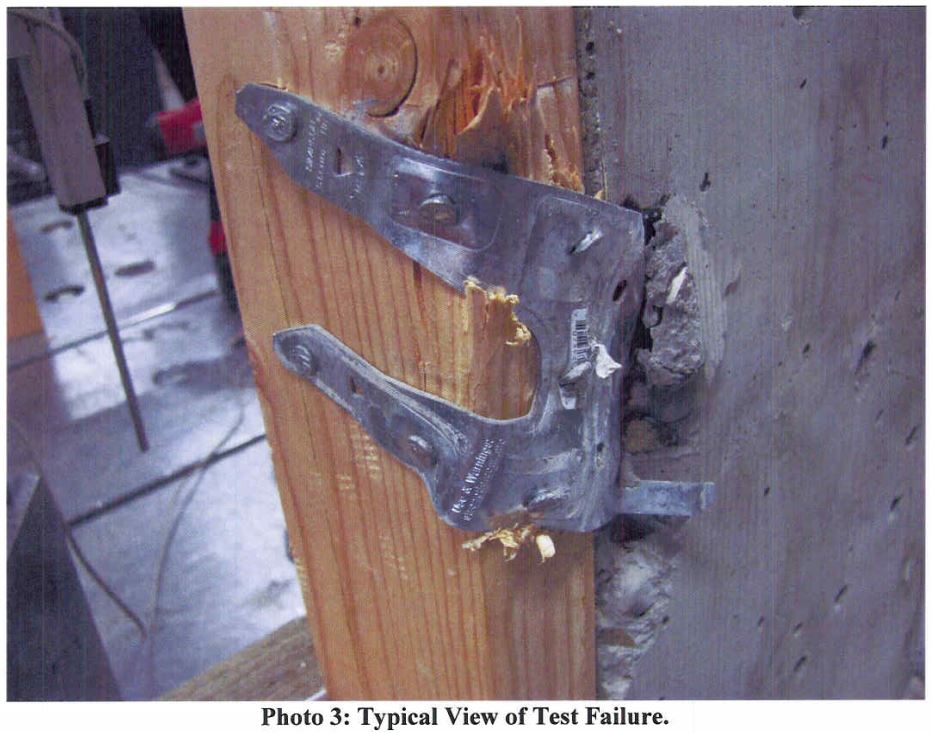
MASA - Test Setup MASA - Test Failure

Rse is a reduction factor for cyclic loading, which is applied to proprietary anchor bolts covered under AC399, such as the SSTB or SB anchors. A comparison of static load and cyclic load is required for qualification in Seismic Design Category C through F. Unlike the cracked reduction factor, manufacturers cannot take a default reduction if they want recognition for high seismic.

Due to the differences in AC398 and AC399 products, the load tables are a little different. AC398 products end up with 4 different loads – wind cracked, wind uncracked, seismic cracked and seismic uncracked.

CBSQ Load Table
CBSQ Load Table

AC399 products are a little simpler, having just wind and seismic values to deal with.

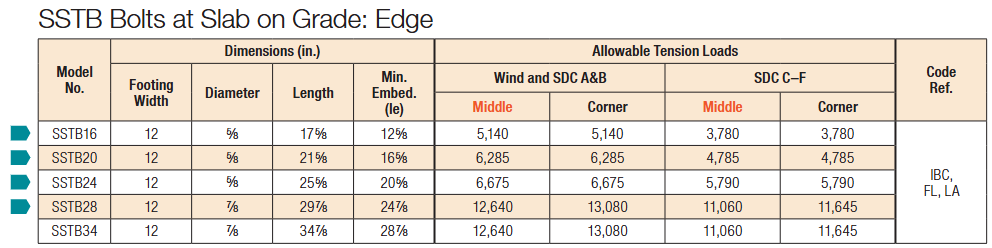
SSTB Load Table
SSTB Load Table

What are your thoughts? Let us know in the comments below.

Innovative Screws Are Replacing Bolts

In the past several years, there has been an increase in the use of screws in applications that have traditionally been reserved for bolts and lag screws. Greater innovation in the wood screw market has caused this shift. Proprietary wood screws now offer many more benefits than commodity bolts and lag screws. Today, this post will discuss some of those benefits.

Continue Reading

Changes Made to ACI 318 With Respect to Adhesives Anchors in Concrete: What Engineers Need to Know

For the first time, ACI 318 – 11 includes a design provision for adhesive anchors in concrete. Previously, adhesive anchors were designed according to provisions found in both ICC Evaluation Service (ICC-ES) AC308 and ACI 318 – 08. Now there is another standard, ACI 355.4, that must be used to qualify adhesive anchors in concrete. This standard, along with ACI 318, contains important changes that will affect anchor systems designed to the IBC.  Not all changes are discussed here. I will only focus on what you – the engineer – should be aware of.

ACI 355.4 requires that adhesive anchors in concrete be evaluated using a bond strength (measured in terms of psi and used with the surface area of the embedded portion of the anchor) that corresponds to a long-term temperature (LTT) of 110 degrees F to account for potential elevated temperature exposure conditions. This wasn’t necessarily the case previously where, for example, the engineer could elect to use a temperature category that listed bond strength values based on a LTT of 75 degrees F. The issue here is creep.

Creep, in the world of adhesive anchors, looks at how well the anchor can resist load without too much axial displacement over a period of not minutes, not hours, not even years but decades. As a general rule, it’s no surprise that creep worsens as the temperature rises for almost any material.  In our case, the bond strength is effectively reduced. Most adhesives, if not all, currently list bond strength values that correspond to a LTT of 110 degrees F. Make sure to select the temperature category that meets this minimum requirement. Some adhesives will experience a reduction in bond strength at an LTT of 110 degrees F, some won’t.

What about applications involving short-term-only loading? Is creep still relevant? Generally, you’ll find that adhesive anchors negatively impacted by the higher LTT requirement will gain back much of their load for seismic/wind-only load applications. So creep becomes irrelevant.

While adhesive anchors used solely for the purpose of resisting short-term loads will remain largely unaffected by this code change, significant changes have been made to the design and installation of adhesive anchors when used for sustained loading applications (e.g. dead load, live load, etc.).

First, the bond strength must be reduced by a factor of 0.55 as compared to 0.75 under the previous code (following ICC-ES AC308). Section 26.7.1 (l) of ACI 318 requires that adhesive anchors used for resisting sustained loads be installed by someone who has taken the Adhesive Anchor Installation Certification (AAIC) program. The installer must show proof that he/she is certified by passing both a written and performance examination. Installing adhesive overhead requires some skill. So it’s no surprise that the installer must satisfactorily demonstrate proficiency by blindly installing adhesive overhead into an inverted test tube that will later be cut in half and graded for the presence of voids.  Figure 1 shows no voids, so the installer passed.

ACI-CRSI Installer Workbook Publication
Figure 1 [from ACI-CRSI Installer Workbook Publication CP-80 (12)]
However, exceptions do exist. If you’re working on a hospital or school in California, the 2022 CBC (Table 1705A.3, footnote 3) ACI 318-19, Section 26.7.2 requires that all horizontal and overhead adhesives anchors – irrespective of load condition – be installed by a Certified Adhesive Anchor Installer (CAAI). This deviates from ACI 318 D.9.2.2.

Arguably, with AAIC, there’s an added cost to using adhesives for anchorage designed for sustained loading. However, for sustained loading applications best suited for adhesive anchors it should come as peace of mind to the engineer, owner, contractor and other parties involved with the construction project that a certified installer has been employed to ensure that the adhesive anchor has been installed in accordance with the manufacturer’s printed installation instructions.

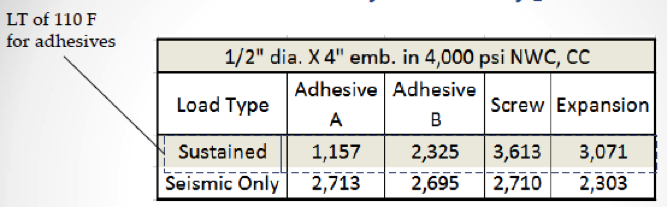
While the engineer should be aware of the above limitations placed on adhesive anchors, by no means should it hamper their design. There are several options available to the engineer. Table 1 compares the tensile design strength of three common types of anchors – two adhesives, two mechanical anchors (one screw and one expansion type) – determined using the new design provision ACI 318 -11. While the creep test results show a reduced capacity for adhesive A, it does show a significant increase in load for seismic-only applications because , as we discussed earlier, creep is no longer an issue. Some adhesives, like adhesive B, will do well under the creep test (at an elevated LTT of 110 degrees F), so any capacity increase for seismic-only applications will be small.

Tensile Design Strength between 3 types of anchors.
Table 1

What three important points can we glean from Table 1? First, all things being equal, mechanical anchors will typically achieve higher “code values” for sustained loading applications relative to adhesives. Second, mechanical anchors are easier to install overhead. Third, AAIC is not required for mechanical anchors. While these reasons support using mechanical anchors for overhead anchorage, doing so is nothing new. The bulk of overhead attachments have almost always been made with mechanical anchors mainly because it’s just easier to do it that way.

Perhaps up to 95% of adhesives are used to secure rebar to concrete – we’ll call them rebar dowels. Like any anchor, rebar dowels can be used to resist seismic and/or sustained loads. While the exact breakdown is hard to determine, arguably, the bulk of rebar dowels in the west coast are found in seismic retrofits and renovations used to thicken walls, tie-in new concrete shear walls, connect new drag struts, strengthen existing concrete elements, etc., all for the purpose of strengthening the lateral capacity of the existing structure to withstand greater earthquake and/or wind loads. These typically won’t require a CAAI, but it might if it’s a school or hospital project that requires overhead or horizontal anchors. Some rebar dowels are used for enlarging footings to withstand greater dead and live loads, so these would require a CAAI. Remember: the bond strength can be lower than expected for sustained loading applications, so you may want to use an adhesive that does well at a LTT of 110 degrees F if that’s what your design requires.

One new benefit of ACI 318 is that the engineer can now design adhesive anchors to go into lightweight concrete using the factors found in section D.3.6.

One significant change engineers should include in their specification is that the concrete must be aged at least 21 days before installing an adhesive. Previously, the industry standard was to wait seven days. For additional information regarding adhesives installed into younger normal-weight concrete, read the following Simpson Strong-Tie engineering letter: http://www.strongtie.com/ftp/letters/generic/L-A-ADHGRNCON14.pdf

What are you experiencing in the design of your anchors in your jurisdictions? Leave a comment down below because we would like to know.

Podium Anchorage – Structure Magazine

It is hard to believe it has been almost two years since I posted The Anchorage to Concrete Challenge – How Do You Meet It? That post gave a summary of the challenges engineers face when designing anchorage to concrete. Challenges include just doing the calculations (software helps), developing a high enough load, satisfying ductility requirements or designing for overstrength. Over the past several years, Simpson Strong-Tie has worked closely with the Structural Engineers Association of Northern California (SEAONC) to help create more workable concrete anchorage solutions for light-frame construction.

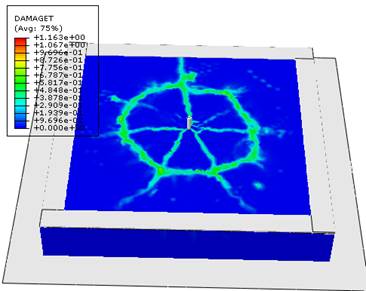
Anchor FEA
Anchor FEA
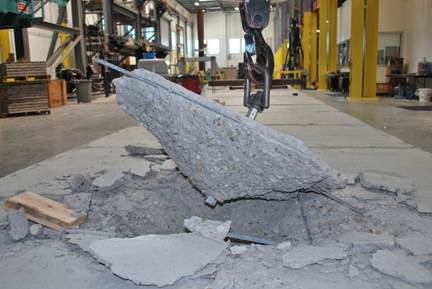
Anchor Breakout
Anchor Breakout
Anchor Close Up
Anchor Close Up

This month’s issue of Structure magazine has an article, Testing Tension-Only Steel Anchor Rods Embedded in Reinforced Concrete Slabs, which provides an update on the ongoing work of SEAONC and Simpson Strong-Tie. The goal of the testing program is to create a useful design methodology that will allow structural engineers to develop the full tensile capacity of high-strength anchor rods in relatively thin (10” to 14”) podium slabs.

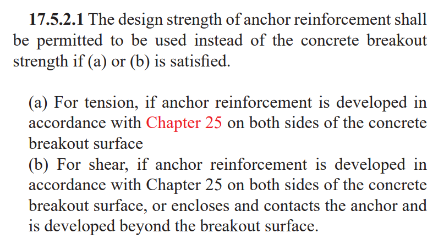
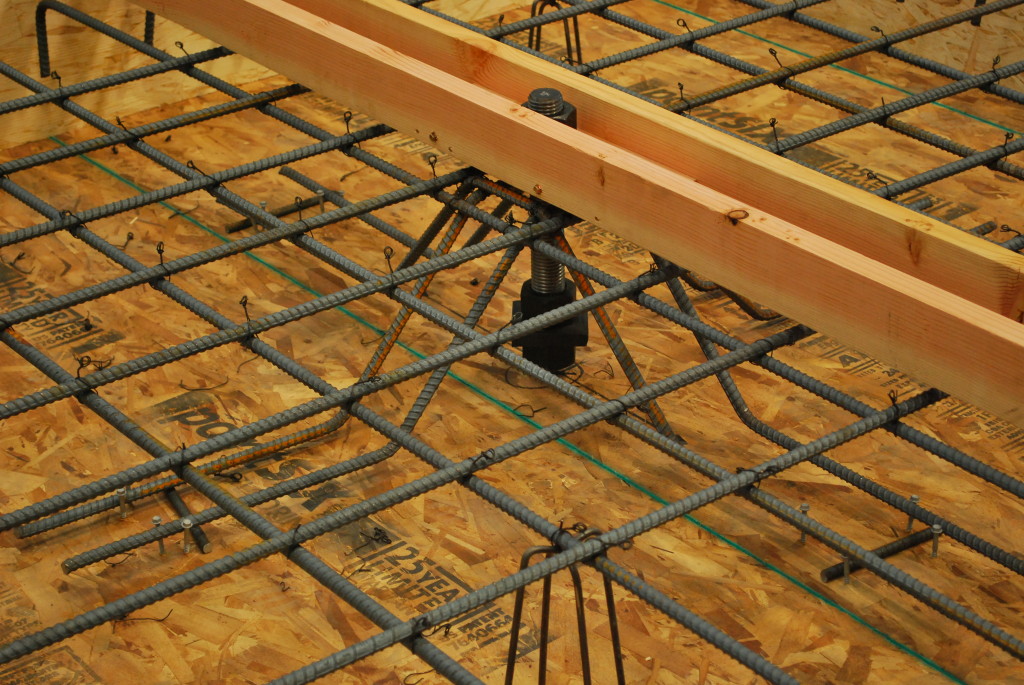
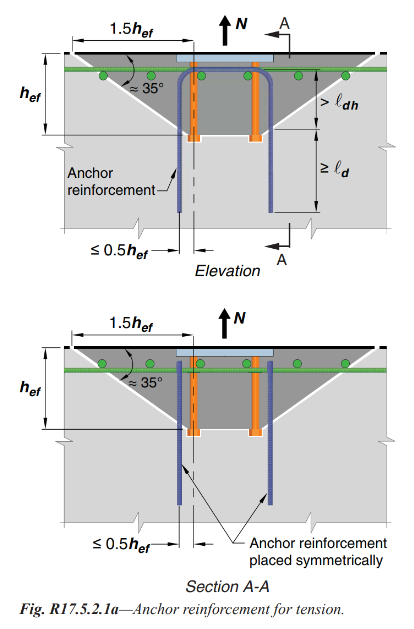
Anchor capacity is limited by steel strength, concrete strength, embedment depth, and edge distances. One way to achieve higher anchor strengths is to design anchor reinforcement per ACI 318-19 Chapter 17.

ACI318-19 Figure R17.5.2.1a
ACI318-19 17.5.2.1
ACI318-19 17.5.2.1

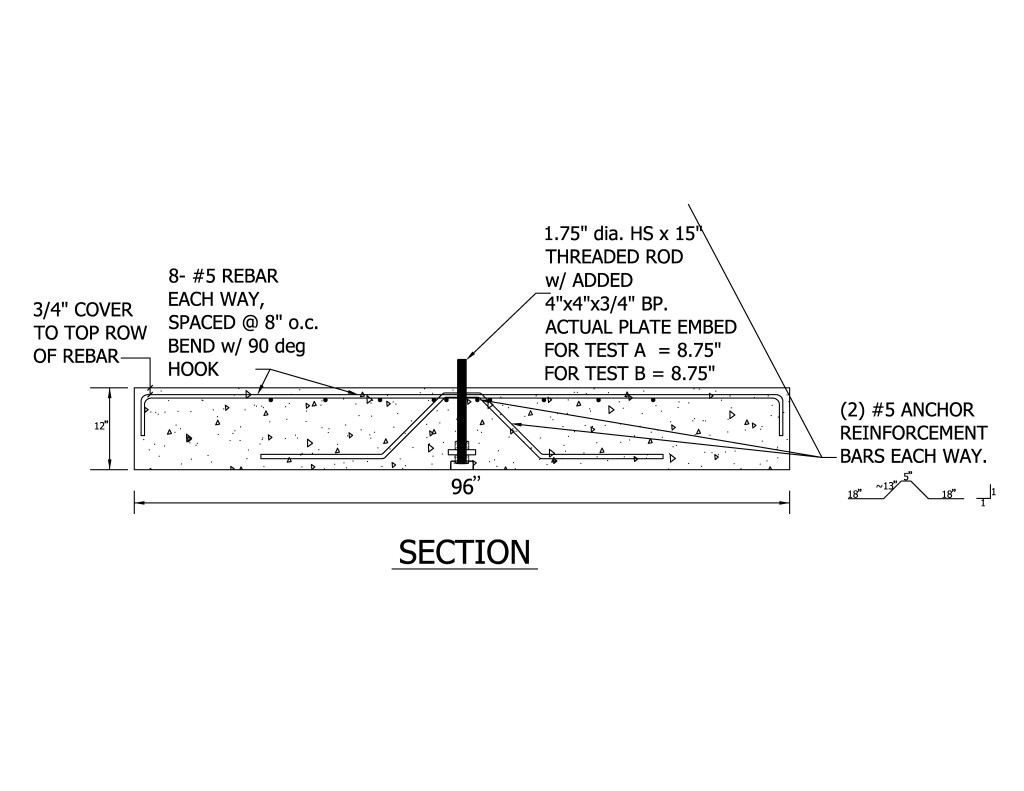
Section 17.5.2.1 requires anchor reinforcing to be developed on both sides of the breakout surface. Since this is not practical in thin podium slabs, alternate details using inclined reinforcing perpendicular to the breakout plane were developed and tested.

Anchor Reinforcing Drawing
Anchor Reinforcing Layout

This month’s Structure magazine article summarizes the test results for anchors located at the interior of the slab, away from edges. Additional testing is needed for anchor solutions at the edge of slab. The anchor reinforcement concepts are similar, yet additional detailing is required to prevent side-face blowout failure modes. This testing is in progress at the Tyrell Gilb Research Laboratory and will be completed later this year.

Did you read the Structure article? What are your thoughts?

Mixing It Up with Concrete Specification

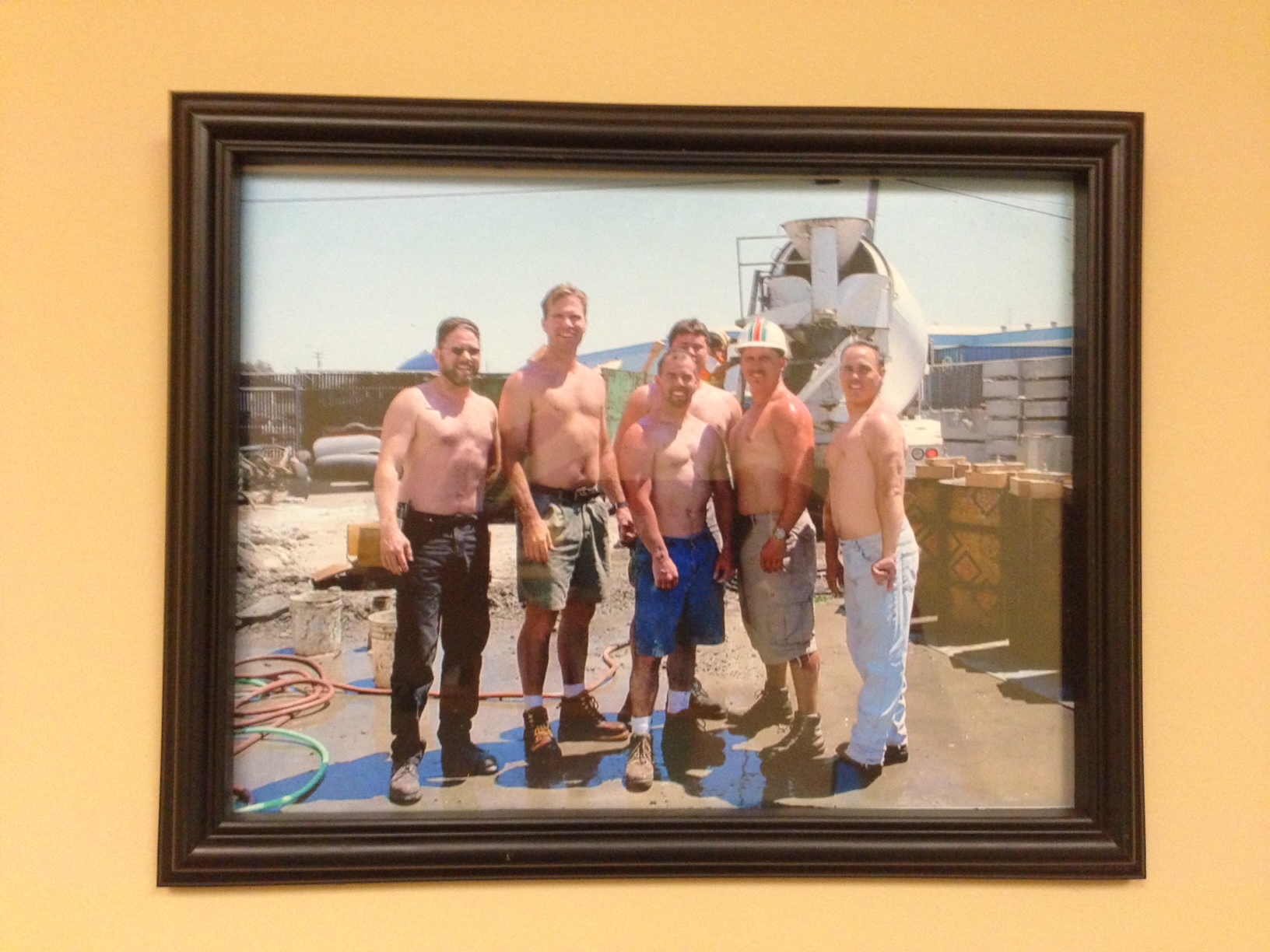
Around Christmas, the Engineering Department does a white elephant gift exchange. We have no idea who framed this picture and wrapped it up the first time.

Lab Guys Concrete Pour

Several of our lab technicians (plus a product manager) are posing for the camera, and obviously trying to flex while sucking their bellies in during a concrete pour to test our SSTB(R) anchors. The tradition has it that if you end up with this picture, you hang it on your wall and re-gift it at next year’s gift exchange – so there it is, on the wall in Engineer Dustin’s office. The trick has become wrapping it so that nobody recognizes that it is the picture frame.

Speaking of concrete, between our test labs in Addison, Ill., Stockton and Pleasanton, Calif., we test a lot of concrete. We will certainly be doing a lot more testing to continue to support our new Repair, Protection and Strengthening Systems for Concrete and Masonry product line. But I will ask the lab technicians to keep their shirts on.

Continue Reading

Welding High Strength Anchor Rods

One of the first projects I worked on when I got out of school was the Mexican Heritage Plaza in San Jose, California. It was a 200,000 square-foot facility with a theater, classrooms, art gallery and gardens. It was my first time using ETABs and SAFE for the building frame and mat slab designs, and there was no graphical interface. Text file input – those were the days! I learned how to detail bolted and welded steel connections, and then I got to enjoy every junior engineer’s first right of passage – reviewing shop drawings. It was eye-opening to learn that a detailer needed to translate all the dimensions, size call-outs and typical details into exact measurements down to the sixteenth of an inch for every single member, bolt, and hole.
I am sure I spent too much time reviewing them and checking that all the numbers added up. Photocopying E-size drawings was more expensive than a junior engineer’s time back then, so before I hand copied my mark-ups over to five sets of drawings, I reviewed them with my manager. She circled the high-strength anchor rods for the special moment frames and wrote “Too short – recheck.” I pointed out that I had checked the grout pad, base plate and washer thickness to make sure the anchor rods extensions were long enough to fully thread the nuts on (they just worked). She told me that high-strength anchor lengths were always too short. It didn’t make sense to me at the time, but I marked up the drawings and sent them off. More on this later.

Common specifications for steel anchor rods used for concrete anchorage are ASTM A307, A449 and F1554 Grades 36, 55, 105.  Some of these anchor rods have specifications appropriate for welding.  According to AISC Design Guide 21 on Welded Connections, “unless the supplier of the anchor rod can provide assurance that the compositional limits of ASTM A36 have been achieved, weldability of F1554 Grade 36 should be investigated”.  Both ASTM F1554 Grade 55 and ASTM A307 provide supplementary requirements for welding applications in Section S1.  The S1 requirements limit the percentage of carbon equivalent permitted for the metal alloy.  Where welding is required designers should specify F1554 Grade 36 with the compositional limits of ASTM A36 or F1554 Grade 55 ordered with supplementary requirement S1. ASTM A307 specified with supplementary requirement S1 can be ordered for anchor rods where welding is required.

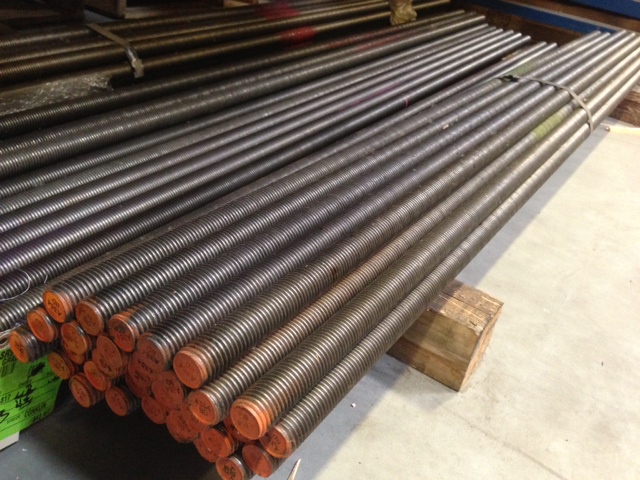
Threaded Rods
Threaded Rods

There is a blend of art and science in the manufacturing of high-strength steel anchor rods (ASTM F1554 Grade 105, A325 and A449).  Like a pastry chef, creating a perfectly baked soufflé with the correct ingredients and temperature, modern day blacksmiths achieve a balance of strength and ductility characteristics for anchor rods through controlled quenching and tempering treatments.  The rapid cooling of metal through quenching increases toughness and strength, but it often increases brittleness.  Tempering is a controlled reheating and cooling of the metal which increases ductility after the quenching process.  Precise control of time with the application of temperature during the tempering process is critical to achieve an anchor with well-balanced mechanical properties.

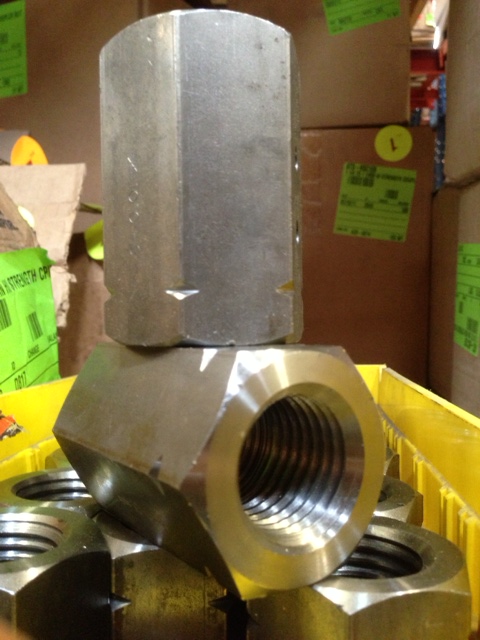
Coupler Nuts
Coupler Nuts

AISC does not recommend welding of high-strength anchor rods including, but not limited to, ASTM F1554 Grade 105, A325, and A449. The heat input from welding can alter the physical properties and other elements from the weld metal are introduced altering the metal alloy for high strength anchors.  Similarly, quenched and tempered steel used to fabricate high strength nuts or couplers is also not suitable for welding.

Now let’s get back to my first steel project. We asked the steel detailer to recheck the anchor rod lengths, and they added 1” of extension above the top of concrete and shipped the assemblies with 16-gage steel templates attached with double nuts. Several templates were damaged in shipping so the contractor fabricated new ones. Somewhere in the process of swapping out templates and reattaching them with double nuts, the anchor rods were set 1” too low. Since the detailer added 1”, everything fit perfectly. And I understood why high-strength anchor rods could never be too long.