



In a perfect world, every single product used in building would undergo a rigorous, independent evaluation process to determine its compliance with established safety codes and standards prior to its appearance in the market. “Alternative” building products and design methods are very much a reality of the construction industry, however. All the same, when Designers and building officials must decide whether to specify or approve such products, there are still review organizations and processes that help them evaluate whether or not the products meet the required safety standards to protect the public. In this post, Jeff Ellis, Simpson Strong-Tie Technical Manager, Engineering Operations, delineates the process involved when an evaluation service entity, such as ICC-ES, issues an evaluation report (ER) for an alternative building product or method.
Continue Reading
Tag: Simpson Strong-Tie
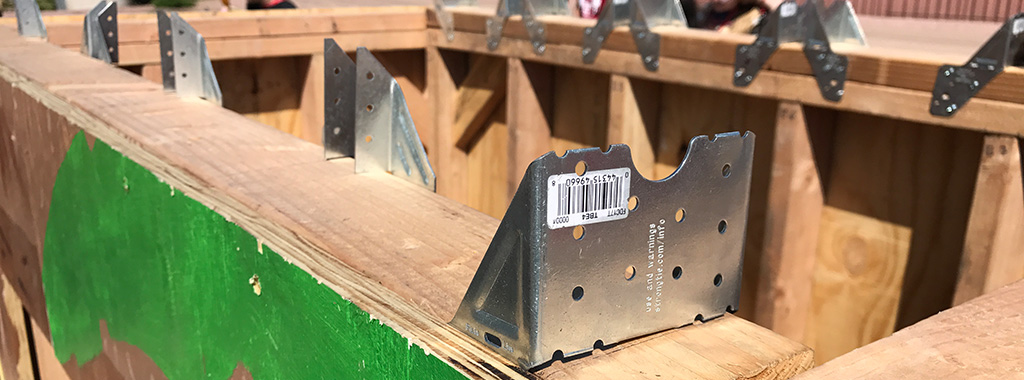
Timber Strong Gives Engineering Students Real-World Experience
Structural engineering, like every other research field, advances by educating new generations of students in the principles and practice of the discipline. Knowing that, Simpson Strong-Tie has teamed with the Binational Softwood Lumber Council and the American Wood Council to co-sponsor and coordinate the Timber Strong Design-Build Competition, an annual design contest held at the ASCE Pacific Southwest Conference in Tempe, Arizona.
Engineering students will test their civil and environmental engineering skills this spring when they compete in the annual Timber Strong Design-Build Competition. Eighteen universities will send teams of students to Tempe, Arizona, to participate at the American Society of Civil Engineers (ASCE) Pacific Southwest Conference (PSWC).
The objective of the competition, taking place April 12–14, is to give students valuable real-world engineering design experience:
Continue Reading
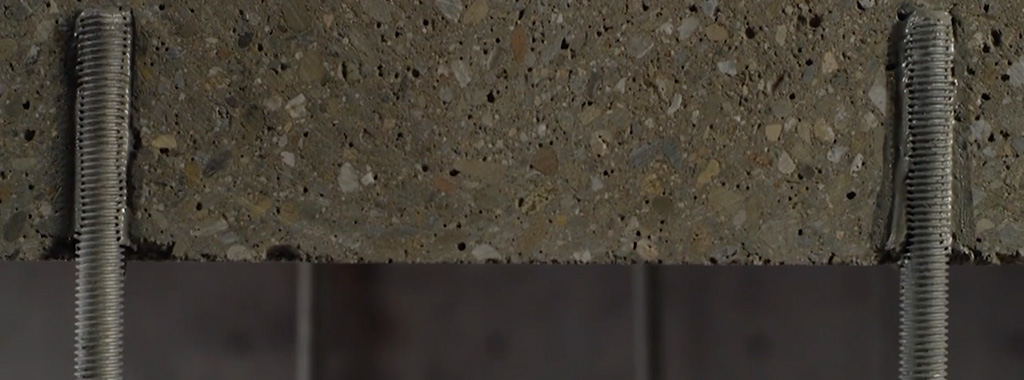
Simpson Strong-Tie® SET-3G™ Adhesive Offers a Ductile Solution for Post-Installed Anchorage near a Concrete Edge
Designing post-installed anchorage near a concrete edge is challenging, especially since the ACI provisions for cracked-concrete anchorage went into effect. In the following post, one of our field engineers, Jason Oakley, P.E., explains how SET-3G™ and Anchor Designer™ for Concrete software from Simpson Strong-Tie make it easier to design a ductile anchor solution.
Engineers often provide holdown anchoring solutions near a concrete edge to help prevent overturning of light-frame shear walls during a seismic (or high-wind) event. Sometimes a post-installed anchor must be used if the cast-in-place anchor was mislocated or misinstalled, or is located where a retrofit or addition is needed. Since the cracked-concrete anchorage design provisions went into effect more than a decade ago, it has been challenging for engineers to offer a near-edge post-installed anchoring solution. This is especially true for structures subject to earthquake loads in seismic design category (SDC) C through F. Simpson Strong-Tie’s new SET-3G epoxy is the first anchoring adhesive in the industry to offer exceptionally high bond-strength values that permit ductile anchorage in concrete near an edge. This blog post will cover a specific example that focuses on Chapter 17 of ACI 318-19 to design a threaded rod, anchored with SET-3G adhesive, used to secure a holdown located 1 3/4″ away from a single concrete edge (Figure 1).
Continue Reading

What Building Professionals Need to Know About Construction Loading
Understanding construction loading is important as it relates to the acceptable practices in terms of staging and storing construction materials prior to installation. What does “construction loading” mean? This term describes materials and people that are present during the course of construction. It refers to any construction material that is stacked and/or staged on the trusses for any length of time prior to the installation of said materials. This also includes those individuals that are working or walking on the trusses during the course of construction.
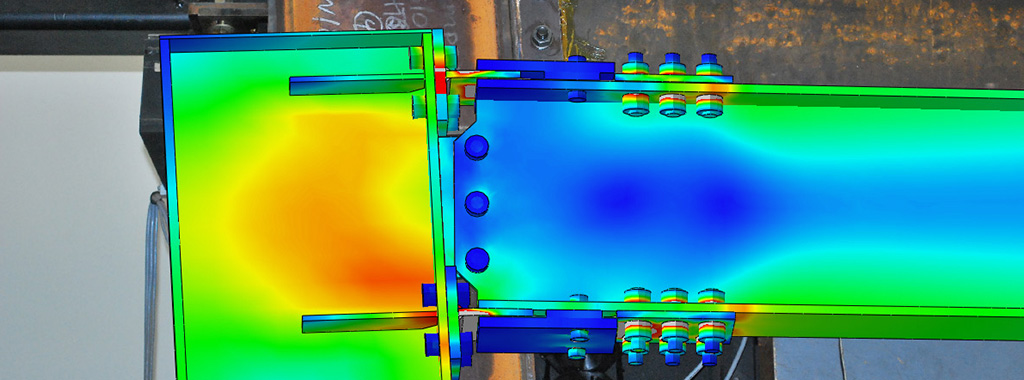
How Computer Simulation Can Power Innovation
Computer-simulated product testing is being used increasingly in modern engineering and manufacturing because it provides a low-risk, time- and cost-efficient means of modeling system performance using a wide array of variables before a physical prototype has been created. The following Blog post outlines some of the uses and advantages of integrating this technology into the product development process.Continue Reading

My Engineering Adventures with Build Change
This week’s post was written by James P. Mwangi, Ph.D., P.E., S.E. – our first annual Simpson Strong-Tie Engineering Excellence Fellow with Build Change.
Let me start by wishing everyone a happy holiday season.
My fellowship activities started in July 2017. I spent two weeks in New Jersey getting oriented to the Build Change organization and engineering activities around the world. I then spent two days in Pleasanton getting to meet the engineering team and getting updated on Simpson Strong-Tie products and the team leaders.
Continue Reading
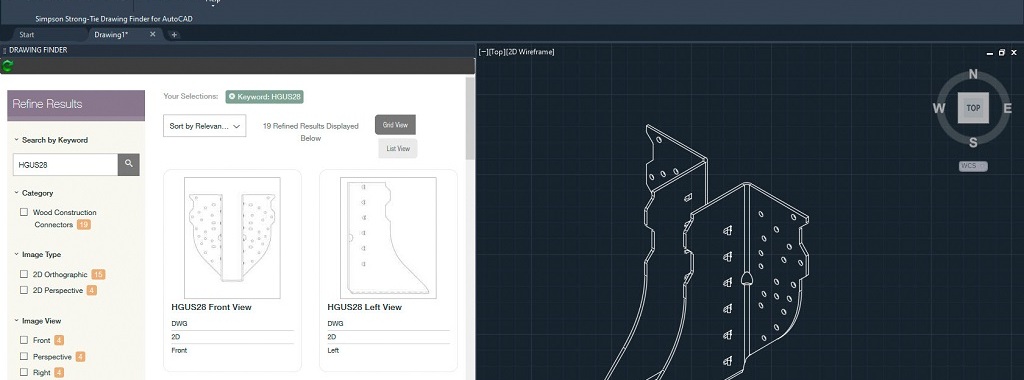
Simplify Access to Your Drawings with the Simpson Strong-Tie AutoCAD® Plugin
Accessing engineering drawings, determining whether you have the right ones and loading them into AutoCAD can seem like an exhausting endeavor. Wouldn’t it be nice to have an application that does everything you need in one package? An application that will also save you time, on both retrieval and installation, and give you access to additional applications? Simpson Strong-Tie has developed a new tool that can take care of all these needs.
Continue Reading

Turkeys and Gratitude
This week’s post was written by Kari Martin, Marketing Communications Content Manager at Simpson Strong-Tie.
There are a couple of turkeys that like to hang out around our home office in Pleasanton and, no, I’m not referring to any of my colleagues — we actually have a gang of wild turkeys that comes up from the creek behind the office. Almost every day, these colorful birds feel safe enough to stroll onto the office walkway pecking for food outside our office windows and doors. It’s surprising to me that these beautiful creatures could be so fearless (or is it simply naïve?), especially around Thanksgiving time. Their presence reminds me that being fearless is important, because nothing new would ever be discovered if we were too afraid to venture outside our comfortzones.Continue Reading
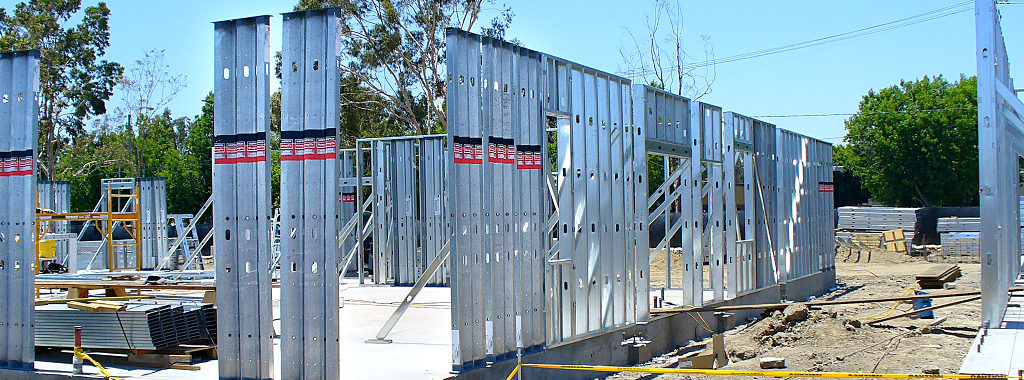
Introducing the New and Improved Simpson Strong-Tie Strong-Wall® Bracing Selector
It’s been said that the World Wide Web is the wave of the future. Okay, maybe this is slightly outdated news, as it’s been 25 years since Bill Gates penned his internet tidal-wave memorandum, but it’s a good lead-in to this week’s blog topic – web apps. More specifically, those apps that have been developed to address the wall-bracing requirements defined in the International Residential Code® (IRC). Designers and engineers have no doubt noticed that over the last several code cycles, the wall-bracing provisions in the IRC have become increasingly complex. To help navigate these requirements and calculate the required bracing length for a given wall line, Simpson Strong-Tie introduced the Wall-Bracing-Length Calculator (WBLC) a few years back, as discussed in an earlier blog post. I’ll also mention that the WBLC has since been updated to the 2015 IRC.
Continue Reading
Q&A About CFS Designer™ Software

I recently had the pleasure of presenting a webinar with Rob Madsen, PE, of Devco Engineering on our CFS Designer software, “Increase Productivity in Your Cold-Formed Steel Design Projects.” The webinar took place on September 28, and a recording is available online on our training website for anyone who wasn’t able to join us. Viewing the recording (and completing the associated test) qualifies for continuing education units and professional development hours. The webinar covers how to use the CFS Designer software to design complex loading conditions for beams, wall studs, walls with openings, and stacked walls using cold-formed steel studs, tracks, built-up sections, and even custom shapes. We received some excellent questions during the webinar, but due to time constraints were only able to answer a few during the live webinar. Rob and I did get a chance to answer all the questions in a Q&A document from which I’d like to share some excerpts. The complete Q&A webinar list can be accessed here, or through the online recording.
Continue Reading