



Code Reports: Uniform Application of Code Intent in a Diverse Environment

Woodworks invited me to do a presentation on Testing and Evaluation of Products for Wood-framed Construction, and I found you can’t really talk about testing without talking about the test standards and criteria used in product evaluations. Usually the goal in testing to these standards is to show compliance with the intent of the building code and have the product listed in a code report.

Why not just follow the code?

Innovative architectural and structural building products not addressed by the building code are in every building. Revisions to the building code are considered on a three-year cycle and some standards are on a five-year cycle. Sometimes it may take several cycles to address a new building product.

Continue Reading

Soft-Story Retrofits

In February 2007 I had the opportunity to volunteer for a Soft-Story Sidewalk Survey for the San Francisco Department of Building Inspection. The purpose of the survey was to inventory buildings in San Francisco that appeared superficially to have soft or weak first stories. The volunteers were given a list of addresses to review and we recorded if the building was more than three stories tall, had five or more dwellings, and estimated what percentage of the ground level had openings in the walls. No structural analysis going on, just counting stories, mailboxes, doors and windows.

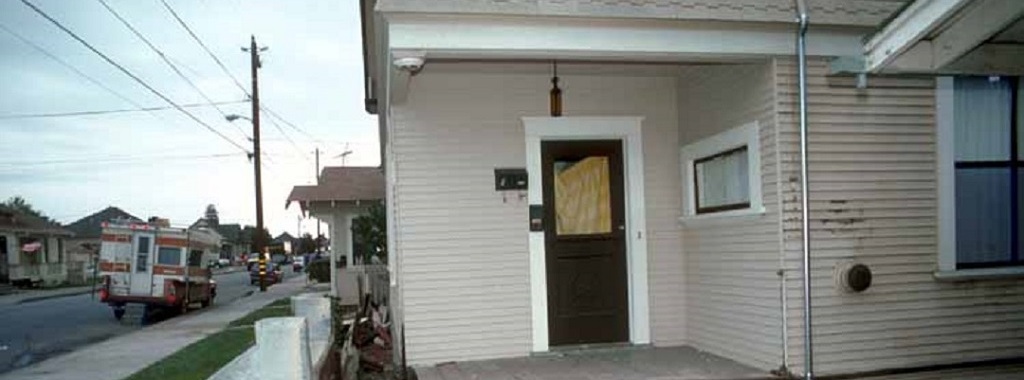
San Francisco soft-story structure. Photo credit: USGS.
San Francisco soft-story structure failure. Photo credit: USGS.
A collapsed house in San Francisco from the 1989 Loma Prieta earthquake. Photo credit: Adam Teitelbaum, AFP, Getty Images.
A collapsed soft-story in San Francisco from the 1989 Loma Prieta earthquake. Photo credit: Adam Teitelbaum, AFP, Getty Images.

Continue Reading

Building Drift – Do You Check It?

Guest Blogger Sam Hensen, Simpson Strong-Tie Southeast Engineering Manager
Sam Hensen

[Simpson Strong-Tie note: Sam Hensen is the Simpson Strong-Tie Engineering Manager for the Southeast U.S. and the latest blogger for the Structural Engineering Blog. For more on Sam, see his bio here.]

Just as bending and shear checks performed on gravity loaded beams do not ensure that the beam will comply with required deflection limitations, adherence to allowable shears and aspect ratio limits  on shearwalls does not mean the structure will comply with required drift limitations. Shearwalls that are too flexible may prevent the structure from meeting drift limitations even if the shearwall design has adequate strength.

Seismic

For seismic load applications, section 12.12.1 of ASCE7-10 states that the design story drift of the structure shall not exceed the allowable drift listed in table 12.12-1. For light-frame buildings, the maximum permitted drift is 2.5% of the story height. This limitation is put in place not merely for serviceability reasons, but is an inherent effect of current seismic design provisions that is required to be checked to ensure life safety.

Continue Reading

Taking Wood-Framed Construction to New Heights

When I had more hair and less of it was gray, I worked on a project as an assistant engineer doing the calculations for a mixed-use building in San Jose, California. Final design consisted of four stories of wood framing over a concrete podium slab and another level of below-grade parking. At that time, my firm had designed many two- and three-story residential buildings, but common thinking was you switched to steel or concrete for taller structures because of perceived limitations in wood-framed construction.Continue Reading

“Sunny With A Chance Of Earthquake”

With scientists predicting a 99% chance of a 6.7 magnitude earthquake striking Southern California within the next 30 years, California weather forecasters may want to remind residents that the location which gives lots of golden sunshine year round is also one of high seismic risk.

Recent earthquakes in cities similar to Los Angeles, San Francisco and Memphis have served as a reminder of the damage and disruption a major earthquake can have on a community. Through lessons learned from past earthquakes and research performed by the construction industry, there are many tools available geared toward residential buildings to reduce damage and resist collapse.

Continue Reading

Cantilever Floor Induced Load Path Concerns

IBC Section 1604.9 requires structural members, systems, components and cladding be designed to resist forces due to earthquakes and wind, with consideration of overturning, sliding and uplift. It also states that a continuous load path be provided for transmitting these forces to the foundation. Seems obvious to engineers that a continuous load path is needed, but it’s still nice to have the code say so.

But what happens if your structure’s upper and lower story walls do not stack? How do you create the required continuous load path? As engineers, we try to steer the architect towards eliminating the offset, making things line up, and keeping construction simple. But architectural requirements cannot always accommodate simple, and non-stacking walls occur all the time.

Continue Reading

Confidence in Code Reports

Every building uses products that are not specifically covered in the building code. IBC Section 104.11 permits this if the “alternative material” is found to comply with the code intent by the building official after review of supporting information, such as research reports and tests.

Reviewing product data might be a challenge for some building departments, as they vary in size and expertise around the country. Some of the questions they might ask are:

1. What, if any, criteria was used to evaluate the product (e.g., test protocol, load rating methodology),

2. Was the criteria developed based on a single individual or a single company’s opinion or was there at least some involvement of others in the construction industry,

3. Are there any potential conflicts of interest in the parties wanting to use the product or the company who evaluated the product, and

4. Are there other tests or analyses that need to be completed prior to accepting the products use in the jurisdiction?

Continue Reading

Top 3 Roof Deck Design Considerations for High Wind Events

Was it JFK who said, “The time to repair the roof is when the sun is shining?” He was likely using the roof as an analogy for the economy, but I take things literally and wanted to talk about roofs.  The time to think about the design of your roof and its function in a high wind event like a hurricane or tornado is right now.

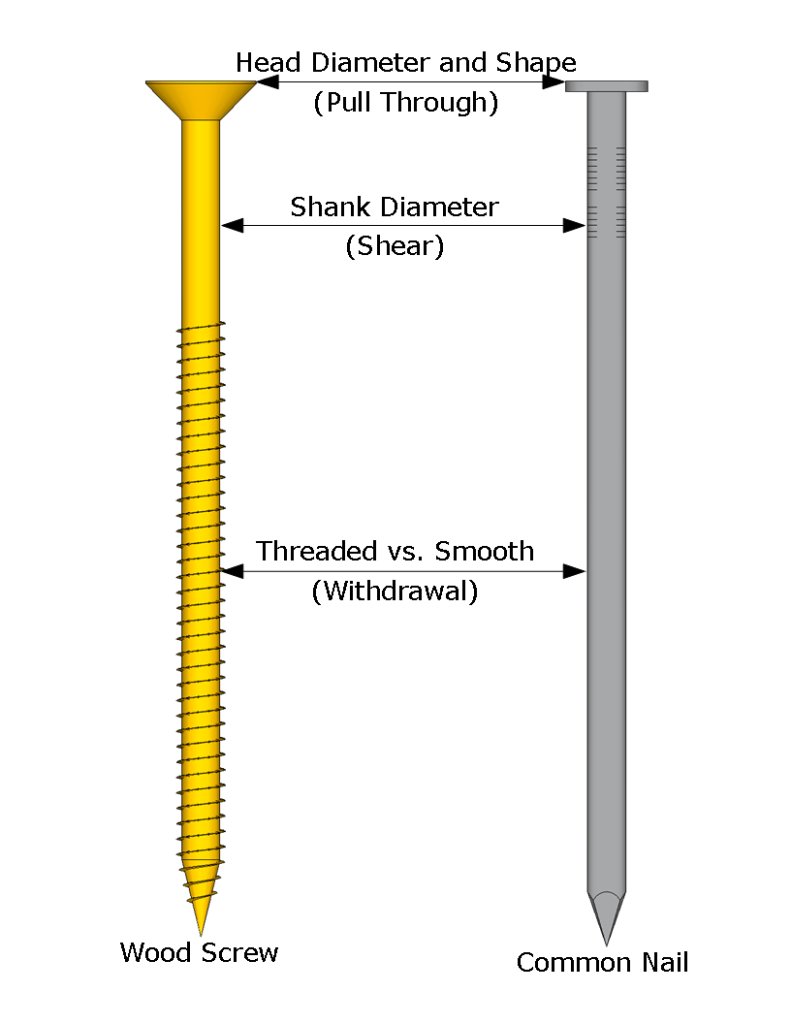
Wood screw vs. common nail

During a high wind event, a roof deck is expected to perform many functions. It should prevent water intrusion from rain, withstand impacts and protect those inside from hail. It also needs to act as a diaphragm – transferring lateral loads to shear walls and resisting the vacuum effects of wind uplift forces.Continue Reading

Flexible or Rigid? Multi-Story Light-Frame Structure Design Considerations

I like to think I’m flexible, but I’ve been accused of being rigid at times. I guess that’s what therapy is for. If you were to ask a light-frame structure diaphragm that same question, you would likely get multiple conflicting answers. The 1988 UBC first introduced parameters to evaluate diaphragm rigidity. Earthquake Regulations Section 2312(e)6 stated:

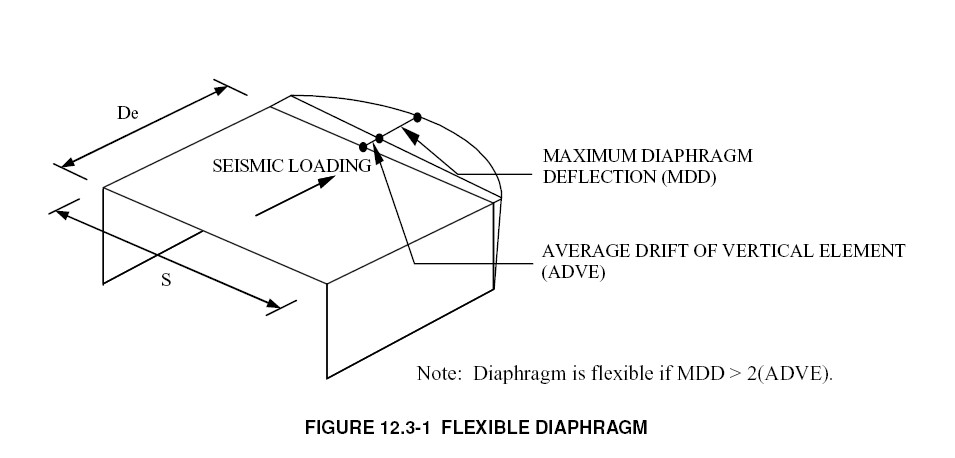
Figure 1. Flexible Diaphragm Definition from ASCE 7-05

Provision shall be made for the increased shears resulting from horizontal torsion where diaphragms are not flexible. Diaphragms shall be considered flexible for the purposes of this paragraph when the maximum lateral deformation of the diaphragm is more than two times the average story drift of the associated story. This may be determined by comparing the computed midpoint in-plane deflection of the diaphragm under lateral load with the story drift of adjoining vertical resisting elements under equivalent tributary lateral load.

Continue Reading

Building a Storm Shelter to ICC-500 Design Requirements

According to the National Weather Service, 2011 ranked right up there as one of the worst years on record for tornadoes, having set records for the earliest date of the first tornado, the most states reporting tornadoes, the greatest monthly total, the greatest daily total, and the highest estimated property and crop losses. (Take a look.)

You may wonder: What can I do to protect building occupants (perhaps even my family) in a tornado? It is possible to build your home to higher wind resistance than normally required so that it can resist weak to moderate tornadoes? See my previous blog post, “Designing Light-Frame Wood Structures for Resisting Tornadoes. It Can Be Done!” and also our tornado technical bulletin for more information. But to resist the strongest of tornadoes, the most economical solution is a storm shelter located nearby or in your home.   Continue Reading