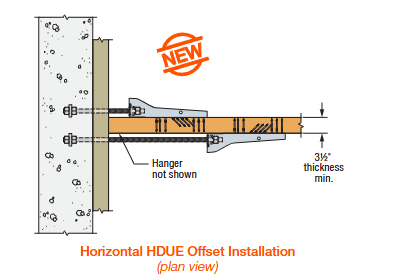
At Simpson Strong-Tie, we really try to listen to our customers. Our products are developed with your needs in mind.
Last year, at my daughter’s college orientation, I found myself in an interesting conversation with one of the other parents. It turned out that he owns a deck-building company. When he found out that I’m an engineer at Simpson Strong-Tie, his first question was “why don’t you guys make some nice-looking connections that I can use on my decks?”
Ugly Connector
I had to choke back a laugh because that’s exactly what I was working on at the time. What he didn’t mention (but we knew he also needed) were connectors that are fast to install, suitable for outdoor use and structurally rated for engineered designs. We also knew code approval was critical to help building departments approve the designs.
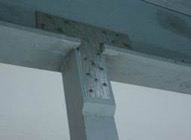
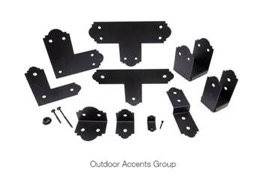
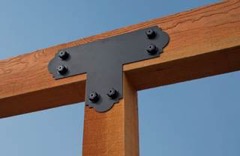
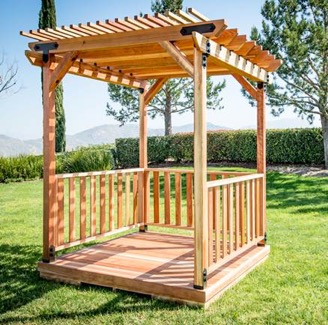
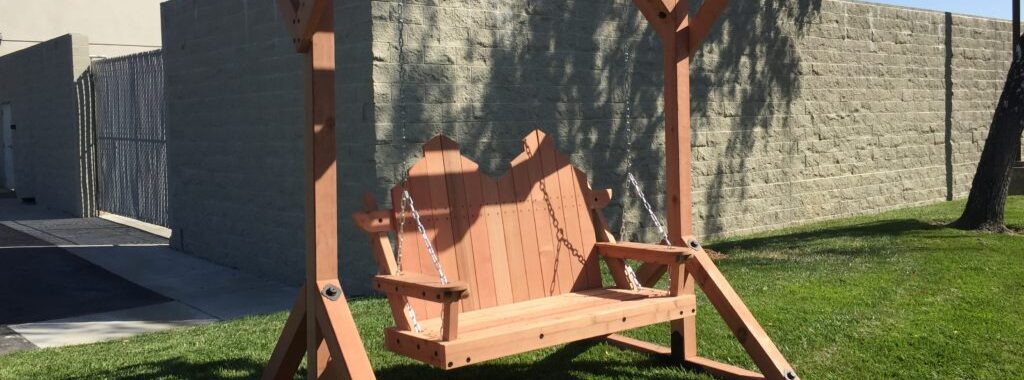
The Outdoor Accents® connectors we designed include some basic T’s, L’s, angles and post bases with a nice architectural feature of decorative edges from our Mission Collection®. The steel has our ZMAX® (G185) galvanizing (which is twice as heavy as our standard G90) to resist corrosion and a black powder-coat finish for aesthetics.
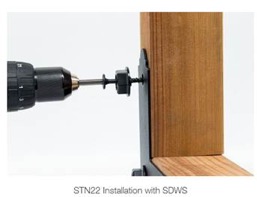
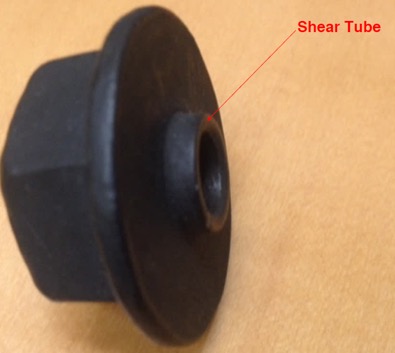
But the real innovation is in the fastener. Architectural connectors and big bolts go hand in hand, but big bolts are expensive, time consuming and often structurally unnecessary. To solve the installation issue, we designed a decorative washer that looks like a washer and nut and perfectly fits our SDWS22DBB Structural Wood screw.
We named it the shear tube nut (STN) because the extended tube increases the shear area in contact with the connector.
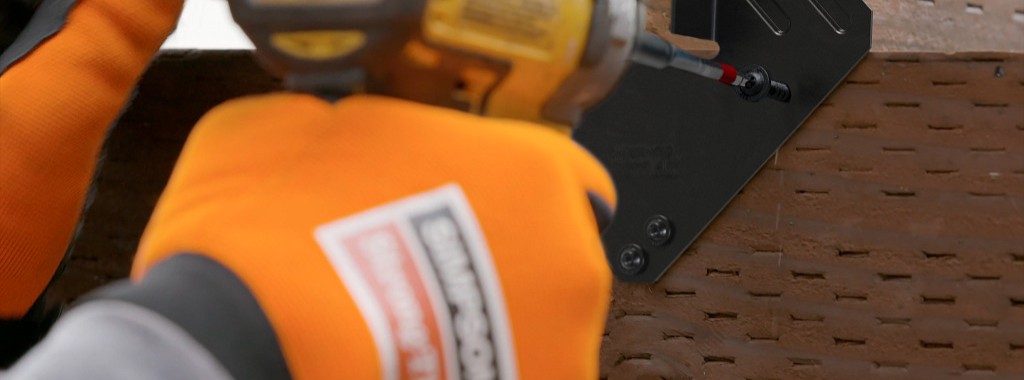
Together with the SDWS22DBB screw, this solution looks like a bolted connection but installs with the speed and ease of a self-tapping screw. Structurally as well, the hardware is comparable to a bolted connection with a shear capacity of 470 lb. per fastener when used with metal side plates, i.e., connectors.1 The solution has also been tested and load rated for use directly on wood, so it can be used for a variety of other connections such as joining multi-ply beams, knee braces, etc.
In order to be code approved, the SDWS22DBB screws were tested with and without the STN in both wood-to-wood and metal-to-wood per AC233 Acceptance Criteria for Alternate Dowel-Type Threaded Fasteners. The connectors and fasteners, including STN, were tested as assemblies per ASTM D7147. Code agency reviewers quickly saw the benefits of the design and issued evaluation reports verifying the loads. The Outdoor Accents® connectors and SDWS22DBB screws are recognized under IAPMO UES ER-280 and ER-192, respectively. The smaller APA21 angle uses our new SD10112DBB screw, which is listed in ICC-ES ESR-3046.
My deck-builder friend will be pleased to see the new connectors are now available at select Home Depot stores.
I can’t wait to see what he thinks of them and to get his ideas for the next big project. How about you? What would you build with these new architectural products? Let us know in the comments below.
Ref. IAPMO UES ER-192 Table 6A steel side member DF = 470 lb.; 2015 NDS Table 12B 3 1/2″ main member, 1/2″ bolt, DF perpendicular-to-grain = 510.
Outdoor Accents®
Add Beauty and Strength to Your Custom Outdoor Living Structures.
It seems that each major hurricane tends to teach those of us in the construction industry some lesson. With Hurricane Andrew, the lessons were the importance of protection from windborne debris, and the importance of proper construction of gable end overhangs.
There are two main areas where gable ends can fail.
Editor’s Note: This week’s blog post is written by one our college interns in the Engineering Department. Ian Kennedy spent the summer of 2016 as an intern for the McKinney office of Simpson Strong-Tie. He will be starting his second year at Calpoly San Luis Obispo in Fall 2016 studying Mechanical Engineering. As an intern, he spent his time helping the branch engineering department with numerous projects, as well as exploring projects of his own. He enjoys metalworking, fitness, and the outdoors. Thank you to Ian Kennedy for this week’s post.
As I write this, I can’t help but laugh that of all the interns studying structural, civil or architectural engineering in school, the intern writing the post for our Structural Engineering Blog is studying mechanical engineering. I haven’t met too many mechanical engineers during my time here at Simpson Strong-Tie. I know there are a few, but while a lot of mechanical engineers are focused on making things move, most of the people here concentrate primarily on making things stay still. I’ve found what Simpson does to be more important than a lot of my peers at school may realize – it seems ME students are more preoccupied with cars and equipment than with what’s keeping the roof from coming down on top of them. Still, my exigence alone wasn’t enough to cancel the uneasiness of a first-time intern doing things he never knew he would be doing.Continue Reading
Bucket lists are mentioned regularly today, which got me to thinking – what about a bucket list for structural engineers? ASCE and others have put together lists of engineering wonders of the modern world, so those seem like a good start for sights to see. But for a practitioner, I’d propose the next most obvious things to add would be working with each of the common structural building materials and system types. For engineers working with buildings, the “list” would include the various types of steel, concrete, wood and masonry materials, and then the different respective building systems.
Maybe this list can also offer a refreshing perspective when you’re wading into uncharted territory; a new material or system presents the chance to cross another item off your list! For most engineers, I would guess a post-frame building will be one of the final remaining items on their list. Post-frame is rightly known for its historical origins in agricultural buildings; however, today there is more developed design information, and post-frame buildings are being built for many different uses. If you do find yourself looking at post-frame for the first time, there are a few resources to be aware of that can help guide and inform your experience.
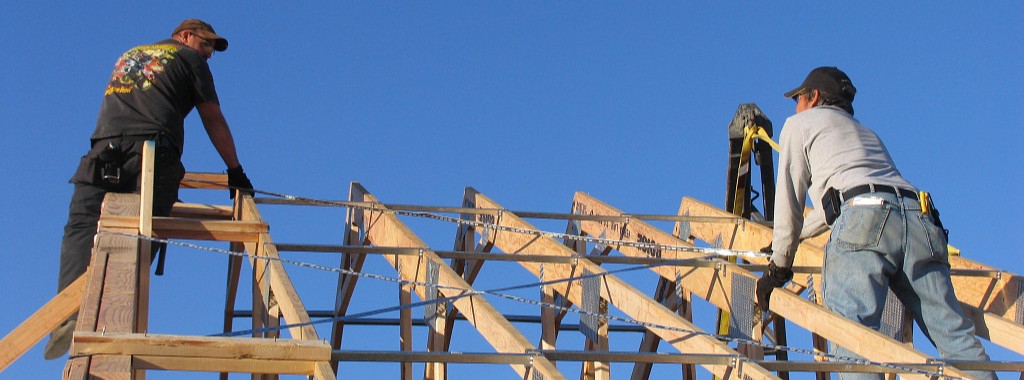
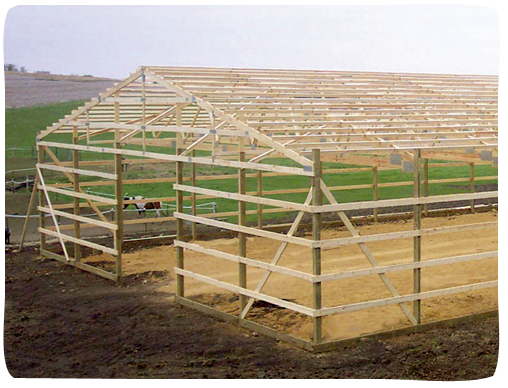
Post-frame buildings comprise a primary framing system of wood roof trusses or rafters that are supported by large solid-sawn or laminated lumber columns. The secondary roof purlins and wall girts support the roof and wall sheathing. The columns are either embedded into the ground or anchored to concrete piers, walls or slabs. The buildings offer efficiency in materials, construction time and costs, and energy. An engineer can design a post-frame building in compliance with the IBC, with allowances for high-wind and seismic conditions.
Two free resources that are good starting points for an engineer considering post-frame are the American Wood Council’s Design for Code Acceptance (DCA5) – Post Frame Buildings, and the Post-Frame Construction Guide by the National Frame Building Association (NFBA). The DCA5 gives a brief overview of the pertinent section of the IBC that relates to post-frame. The Post-Frame Construction Guide is a 20-page document that describes the components of a post-frame system, fire performance, examples of common details and different building uses, and a summary of resources for additional information.
A manual for purchase that is an excellent resource is the NFBA’s Post-Frame Building Design Manual – Second Edition. The manual presents a comprehensive scope of content including sections on code provisions, guidance for design, diaphragm design, post design and foundation design. Lesser-known IBC-referenced standards that are commonly utilized in post-frame, such as ASABE EP 484.2 for diaphragm design and ASABE EP 486.1 for shallow post foundation design, are covered by the manual.
What do you think of the idea of a bucket list for structural engineers? Would you already be able to cross off post-frame building from your list? Let us know by posting a comment.
The parts won’t hold themselves up. They have to be fastened in place.
The previous blog in the How to Pick a Connector Series by Randy Shackelford, on “ Selecting a Joist Hanger,” covered the available Simpson Strong-Tie joist hanger options and how to pick a hanger for your design. This week’s blog focuses on the fasteners recommended for various wood connectors.
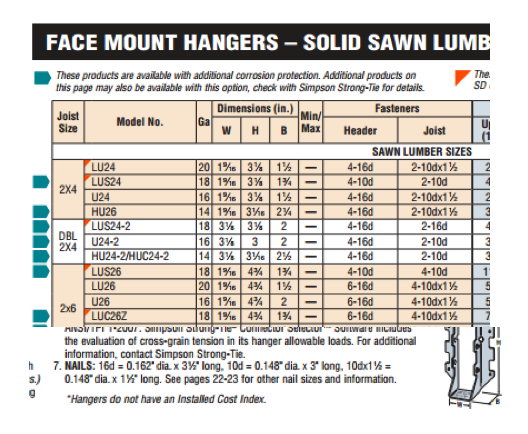
For straps, holdowns and other connectors, the first step is to specify a product that meets the load and corrosion resistance requirements. Then, specify fastening that is appropriate. The Wood Construction Connectors catalog, C-C-2026, offers fastener information for every Simpson Strong-Tie connector used in wood construction. If you specify the type and number of fasteners and install them as shown in the catalog, then your installation will get full design values. Many connectors are designed to be installed with either nails or Strong-Drive® SD Connector screws. Some products must be installed with Strong-Drive SDS Heavy-Duty Connector screws. Figure 1 is a snip from page 114 of catalog C-C-2026. Here the face-mount hanger table gives the size and number of nails to be installed in the header and the joist, and the table note defines the nail size terminology. Let’s take a look at the various fasteners used for Simpson Strong-Tie connectors of all varieties.
Figure 1. A snip from the face-mount hangers table showing the size and number of nails to be used in the header and joist. The footnote defines the nail sizes in the table.
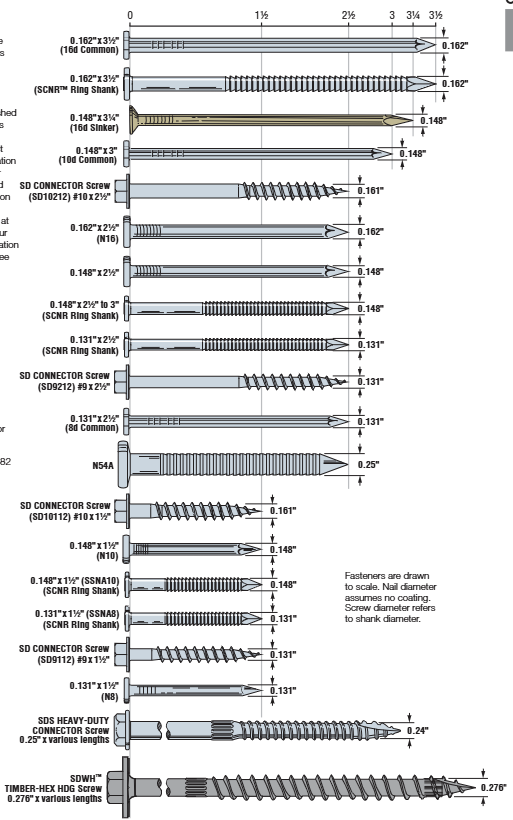
Figure 2 shows a scale view of almost all of the fasteners used with connectors. You can find this illustration in the Fastening Systems catalog, C-F-2025, and the Wood Construction Connectors catalog, C-C-2026. However, we are continually designing, evaluating and adding new fasteners to use with our connectors. Check our website for the latest and greatest.
Figure 2. Fastener types and sizes specified for Simpson Strong-Tie connectors.
Keep in mind some generalities that are to be considered in every connector fastener specification.
Type and size – Be sure to specify the correct type of fastener and size; for nails, that means diameter and length.
Do not mix fasteners – Do not combine nails and screws in the same connector unless specifically allowed to do so in the load table.
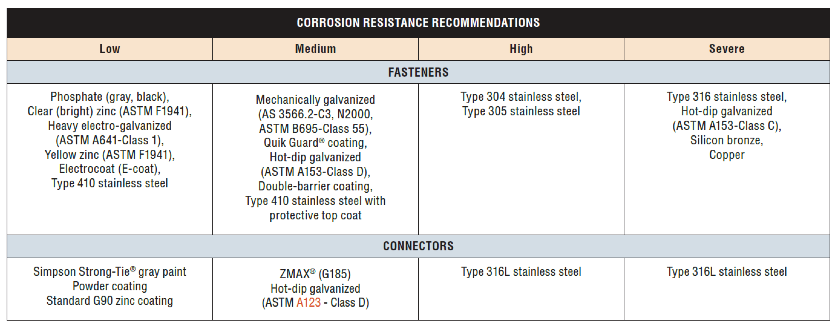
Corrosion resistance – Consider environmental corrosion and galvanic corrosion. For environmental corrosion, specify fasteners that have corrosion resistance similar to the connector; for galvanic corrosion, the fasteners and connector should be galvanically compatible. Figure 3 shows the corrosion resistance recommendations for fasteners and connectors.
Figure 3. Corrosion resistance recommendations.
NAILS
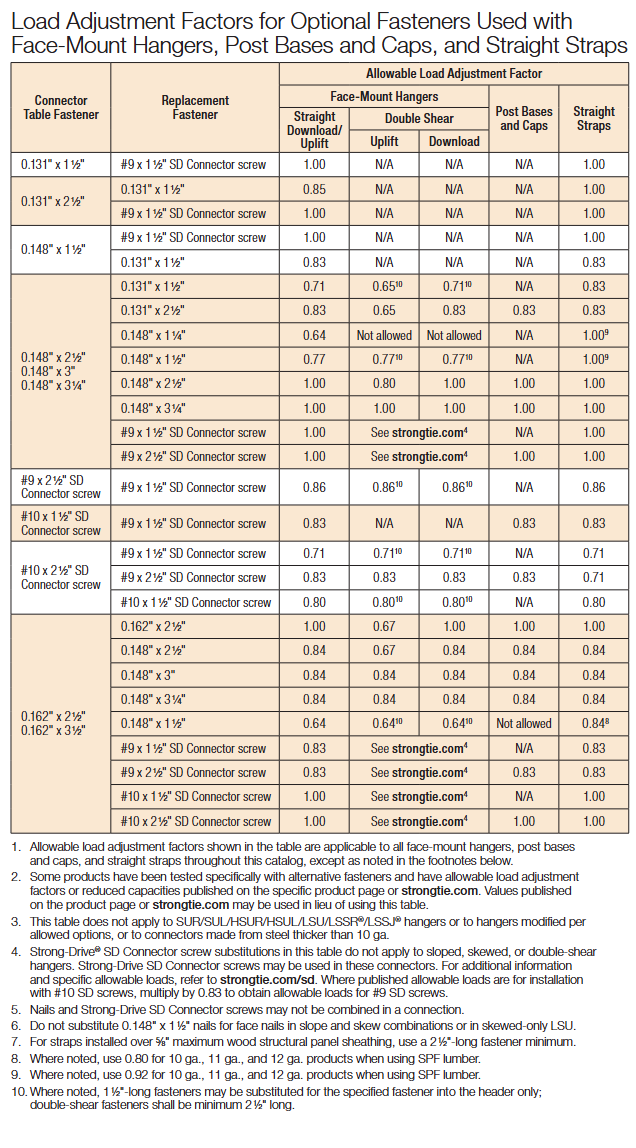
Nail terminology is messy. In a Structure Magazine article (July 2016), the author made the point that nail specifications are frequently misinterpreted (or overlooked), and as a result the built system does not have the intended design capacity. In general construction vernacular, specification by penny size identifies only the length. For example, a “10d” specification could be interpreted to mean 10d common – 0.148″ x 3″, 10d box – 0.128″ x 3″, 10d sinker – 0.120″ x 2.875″, or the 10d x 2.5″ – 0.148″ x 2.5″. See NDS-24, Appendix L, Table L4 for the length, nail diameter and head diameter of Common, Box, and Sinker steel wire nails. What if the face-mount hanger needed 0.148”x3” nails to achieve full load, but the face-mount hanger was installed with 0.148″ x2.5″? In this case, the nail substitution causes a reduction in load capacity of 15%. The load capacity losses would be even greater if 10d sinker or 10d box nails were used. The load adjustment factors for nail substitutions used with face- mount hangers and straight straps are shown in Table 3.
Simpson Strong-Tie nail terminology further complicates nail specification because, in Strong-Tie lingo, the penny reference is to diameter (not to length). This is further reason to write nail specifications in terms of diameter and length.
The best way to prevent mistakes is to specify nails by both length AND diameter.
There are two types of connector nails available, the Strong-Drive® SCNR Ring-Shank Connector nail and the Strong-Drive SCN Smooth-Shank Connector nail. SCN stands for Structural Connector Nails. R would refer to ring- shank nails. Currently most ring-shank connector nails are available in Type 316 stainless steel. Reasons for this are discussed here. The smooth-shank nails are made of carbon steel and either have a hot-dip galvanized (HDG) finish meeting the specifications of ASTM A153, Class D, or have a bright finish. Stainless-steel ring-shank nails are recommended for stainless-steel connectors. Use hot-dip galvanized nails with ZMAX® and HDG connectors. See Load tables for the nail properties.
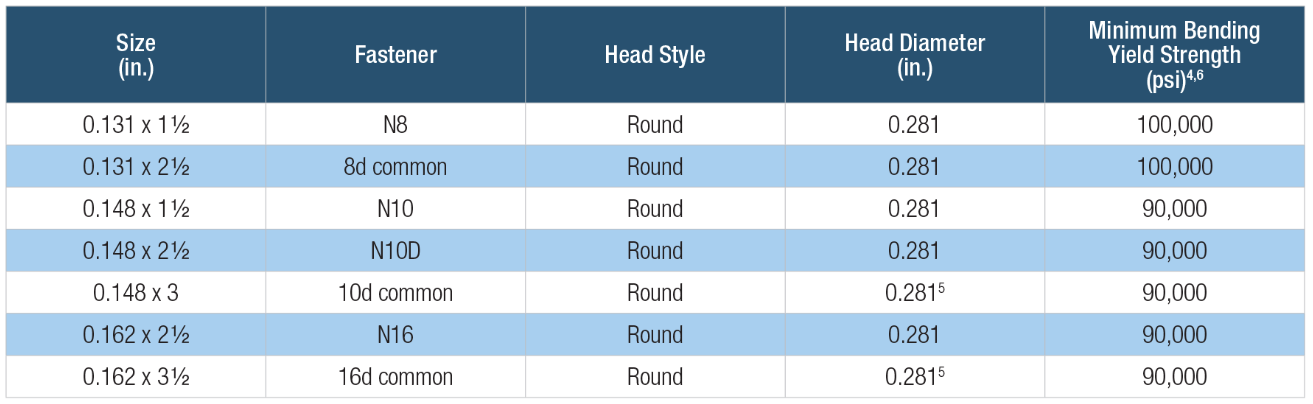
Table 1. Simpson Strong-Tie® connector nail terminology decoder. The penny size refers to diameter and “N” indicates a short nail.
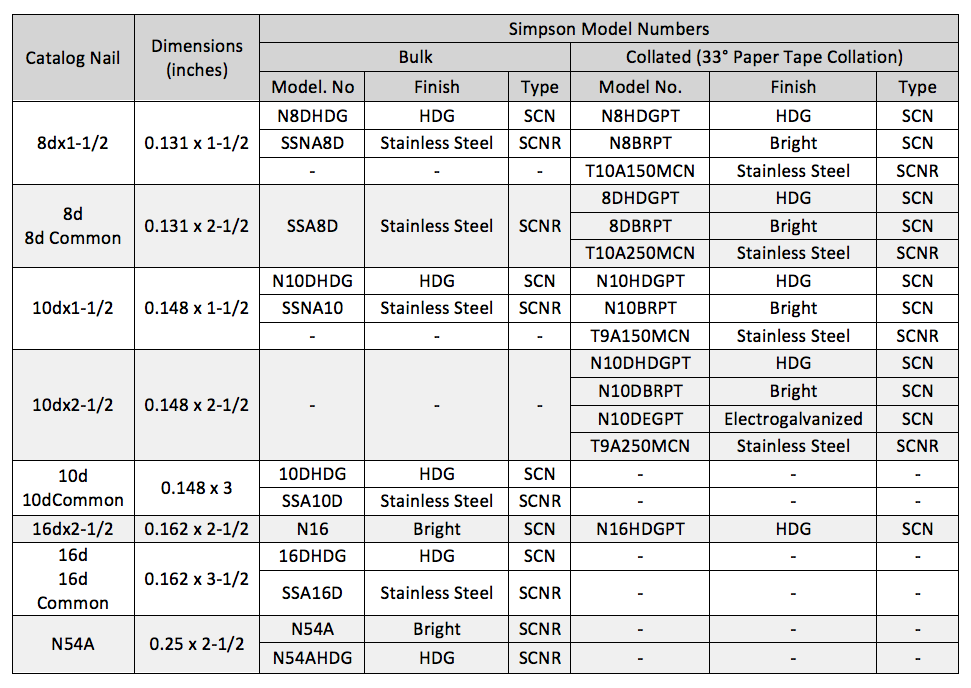
Simpson Strong-Tie connector nail specifications include common nails, sinker nails and short nails. Nails used in connectors should always have a full round head and meet the bending yield requirements of ASTM F1667, Table S1. Nails can be driven with a hammer or power-driven. Table 2 shows the Strong-Tie connector nails by catalog name, size and model number.
Table 2. Simpson Strong-Tie® Strong-Drive® SCN and SCNR Connector nails. HDG is hot-dip galvanized per ASTM A153, Class D; EG is electro-galvanized per ASTM B641, Class 1; SS is Type 316 stainless steel; “A” indicates ring-shank. These are collated for power-tool nailing in paper tape (PT).
Remember that connector double-shear nailing should always use full-length common nails. Do not use shorter nails in double-shear conditions.
Table 3 is snipped from the Fastening Systems catalog, and it shows load adjustment factors for optional fasteners used in face-mount hangers and straps.
Page 26 of Connector catalog C-C-2026
SD Screws
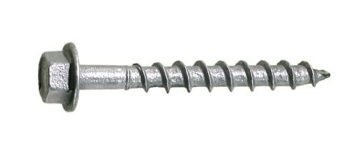
Figure 4. SD9112 CONNECTOR Screw.
Almost 150 Simpson Strong-Tie connectors can be installed with Simpson Strong-Tie Strong-Drive® SD Connector screws (Figure 4). The shanks of the SD Connector screws are designed to match the fastener holes in Simpson Strong-tie connectors. The screw features, dimensions, strengths and allowable single-fastener properties are given in ICC-ES ESR-3046, and the SD screws have been qualified for use in engineered wood products. See ICC-ES ESR-3096 for code-approved connectors installed with SD screws.
SD screws can make connector and strap installation easier and can also provide some resistance that is needed beyond what might be offered by nails. Ease of installation is sometimes an issue in tight places where it might be much easier to use a screw-driving tool rather than a hammer or a power nailer. Some installations are improved by using screws instead of nails, especially where pulling away from the mounting member is a possible failure mode. For example, joist hangers for a deck need withdrawal resistance to help keep the deck tightly connected to the ledger.
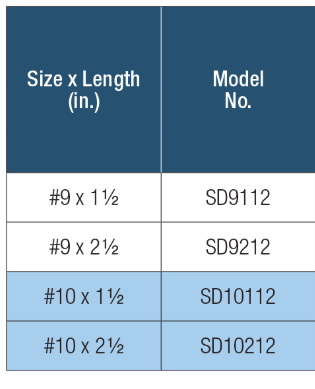
SD screws are available in four sizes as shown in Table 4 below. These screws are mechanically galvanized per ASTM B695, Class 55, and have corrosion-resistance qualifications for use in chemically treated wood for Exposure Conditions 1 and 3 per ICC-ES AC257, which is the acceptance criterion for Corrosion-Resistant Fasteners and Evaluation of Corrosion Effects of Wood Treatment Chemicals. See ICC-ES ESR-3046 for corrosion resistance details. Visit SD Screws in Connectors for a complete list of connectors that can be installed with SD screws.
Table 4. SD Connector Screws.
Here are a few specification and construction tips for SD screws:
SD10 screws replace 16d common and N16 nails in face-mount hangers and straps.
SD9 screws replace 8d and 10d common and 1-1/2″ size nails and 16d sinker nails (all nails 0.148″ and 0.131″ diameter) in face-mount hangers and straps.
When SD screws are to be an alternative to nails, specify and use only SD screws. Other types of screws shall not be substituted.
SD screws are required to be installed by turning. Do not drive them with a hammer or palm nailer!
SD screws and nails cannot be mixed in the same connector.
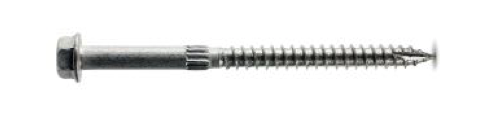
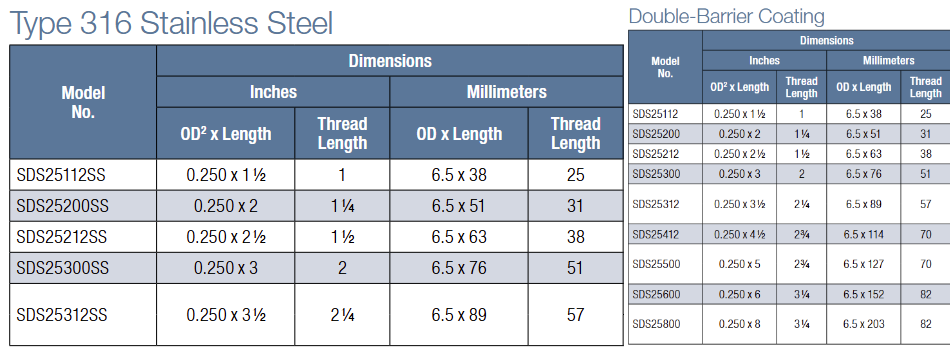
The Simpson Strong-Tie Strong Drive® SDS Heavy-Duty Connector screws are 1/4″ screws with a hex washer head (Figure 5). They are available in nine lengths. Table 5 shows the available SDS screws. SDS Screws are available with a double-barrier coating or in Type 316 stainless steel. These screws can be installed with no predrilling and have been extensively tested in various applications. SDS screws can be used for both interior and exterior applications. See ICC-ES ESR-2236 for dimensions, mechanical properties and single-fastener allowable properties. As shown in the evaluation report, SDS screws are also qualified for use in chemically treated wood. See the evaluation report for particulars. SDS screws also have been qualified for use in engineered wood products.
Table 5. SDS Heavy-Duty Connector Screws.
If you need more information about the nails and screws recommended for use with Simpson Strong-Tie connectors, visit strongtie.comand see the appropriate catalog, flier or engineering letter. Remember, your choice of fasteners affects the load capacity of your connections.
Let us know if you have any comments on Simpson Strong-Tie fasteners for straps, holdowns and other connectors.
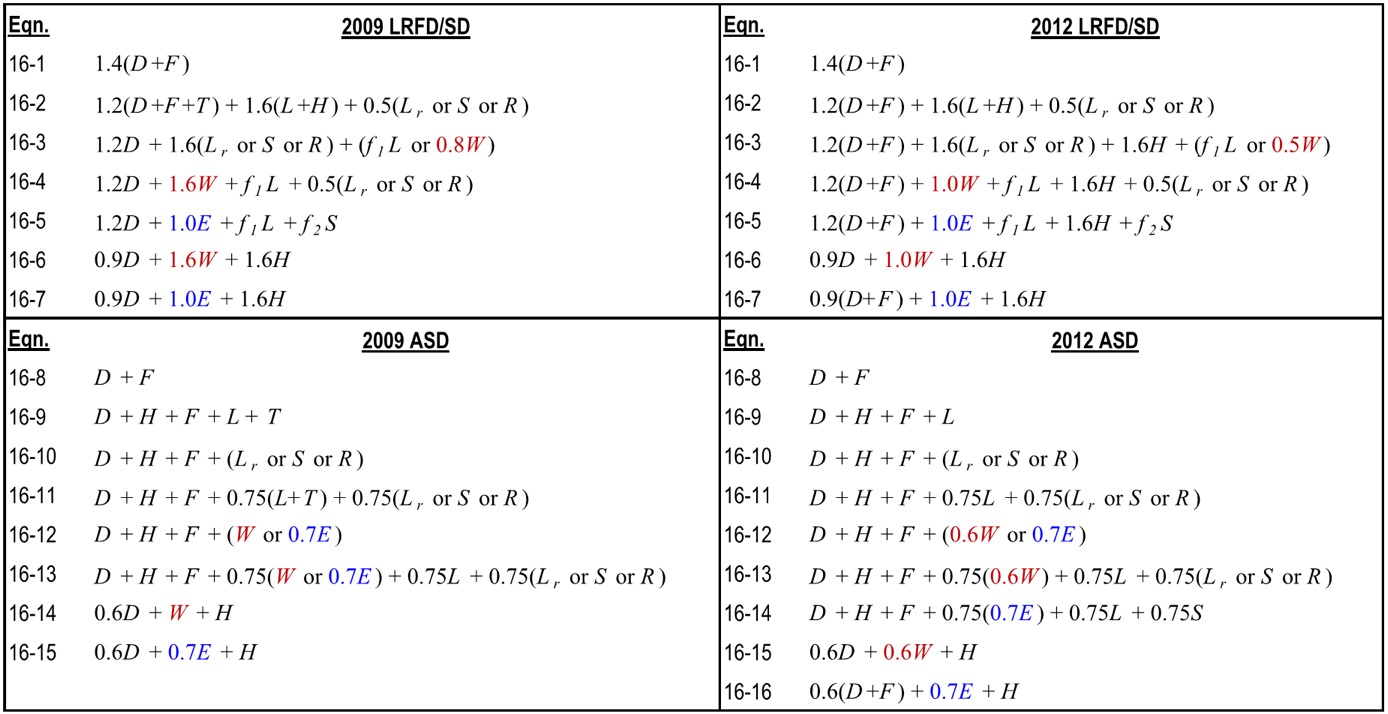
One of the first things I learned in school about using load combinations was that you had to pick either Load and Resistance Factor Design (LRFD)/Strength Design (SD) or Allowable Stress Design (ASD) for a building and stick with it, no mixing allowed! This worked for the most part since many material design standards were available in a dual format. So even though I may prefer to use LRFD for steel and ASD for wood, when a steel beam was needed at the bottom of a wood-framed building that was designed using ASD load combinations, the steel beam could easily be designed using the ASD loads that were already calculated for the wood framing above since AISC 360 is a dual- format material standard. And when the wood-framed building had to anchor to concrete, ASD anchor values were available in the IBC for cast-in-place anchors and from manufacturers for post-installed anchors in easy-to-use tables, even though ACI 318 was not a dual-format material standard. (Those were good times!)
Then along came ACI 318-02 and its introduction of Appendix D – Anchoring to Concrete, which requires the use of Strength Design. The 2003 IBC referenced Appendix D for Strength Design anchorage, but it also provided a table of ASD values for some cast-in-place headed anchors that did not resist earthquake loads or effects. This option to use ASD anchors for limited cases remained in the 2006, 2009 and 2012 codes. In the 2015 IBC, all references to the ASD anchor values have been removed, closing the book on the old way of designing anchors.
So what do you do now? Well, there is some guidance provided by ICC-ES for manufacturers to convert calculated SD capacities to ASD allowable load values. Since there is no conversion procedure stated in the IBC or referenced standards, designers may want to use this generally accepted method for converting anchor capacities designed using ACI 318. ICC-ES acceptance criteria for post-installed mechanical and adhesive anchors (AC193 and AC308) and cast-in-place steel connectors and proprietary bolts (AC398 and AC399) outline a procedure to convert LRFD capacities to ASD using a weighted average for the governing LRFD/SD load combination. So if the governing load combination for this anchor was 1.2D + 1.6L and the dead load was 1,000 pounds and the live load was 4,000, then the conversion factor would be (1.2)(0.2) + (1.6)(0.8) = 1.52 (keep in mind that the LRFD/SD capacity is divided by the conversion factor in the ICC-ES equation shown here for tension).
Right away, there are a few things that you may be thinking:
What about load factors that may exist in ASD load combinations?
It may just be easier to just recalculate my design loads using LRFD/SD combinations!
The resulting allowable loads will vary based on the load type, or combination thereof.
If the ACI 318 design strength is limited by the steel anchor, then the conversion will result in an allowable load that is different from the allowable load listed for the steel element in AISC 360.
Let’s take a look at these objections one by one.
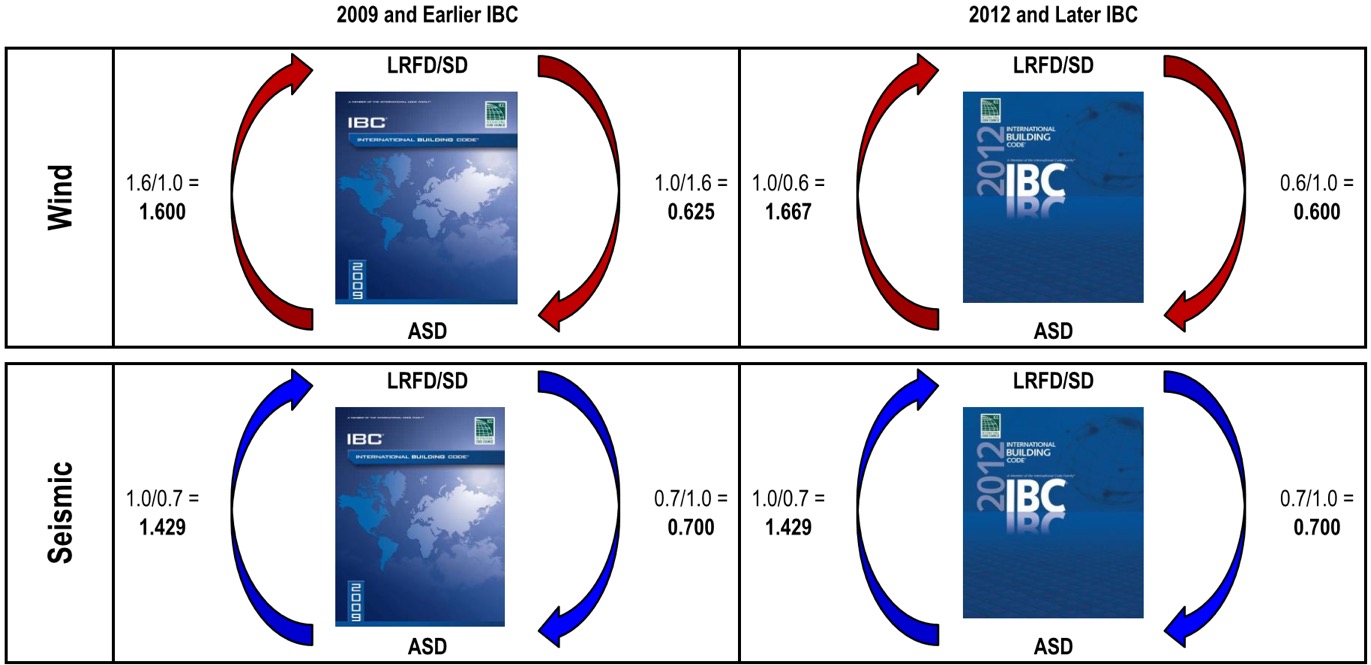
Item 1: Since unfactored earthquake loads are determined at the ultimate level in the IBC, they have an LRFD/SD load factor of 1.0 and an ASD load factor less than 1.0, which is also true for wind loads in the 2012 and 2015 IBC (see graphic below). Using the LRFD/SD load factor of 1.0 obviously does not convert the capacity from LRFD to ASD so you must also account for ASD load factors when calculating the conversion factor. To do so, instead of just using the LRFD load factor, use the ratio of LRFD Factor over ASD Factor. So if the governing load combination for an anchor was 0.9D + 1.0E and the dead load was 1,000 pounds and the seismic load was 4,000, then the conversion factor would be (0.9)(0.2) + (1.0/0.7)(0.8) = 1.32.
Item 2: Even though the weighted average conversion requires you to go back and dissect the demand load into its various load types, often this can be simplified. ICC-ES acceptance criteria permit you to conservatively use the largest load factor. The most common application I run into is working with ASD-level tension loads for wood shearwall overturning that must be evaluated using SD-level capacities for the concrete anchorage. Since these loads almost always consist of wind or seismic loads, using the largest factor is not overly conservative. Depending on the direction in which you are converting the demand loads or resistance capacities, the adjustment factors are as shown in the figure below. Affected Simpson Strong-Tie products now have different allowable load tables for each load type. (For examples, see pp. 33-36 of our Wood Construction Connectors catalog for wind/seismic tables and pp. 28-30 of our Anchoring and Fastening Systems catalog for static/wind/seismic tables.)
Item 3: I am unsure whether there is any sound rationale for having allowable loads for an anchor resisting 10% dead load and 90% live load differ from those of an anchor that resists 20% dead load and 80% live load. Perhaps a reader could share some insight, but I just accept it as an expedience for constructing an ASD conversion method for a material design standard that was developed for SD methodology only.
Item 4: We have differing opinions within our engineering department on how to handle the steel strength component of the various SD failure modes listed in ACI 318. Some believe all SD failure modes in ACI 318 should be converted using the load factor conversion method. I side with others who believe that the ASD capacity of a steel element should be determined using AISC 360. So when converting SD anchor tension values for a headed anchor, I would apply the conversion factor to the concrete breakout and pullout failure modes from ACI 318, but use the ASD steel strength from AISC 360.
Finally, I wanted to point out that the seismic provisions in ACI 318, such as ductility and stretch length, must be considered when designing anchors and are not always apparent when simply converting to ASD. For this reason, I usually suggest converting ASD demand loads to SD levels so you can use our Anchor Designer™ software to check all of the ACI 318 provisions. But for some quick references, we now publish tabulated ASD values for our code-listed mechanical and adhesive anchors in our C-A-2016 catalog — just be sure to read all of the footnotes!
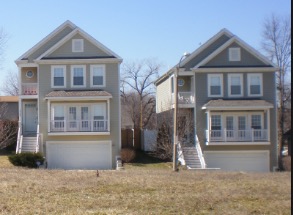
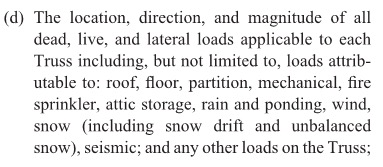
Take two trusses with identical profiles and environmental surroundings, and they should have the same design loads, right? Early in my career, I recall hearing a story about two identical buildings right next to each other that were designed for two different magnitudes of environmental loads. I remember wondering – how do the loads know which building is which?
There used to be a time when it was not uncommon for 5 substantially different wood truss designs to come from 5 different companies – all designing to the exact same spec. Whereas some differences are always to be expected (manufacturer-specific plate design values and proprietary analogues come to mind), the truss design disparities that used to exist from one company to the next were compounded by variations in something which really shouldn’t vary at all – the application of the specified loads to the truss. Differences in loading can occur whenever there is room for interpretation. In cases where the loading specs for fabricated wood trusses are not very detailed, there is a lot of room for interpretation. And when that happens, everyone knows how many different answers you get when you ask 5 different engineers!
Fortunately, the truss industry has come a long way in this area. In some cases, the codes and standards that govern the loading of structures have improved and helped the cause. But the truss industry also made a concerted effort to minimize these loading differences. Everyone agreed that a truss bid shouldn’t be won based on “less loading,” so they set out to change that. One of the best efforts in accomplishing this was the development of the SBCA Load Guide entitled “Guide to Good Practice for Specifying & Applying Loads to Structural Building Components.” Produced by the Structural Building Component Association (SBCA) in cooperation with the Truss Plate Institute (TPI), the Load Guide was developed with the stated goal of “helping everyone that uses it to more easily understand, define and specify all the loads that should be applied to the design of each structural building component” and “to help assure that all trusses will be designed using a consistent interpretation and application of the code.”
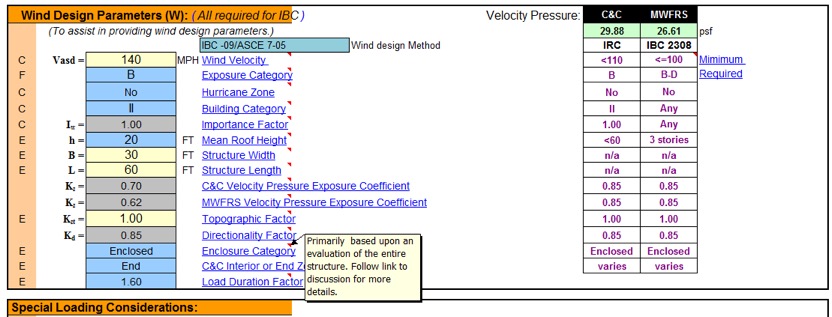
If you are an architect, engineer or a Building Code Official who deals with trusses and you don’t already have the current SBCA Load Guide, I strongly encourage you to check it out (free downloads are available from the SBCA website here.) When fielding questions about loading on trusses, I inevitably refer the inquiring party to the SBCA Load Guide not only for the answer to the question, but for future reference as well. The SBCA Load Guide isn’t just a handy reference to read, it also offers a spreadsheet tool that can be used to calculate loads as well as output the load calculation worksheets. The worksheets can be submitted with the construction documents for plan approval or submitted to the truss manufacturer to be used in the design process.
Worksheet from the SBCA Load Guide
In addition to providing all of the code and standard loading provisions that apply to metal-plate-connected wood trusses, the SBCA Load Guide also presents the truss industry’s consensus positions and interpretations on provisions that are either unclear as to how they apply to trusses or that have resulted in loading inconsistencies in the past. With the many truss-specific examples and applications covered, it leaves very little room, if any, for further interpretation or question as to how the various code provisions should be applied to trusses.
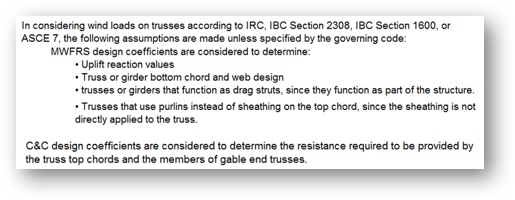
Take wind loads, for example. Wind loading on trusses has been a heavily debated topic over the years, such as whether a truss should be designed for Components & Cladding (C&C), Main Wind Force Resisting System (MWFRS) or both. In fact, wind loading used to be one of the main sources of inconsistencies in truss designs from one company to another. The truss industry has since established a consensus position on this matter and the SBCA Load Guide presents it as follows:
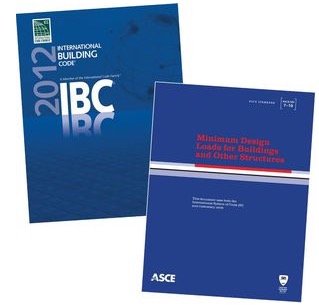
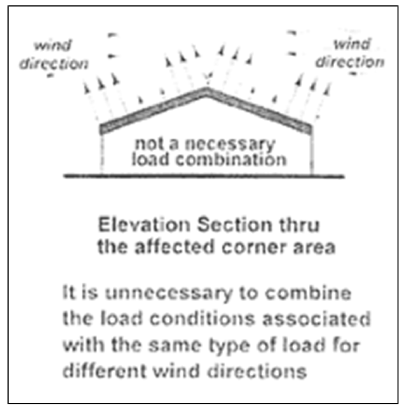
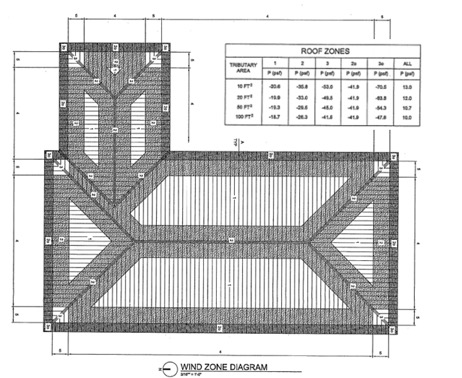
The SBCA Load Guide also pulls information from a variety of resources to help provide more insight into some of the code provisions. For example, in the wind loading section a graphic is reproduced from a Structural Engineers Association of Washington’s handbook (SEAW RSM-03) to clarify the effect of wind directionality on C&C wind pressures for gable/hip roofs, since this consideration is not made clear in ASCE 7.
Graphic from SEAW RSM-03 As Reprinted in the SBCA Load Guide
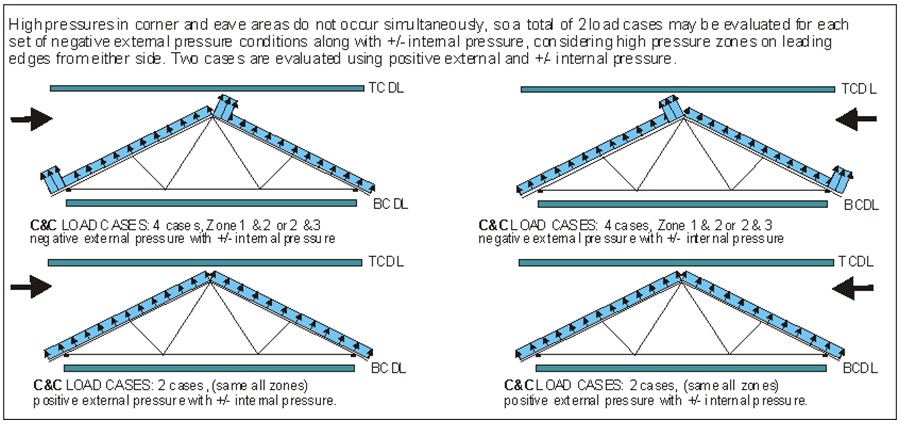
This clarification is further illustrated in the example wind loading diagrams, which show how wind pressures are evaluated when taking the directionality of the wind into account, i.e., by evaluating the pressures separately with the wind from the left and from the right.
Example Wind Loading Diagrams in the SBCA Load Guide
Of course, the SBCA Load Guide is only a guide and is NOT intended to supersede a Building Designer’s design specification. As specified in ANSI/TPI 1, the Building Designer is responsible for providing all applicable design loads to be applied to the trusses:
If you are an architect or engineer who specifies detailed loading schedules for truss systems, great! Your specifications may not need the SBCA Load Guide to ensure that the trusses are accurately loaded as intended in the design of the building. But the SBCA Load Guide still provides a lot of insight as to how the truss industry – and anyone who uses the Load Guide – applies various code provisions to trusses. It might even be an interesting study to see how your specified loads compare to the loading examples in the SBCA Load Guide.
For everyone else who isn’t well-versed in the application of code provisions to wood trusses, the SBCA Load Guide is an invaluable tool. Building Designers, building code officials, truss technicians and truss Designers can all benefit from the Load Guide. As stated in the SBCA Load Guide, one of the industry’s goals is to achieve a greater level of consensus among the largest audience possible on how to load trusses and other structural building components. The more people who read and use the SBCA Load Guide, the more consistency there will be in the interpretation and application of code provisions pertaining to wood trusses, which will help make projects run smoother and most importantly, improve building safety. At Simpson Strong-Tie, we are big fans of tools that work to do that.
If you’ve had experience using the SBCA Load Guide, we’d love to hear about it – please let us know in the comments below!
A quick glance through the Simpson Strong-Tie® Wood Construction Connectors catalog shows that we manufacture at least 29 different models of face-mount wood-to-wood joist hangers, three separate models of face-mount wood-to-masonry hangers, 42 different models of top-flange wood-to-wood joist hangers, four different models of top-flange wood-to-masonry hangers and 15 models of specialty joist hangers. And that’s not even counting heavy truss girder hangers or multiple- member hangers. So it’s no wonder that sometimes it’s difficult to pick exactly the right hanger for your particular application.
There are many things to consider when picking a joist hanger. The first may be what your load requirements are, including their direction. That will sometimes determine the second consideration. Do you want to use a top-flange or a face-mount joist hanger? Top-flange hangers typically have higher down loads with fewer fasteners, but must be installed when there is access to the top of the supporting member and often before the joist is in place. On the other hand, face-mount hangers can be installed after the joist is in place, and can have higher uplift loads, but will use more fasteners.
Speaking of fasteners, any fastener preference can determine your selection of a hanger. Joist hangers can be installed with common nails, screws (SD for lighter hangers and SDS for heavier hangers), or even bolts, for heavy glulam hangers. See here for information on the various fasteners that can be used with our connectors. The Simpson Strong-Tie Wood Construction Connectors catalog does not list allowable loads for joist hangers installed with SD screws, but you can find them here; just click on the link of the product to find its allowable load. Also, if the joist hanger will be installed with pneumatic fasteners, the possible load reductions that will result.
Another thing to consider at the beginning is what types and sizes of members are being connected together. Is your connection all solid-sawn dimension lumber, engineered wood or structural composite lumber, glulam beams, or trusses? All these types of wood products require different hangers.
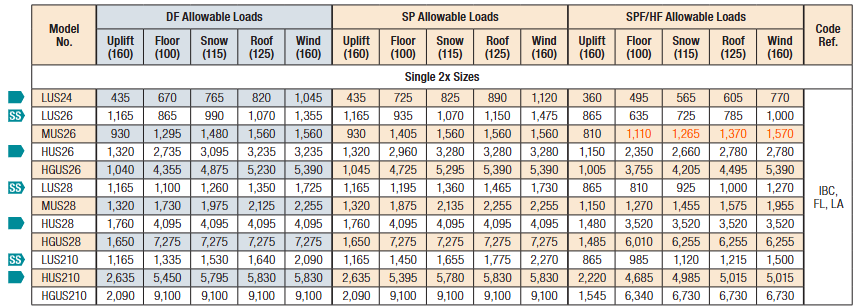
Furthermore, joist hangers will have different capacities based on the species of wood to which they are being attached. For example, the truss hangers in the table below have allowable loads listed for Douglas Fir-Larch, Southern Pine and Spruce-Pine-Fir/Hem Fir. Most standard solid-sawn joist hangers, on the other hand, will only have two load ratings, DF/SP and SPF.
Top-flange hangers are sensitive both to the species of wood and to the type of engineered wood to which they are attached. Because of that sensitivity, they have to be tested to each different type of engineered wood that could be used as a header and may have different published allowable loads for each type.
Is the joist framing into the side or top of a concrete/masonry wall? Then a special joist hanger is required. Is the joist connecting to a nailer on top of a steel beam or concrete/masonry wall? Nailers require top-flange hangers and can result in loss of allowable load if you have to use shorter nails, so you need to check that carefully. There are special tables published for nailer loads for top-flange hangers.
Another consideration is the orientation of the members. In a perfect world, all connections will be between perfectly perpendicular members. But in the real world, joists may be rotated side to side (skewed), or up or down (sloped), or some combination of the two. There are a couple of options in those cases. Hangers such as the SUR/SUL series are available pre-skewed at 45 degrees. Adjustable hangers such as the LSU/LSSU series can be adjusted within limits to certain slopes, skews and slope/skew combinations. Simpson Strong-Tie also has the capability to custom-manufacture quite a few types of hangers to any slope or skew within certain limits, based on the hanger. All of these options, including any load reductions required, are listed in the Hanger Options section of the catalog or website. The table there gives the various options available for each product and clicking on an individual hanger in the website table will send you to a page with the specific reductions for each option.
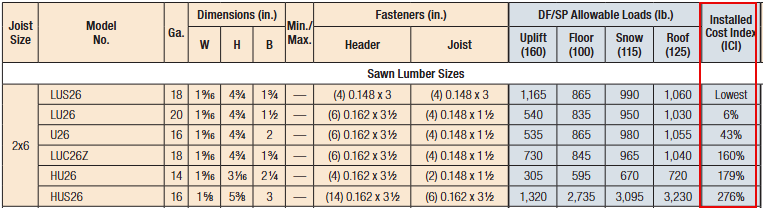
Another important consideration is the installed cost of the joist hanger. Simpson Strong-Tie publishes what we call an Installed Cost Index, where the total installed cost of a hanger, including fasteners and labor, can be compared for related hangers. For example, there are six joist hangers listed in the Solid Sawn section for a 2×6 joist. They are listed in order of increasing Installed Cost Index. To choose one, simply find the one with the lowest installed cost that meets your load requirements.
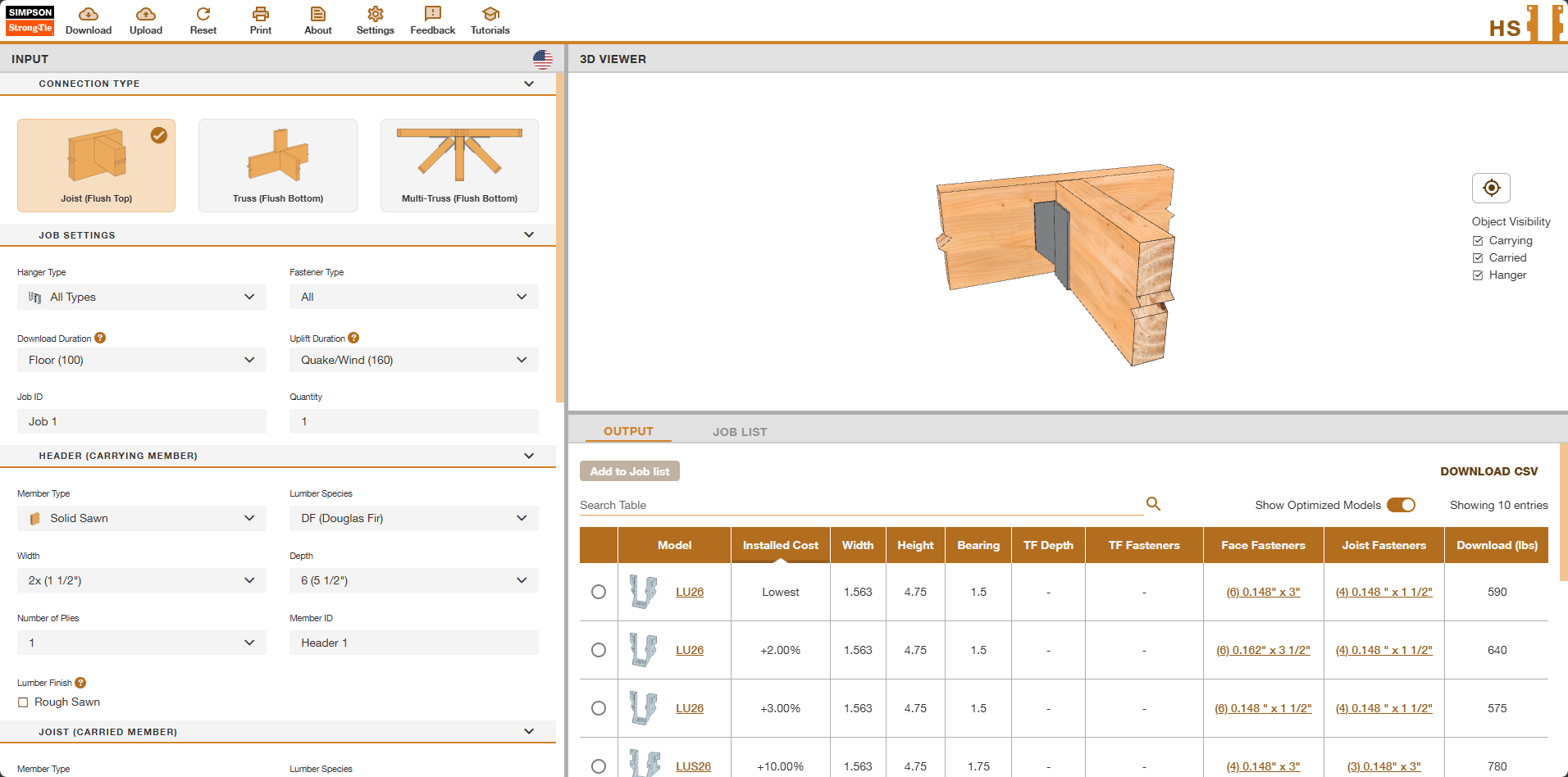
Obviously, this is a lot to think about when trying to choose a simple joist hanger. In order to make choosing a connector as easy as possible for our customers, Simpson Strong-Tie offers the Joist Hanger Selector Web App. This is found directly on the strongtie.com website. While not necessarily as versatile as the Connector Selector, it has a much easier-to-use graphic interface where the user can choose any option they wish. Just simply choose the desired hanger type, the header member, the joist member, the fastener type, any hanger options and input any design load requirements, then hit calculate, and your choices show up immediately.
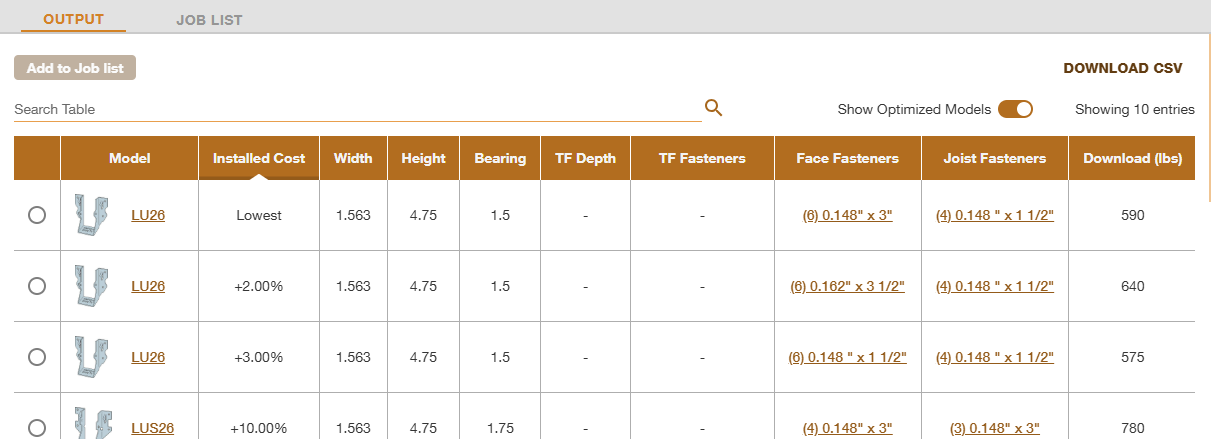
Here is the output shown for the same inputs as the Connector Selector above. The app will initially show only the most common models that provide a solution, but the user can click SHOW ALL MODELS for a more complete list of solutions. The user can also click on the “+” next to the model name to get additional fastener options.
A final consideration in choosing a joist hanger is the finish desired. Simpson Strong-Tie manufactures joist hangers in several different finishes: Standard G90 zinc coating, ZMax® G185 zinc coating, HDG hot-dipped galvanization after fabrication, Type 316L stainless steel and powder-coat painted. The environment where the joist hanger will be installed and the material it will be in contact with (treated wood or other corrosive materials) will both influence which finish should be chosen. Guidance for selecting finishes is found in our literature and on our website. Also remember that the finish of the fastener used needs to match the finish of the connector.
We hope you find these tools helpful the next time you need to choose a joist hanger. Are there any other tools you need to help you specify Simpson Strong-Tie connectors or anchors? Tell us below.
In our last social media–related blog post, I shared the Top 5 LinkedIn Groups to Follow for Structural Engineers. Following groups on LinkedIn allows you to share content, post or view job openings, network and help establish yourself as a key opinion leader in your industry. But what about critical design questions or help? How do you deal with office dynamics or a difficult client as a structural engineer?
LinkedIn groups may assist with questions like these, but there are other social media platforms that might make it easier to have a more in-depth discussion about issues that you face. While LinkedIn is certainly an important social media platform for professionals such as structural engineers, it is not the largest social media platform. That title goes to the social media giant Facebook. Facebook has the social advantage of engaging more than 1.7 billion active users.
You are probably using Facebook already for personal social networking. However, there are some professional applications for structural engineers on Facebook that you may not have heard about. Here are some Facebook tips for structural engineers that you can use to jumpstart your professional social media arsenal:
Follow Industry-Related Pages
There are a variety of pages that you can follow on Facebook to give you an idea of what is happening in the industry. Following and engaging with pages like Structural Engineering World for design inspiration or Civil + Structural Engineer magazine for project management ideas allows you to have a more professionally focused newsfeed around content that matters to you (while still allowing time for cat memes and Buzzfeed quizzes if you want those, too). One useful page for engineers is the Autodesk Revit page, because it has things like tips on how to share large BIM files.
Join Structural Engineering Groups
Groups are a great way to connect with other Facebook users. As a structural engineer, you are bound to come across an issue that you would like some advice on. By joining a group of other structural engineers, you can ask design questions, questions about calculations and get tips on the best tools for your profession. I would ask your colleagues which groups they recommend joining.
Jumpstart Your Job Search
If you are looking for a new position, I am sure that you already know about LinkedIn. But did you know that there are things like the Career Center App on Facebook pages like the ASCE? The app works for employers looking to hire, too!
Do you have Facebook tips that would you recommend for structural engineer? Let us know in the comments below.
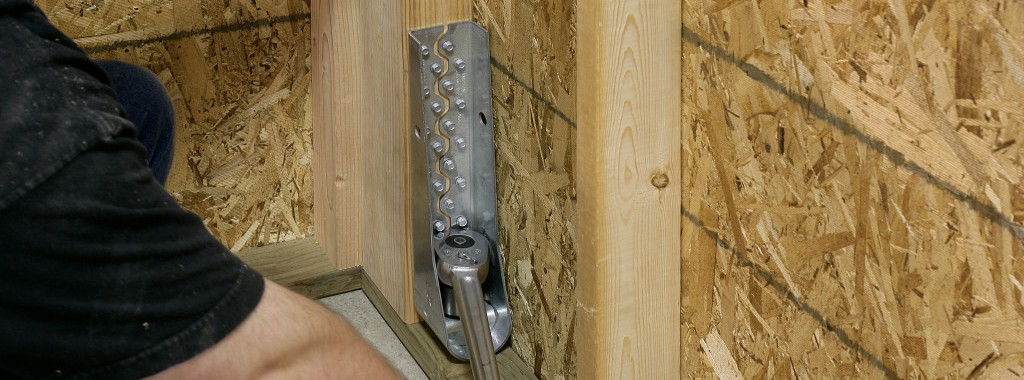
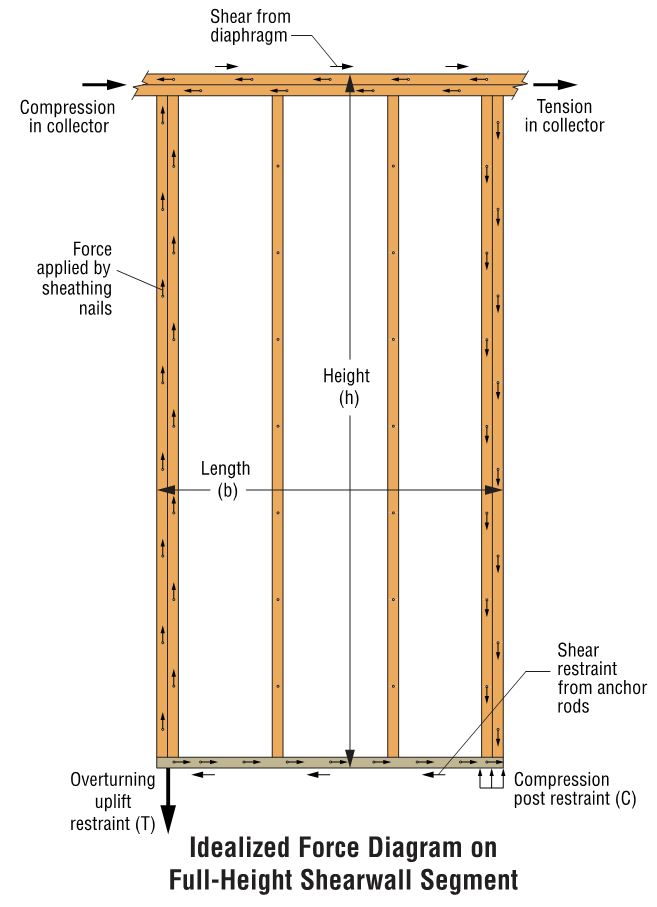
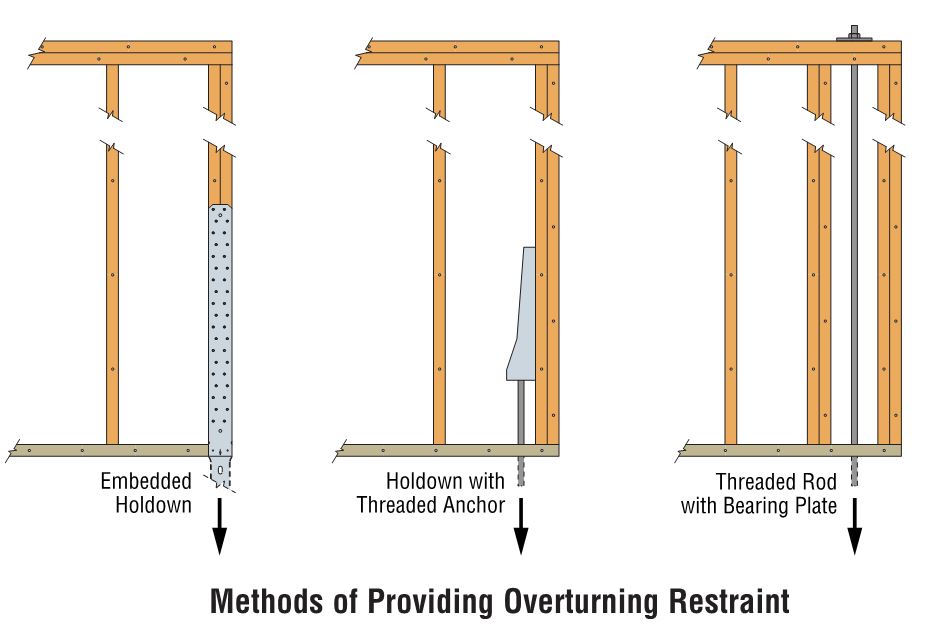
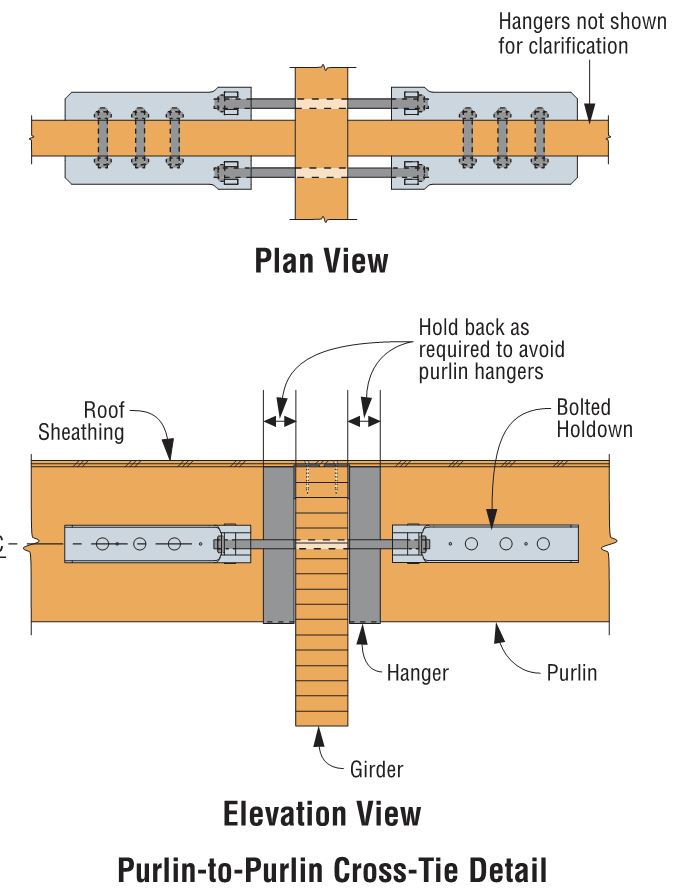
Keith Cullum started off our “How to Select a Connector” series with Hurricane Ties. This week we will discuss how to select holdowns and tension ties, which are key components in a continuous load path. They are used to resist uplift due to shearwall overturning or wind uplift forces in light-frame construction. In panelized roof construction, holdowns are used to anchor concrete or masonry walls to the roof framing.
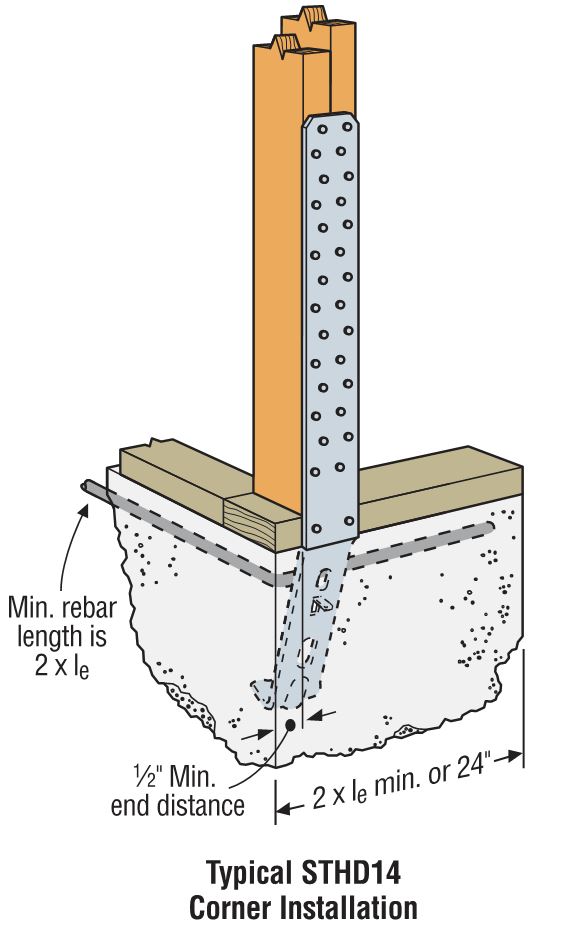
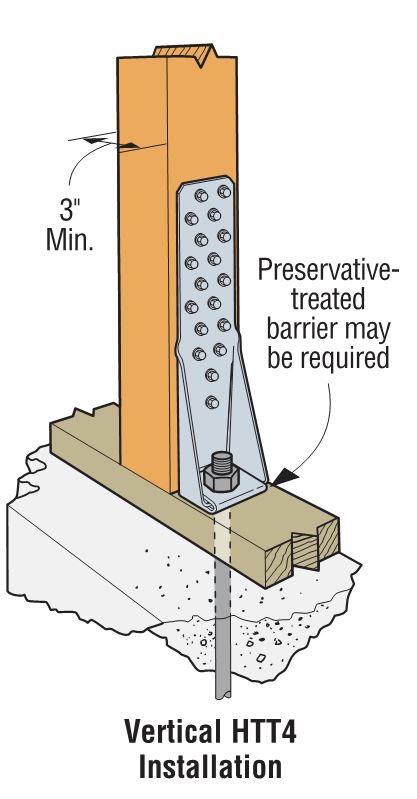
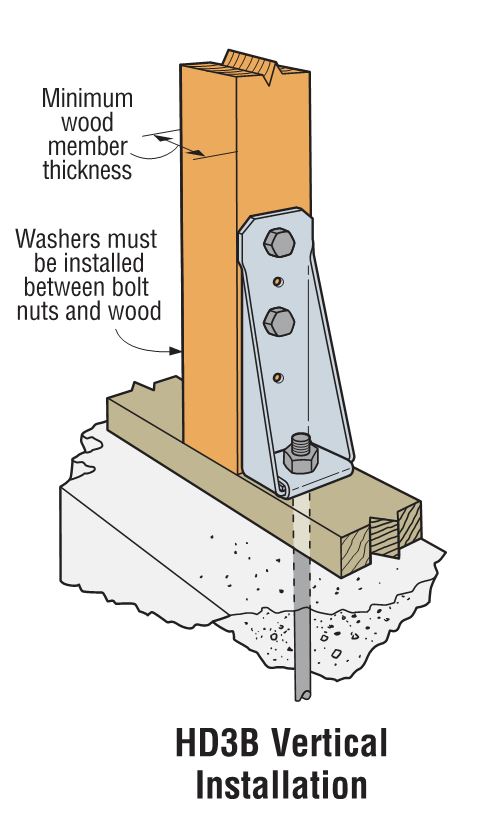
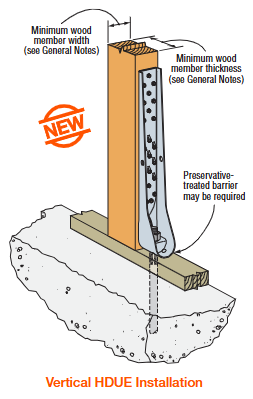
Holdowns can be separated in two basic categories – post-installed and cast-in-place. Cast-in-place holdowns like the STHD holdowns or PA purlin anchors are straps that are installed at the time of concrete placement. They are attached with nails to wood framing or with screws to CFS framing. After the concrete has been placed, post-installed holdowns are attached to anchor bolts at the time of wall framing. The attachment to wood framing depends on the type of holdowns selected, with different models using nails, Simpson Strong-Tie® Strong-Drive® SDS Heavy-Duty Connector screws or bolts.
A third type of overturning restraint is our anchor tiedown system (ATS), which is common in multistory construction with large uplift forces. I discussed the system in this blog post.
Given the variety of different holdown types, a common question is, how do you choose one?
For prescriptive designs, such as the IRC portal frame method, the IRC or IBC may require a cast-in-place strap-style holdown. Randy Shackelford did a great write-up on the PFH method in this post.
For engineered designs, a review of the design loads may eliminate some options and help narrow down the selection.
Holdown Type
Maximum Load (lb.)
Cast-in-Place
5,300
Nailed
5,090
SDS Screws
17,685
Bolted
19,070
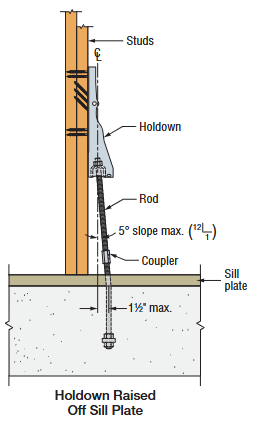
Adjustability should be considered when choosing between a cast-in-place and a post-installed holdown. Embedded strap holdowns are economical uplift solutions, but they must be located accurately to align with the wood framing. If the anchor bolt is located incorrectly for a post-installed holdown, raising the holdown up the post can solve many problems. And anchors can be epoxied in place for missing anchor bolts.
We are often asked if you can double the load if you install holdowns on both sides of the post or beam. The answer is yes, and this is addressed in our holdown general notes.
Nailed or screwed holdowns need to be installed such that the fasteners do not interfere with each other. Bolted holdowns do not need to be offset for double-sided applications. Regardless of fastener type, the capacity of the anchorage and the post or beam must be evaluated for the design load.
Once you have selected a holdown for your design, it is critical to select the correct anchor for the demand loads. Luckily, I wrote a blog about Holdown Anchorage Solutions last year. What connector would you like to see covered next in our series? Let us know in the comments below.
We use cookies on this site to enhance your user experience. By clicking "I AGREE" below, you are giving your consent for us to set cookies. Privacy PolicyI AGREE
Privacy & Cookies Policy
Privacy Overview
This website uses cookies to improve your experience while you navigate through the website. Out of these cookies, the cookies that are categorized as necessary are stored on your browser as they are essential for the working of basic functionalities of the website. We also use third-party cookies that help us analyze and understand how you use this website. These cookies will be stored in your browser only with your consent. You also have the option to opt-out of these cookies. But opting out of some of these cookies may have an effect on your browsing experience.
Necessary cookies are absolutely essential for the website to function properly. This category only includes cookies that ensures basic functionalities and security features of the website. These cookies do not store any personal information.
Any cookies that may not be particularly necessary for the website to function and is used specifically to collect user personal data via analytics, ads, other embedded contents are termed as non-necessary cookies. It is mandatory to procure user consent prior to running these cookies on your website.









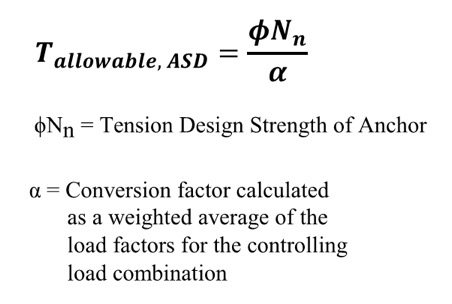 So what do you do now? Well, there is some guidance provided by ICC-ES for manufacturers to convert calculated SD capacities to ASD allowable load values. Since there is no conversion procedure stated in the IBC or referenced standards, designers may want to use this generally accepted method for converting anchor capacities designed using ACI 318. ICC-ES acceptance criteria for post-installed mechanical and adhesive anchors (AC193 and AC308) and cast-in-place steel connectors and proprietary bolts (AC398 and AC399) outline a procedure to convert LRFD capacities to ASD using a weighted average for the governing LRFD/SD load combination. So if the governing load combination for this anchor was 1.2D + 1.6L and the dead load was 1,000 pounds and the live load was 4,000, then the conversion factor would be (1.2)(0.2) + (1.6)(0.8) = 1.52 (keep in mind that the LRFD/SD capacity is divided by the conversion factor in the ICC-ES equation shown here for tension).